Investment demand for platinum still extremely strong

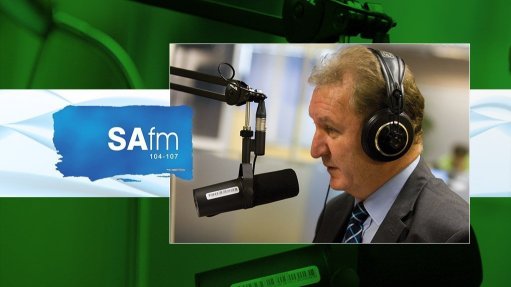
World Platinum Investment Council's Edward Sterck interviewed by Mining Weekly's Martin Creamer. Video: Darlene Creamer.



JOHANNESBURG (miningweekly.com) – Investment demand for platinum remains extremely strong, with market fundamentals continuing to support platinum as a compelling investment.
Market tightness suggests that there is insufficient platinum availability.
By year end, above ground stocks are projected to provide less than three months’ global demand cover. (Also watch attached Creamer Media video.)
Platinum bar and coin demand is expected to be 33% higher in 2026 than in 2025.
All the conditions that spurred the 2025 price rally are still very much in play.
Incoming emissions regulations are supportive of automotive demand for platinum.
The need for regional energy security, particularly in Europe and East Asia, is getting hydrogen demand going again.
Even potential demand drag for platinum catalysts possibly coming through from automotive or petrochemical perspectives would likely be more than offset by platinum investment.
These and many other points were made by World Platinum Investment Council (WPIC) director of research Edward Sterck, who spoke to Mining Weekly following the publication of the Platinum Quarterly for quarter one of 2026, in which WPIC CEO Trevor Raymond notes that platinum’s strong 2025 price performance and robust 2026 levels have increased global attention to platinum’s investment potential.
Raymond points out that a far wider cohort of investors is now actively considering platinum’s precious attributes and platinum demand is well insulated, the geopolitical Middle East headwinds notwithstanding.
"We’re also seeing platinum already playing a vital role across many technologies underpinning the rollout of AI infrastructure – from optical communications to data storage,” Raymond reported.
Mining Weekly: What are the key factors attributing to the fourth consecutive deficit forecast for 2026?
Sterck: There are a couple of key factors really. Firstly, supply is ultimately continuing to be extremely constrained. We've seen a pretty substantial increase in platinum group metal (PGM) prices over the last 12 months. Remember that the price rally started more or less a year ago. At one point we were up by almost over 200% and now we're slightly over 100% up on prices one year ago. But despite that price increase, we haven't really seen a meaningful change in supply outlook. Mine supply is fundamentally very, very limited by geological factors. These are, for the most part, deep-level underground mines. There's an intrinsic limitation in terms of the ability to flex output from those operations on a short-term or even a medium-term basis. At the same time, we do see a little bit more flexibility in terms of recycling supply. We’ve got an increase around 9% year-on-year in terms of recycling supply outlook. But there are some potential headwinds to that in terms of credit availability and the availability of end-of-life vehicles and autocatalysts to be recycled. It is important to recognise that we do have some headwinds on the demand side of the equation but, for the most part, demand has proving to be extremely resilient. We're not projecting significant growth. Automotive is down 2% year-on-year. Jewellery demand is down around 12% from last year, which is largely due to slightly reduced demand from China, whereas in the rest of the world, we're expecting in most geographies, demand to remain at or above last year's levels. Then, in terms of industrial demand, we've got a return to growth after, cyclically, a very weak 2025. The big swing factor this year is investment demand. I think it's important to emphasise, before I go into the detail, that actually investment demand remains extremely strong. It's just that we're not expecting the repeat of the massive inflows we saw last year into exchange stocks and exchange traded funds (ETFs). Although we're expecting very modest outflows from both those categories this year, bar and coin demand is expected to be extremely strong, and with ETFs and exchange stocks remaining pretty close to last year's levels, that's actually a pretty robust outlook. To summarise, constrained supply and demand at relatively robust levels overall.
What are the implications of only three months of above ground stocks?
If you look at it at face value, only three months’ worth of above ground stocks is extremely low, and so therefore there's likely to be an ongoing shortage of metal availability. We do have elevated lease rates. They've eased the last few months, but they're still, from an historical perspective, high. We've got ongoing backwardation in the London Over-the-Counter (OTC) market, which is another indication of market tightness. But I would caution that we need to treat above ground stock estimates with a degree of sensitivity. They are, at best, estimates. They're unlikely to be accurate in the extreme, but we should focus more on the change in direction of above ground stocks. So, if above ground stocks are coming down, then metal availability is reducing. If we see them going up, then, of course, they are increasing again. Looking at it on a broader picture than just this year and given that we're in our fourth year of consecutive annual deficits, clearly whatever the above ground stock levels are, those consecutive annual deficits have depleted them significantly from where they were four years ago, and if we look back at the catalyst behind the beginning of the price rally in May of last year, one of the catalysts was above ground stocks falling to unsustainably low levels. Whatever those levels are is debatable but, clearly, the price move we've seen and the indications of market tightness suggest that there isn't enough metal availability.
Recycling is bolstering supply due to higher prices but why is it more muted than expected and why is mine supply flat despite higher platinum prices?
To address the second question first, these deep-level underground mines are fundamentally dictated to by geology, by geotechnics, and it's just not possible to flex output that quickly. We're talking about, for the most part, large tabular orebodies. Expanding your production footprint requires a significant amount of off-reef development before you start getting into the reef. You need to increase your head count as well and I just don't think the appetite is there from the mining companies, necessarily, to spend that capital right now. Bear in mind, we've only had 12 months of higher prices, and to commit to what would be effectively be a multi-year programme in order to expand output, I think you probably want to see confidence that these prices are going to persist for, not just three or four years, but beyond that time period in order to make sure you get the return on capital that you need to deploy. Obviously, after the last, let's say, ten years or so of fairly depressed platinum prices, you have a nice sunshine moment in terms of higher palladium and rhodium prices. But I just think that people are a bit cautious and somewhat reluctant to make that capital investment right now. Also, shareholders, fundamentally, are hoping for, and possibly demanding, higher returns given the higher prices. In terms of recycling supply, we do have some upside from where we were last year and from the year before, but there are some headwinds. Capital availability is an issue. If you think about the fact that we've got much higher prices, that fundamentally just means that you’ve got to have expanded credit lines, and that takes time to negotiate with your lenders. At the same time, we've seen a doubling of energy prices, broadly speaking, in the last couple of months. That increases your cost base, and given that the higher energy prices are driving inflation and changing interest rate expectations, then that has a bearing on the ability of people to fund new vehicles, and so may slow the availability of end-of-life vehicles for recycling purposes. We can't ignore the fact that fewer new vehicle purchases is a bit of a drag on new demand, and I think we factored that into our forecast, so we do have one-million fewer new vehicles in our outlook for this year as a result of that.
What are the key sectors for demand in 2026? Why is there such a big year-on-year reduction in investment demand?
The key sector to focus on this year is definitely investment. Platinum bar and coin demand is expected to be up by 33% year-on-year in total. That is actually extremely encouraging. If you look at the other investment demand sectors, you're really looking at ETFs and exchange stocks, and principally it comes down to not having a repeat in our current outlook of the massive inflows that we saw last year. Last year’s motivations behind buying ETFs were principally based upon platinum's underlying fundamentals, a belief that platinum was undervalued versus gold, for example. That obviously played out to a degree as the year unfolded, and was then accelerated by a pivot towards non-dollar assets. These commodities are priced in dollars, but fundamentally they could be looked at independently of that, and so we saw a fourth-quarter pivot to the precious metals, these monetary-like assets, that benefited gold, silver, platinum, palladium, and even some of the more investable base metals. As we look through the course of this year, we may well see a return to that sort of enthusiasm. But right now, we're taking a cautious view, and we don't see the same sort of ETF buying that manifested last year. In terms of the exchange stocks, the motivation last year for adding to exchange stocks in the US, in particular, was concern about trade barriers being thrown up, given the Trump administration's tariff rhetoric and so on. The exchange stocks hit a level that was effectively commensurate with those concerns. We've seen a little bit of outflows over the course of the first quarter of this year, but fundamentally, those trade fears have not necessarily totally dissipated. If you look back over the last couple of weeks, we've seen the US administration file some new cases. These are called Section 301 cases that would in effect allow the government to apply tariffs unilaterally against foreign countries for various different perceived infringements, and I think this is just a way for the US administration to get around the US Supreme Court's strike down of Trump's original tariffs by finding another bureaucratic path to being able to apply those. As a result, those exchange stocks are likely to remain fairly sticky, but certainly we don't necessarily see them going up. So, it's really that sort of swing factor in terms of big additions last year to ETFs and exchange stocks, and not seeing those same additions occurring this year. That's the swing factor in terms of investment demand.
Why do market fundamentals still support platinum as a compelling investment?
The answer to that's fairly simple. If we anatomise the price rally last year and what the driving factors were behind it, last year we had a significant market deficit. We were in our third year of market deficits. You had very constrained supply. You had demand that was looking pretty robust. You had tight market conditions in terms of elevated lease rates, backwardation in the London OTC market. Nothing's really changed. Okay, we're not expecting quite the same strength and investment demand in terms of ETFs and exchange stocks this year. But fundamentally, even with that swing in investment demand, we're now in our fourth year of meaningful market deficits, above ground stocks are even more depleted. You've still got tight market conditions in terms of elevated lease rates, backwardation of the London OTC market. We don't give price forecasts, but just as an observation, all of the conditions behind the price rally last year are still very much in play today, so I think that really underlines platinum as an investment versus perhaps your alternative investment opportunities.
Finally, and possibly most importantly, how are geopolitical events affecting your forecasts for 2026 and which sectors face the greatest upside and downside in platinum demand given current global instability and supply deficits in 2026?
The biggest events of the day, really, in terms of a potential economic drag, are the US-Israeli war on Iran, the closure of the Strait of Hormuz and so on. The headline outcome from that is higher oil prices that people can see when they're buying petrol or diesel at the pump, or airlines cancelling flights all around the world due to higher avgas prices. But it's important to remember that there are some second order impacts of that. However, to begin with, we've downgraded our vehicle production forecast by about a million units, so I think that probably broadly accounts for higher oil prices. If the war drags on much longer than we're currently expecting it to, then I think we could see the shortage of automotive grade aluminium alloys, the shortage of helium, which is important for semiconductor production, begin to have a bearing on vehicle production numbers, and that could provide a bit of downside risk to our automotive demand for platinum outlook. It's important to note that those factors would affect both internal combustion engine vehicles and battery electric vehicles, so this isn't one or the other, it's across the vehicle spectrum. At the same time, if we've got that scenario, then, given that that's an inflationary factor across the board including oil and gas prices, that would lead to higher interest rate expectations, and given the growing US debt pile and the cost of servicing that debt, I think that would come back into scrutiny, which is exactly really what was going on in the fourth quarter of last year, and so we'd probably see a pivot back towards monetary-like assets, of which platinum would be a beneficiary. So, what we might lose in terms of automotive demand for platinum, we would probably gain in terms of investment demand, or even possibly more so. So, even with the potential demand drag for platinum catalysts possibly coming through from an automotive or petrochemical perspective, we'll probably see it being more than offset in terms of platinum investment.
INDUSTRIAL DEMAND GROWTH
In the three months to March 31, industrial demand for platinum increased by 41% year-on-year to 513 000 oz , with glass demand reaching 94 000 oz during the quarter. This gain more than offset weakness in the chemical segment, which declined year-on-year to a 4%-lower 116 000 oz.
In full year 2026, a 9% increase in industrial demand is anticipated to 2 238 000 oz, led by growth in glass demand (+83% to 377 000 oz).
Increases are also expected across all other sectors with the exception of petroleum (-28%) and the ‘other’ category which is expected to be flat.
The full year forecast for petroleum demand has been lowered by 22 000 oz to 132 000 oz (versus 182 000 oz in full year 2025) to reflect the downside risk of disruption to this sector caused by the conflict in the Middle East.
MINE AND RECYCLING
First-quarter mine supply was a 22%-higher 1 320 000 oz and recycling grew 7% year-on-year to 416 000 oz.
While higher prices are resulting in more spent catalysts being collected, the amount of recoverable PGMs extracted from each catalyst (known as its loading) is lower than in previous years, partly offsetting the benefit of higher volumes.
In full-year 2026, mine supply is expected to be broadly flat year-on-year at 5 551 000 oz as modest gains in South Africa are offset by declines elsewhere.
Recycling is forecast to rise 9% to 1 826 000 oz, although downside risks exist as recyclers continue to face working capital constraints owing to markedly higher PGM prices.
Total demand in 2026 is forecast to be a 9%-lower 7 674 000 oz and total supply is projected to increase 2% to 7 377 000 oz driven by recycling growth.
Article Enquiry
Email Article
Save Article
Feedback
To advertise email advertising@creamermedia.co.za or click here
Research Reports


Projects

Latest Multimedia

Latest News

Showroom
The Steel Tube Export Association of South Africa was established to develop sustainable, internationally competitive carbon steel tube and pipe...
VISIT SHOWROOM
At Airshrink - CiP, we surpass customer expectations with innovative MV and LV cable accessories, including heat shrink joints, terminations,...
VISIT SHOWROOM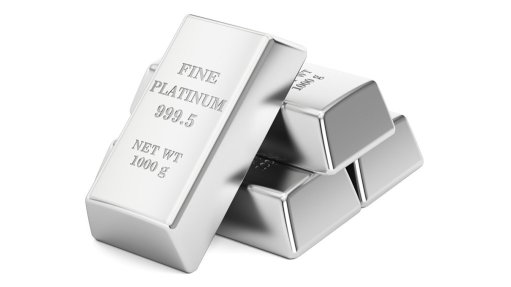
Announcements
What's On
Subscribe to improve your user experience...
Option 1 (equivalent of R125 a month):
Receive a weekly copy of Creamer Media's Engineering News & Mining Weekly magazine
(print copy for those in South Africa and e-magazine for those outside of South Africa)
Receive daily email newsletters
Access to full search results
Access archive of magazine back copies
Access to Projects in Progress
Access to ONE Research Report of your choice in PDF format
Option 2 (equivalent of R375 a month):
All benefits from Option 1
PLUS
Access to Creamer Media's Research Channel Africa for ALL Research Reports, in PDF format, on various industrial and mining sectors
including Electricity; Water; Energy Transition; Hydrogen; Roads, Rail and Ports; Coal; Gold; Platinum; Battery Metals; etc.
Already a subscriber?
Forgotten your password?
Receive weekly copy of Creamer Media's Engineering News & Mining Weekly magazine (print copy for those in South Africa and e-magazine for those outside of South Africa)
➕
Recieve daily email newsletters
➕
Access to full search results
➕
Access archive of magazine back copies
➕
Access to Projects in Progress
➕
Access to ONE Research Report of your choice in PDF format
RESEARCH CHANNEL AFRICA
R4500 (equivalent of R375 a month)
SUBSCRIBEAll benefits from Option 1
➕
Access to Creamer Media's Research Channel Africa for ALL Research Reports on various industrial and mining sectors, in PDF format, including on:
Electricity
➕
Water
➕
Energy Transition
➕
Hydrogen
➕
Roads, Rail and Ports
➕
Coal
➕
Gold
➕
Platinum
➕
Battery Metals
➕
etc.
Receive all benefits from Option 1 or Option 2 delivered to numerous people at your company
➕
Multiple User names and Passwords for simultaneous log-ins
➕
Intranet integration access to all in your organisation