How mining companies are innovating to address sustainable tailings management

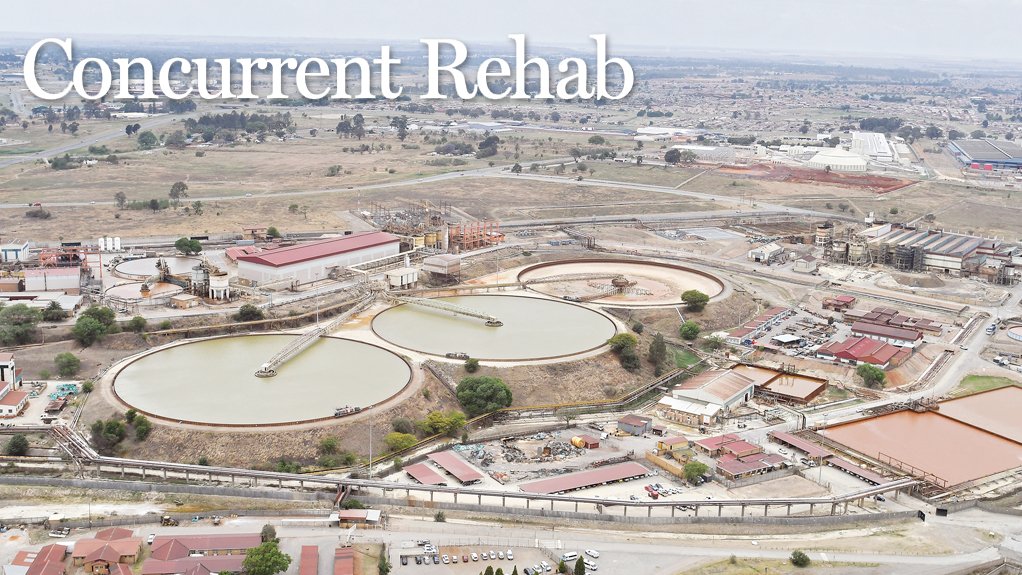

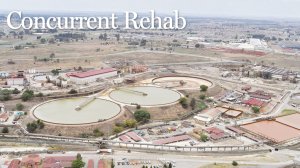
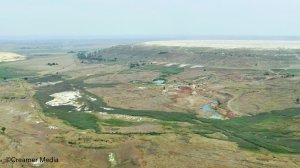
DRDGOLD Ergo tailings storage facility Panellists during Creamer Media's Tailings webinar discussed the evolution of tailings in the country and explore themes such as regulatory, financial, technical and social barriers that may be slowing rehabilitation efforts
Photo by Creamer Media's Donna Slater
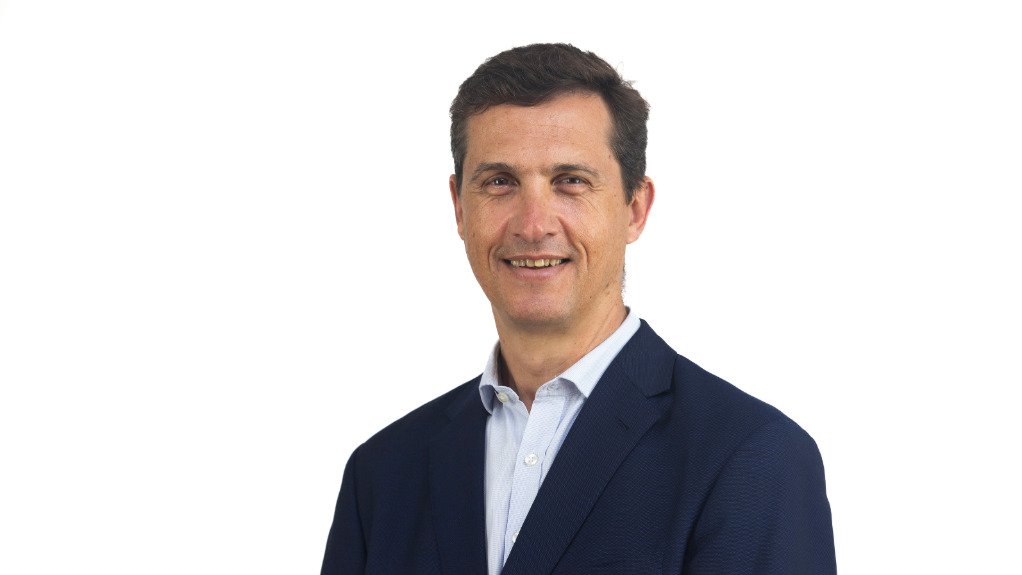
DRDGOLD COO Jaco Schoeman
Henry Gouws High volumes are necessary to deal with the low grades the Ergo operation currently processes




As South African mining companies face environmental and legacy issues brought about by the country’s long and complex mining history, it is becoming increasingly important to adopt responsible tailings management and effective land rehabilitation systems.
This was underscored by panellists during Creamer Media’s ‘Tailings’ webinar, held earlier this month, which brought together industry experts to discuss the evolution of tailings in the country and explore themes such as regulatory, financial, technical and social barriers that may be slowing rehabilitation efforts.
During the discussion, DRDGOLD COO Jaco Schoeman outlined the progression of the company’s tailings retreatment and rehabilitation operation, Ergo, on Gauteng’s East Rand, over the past 50 years, highlighting a shift from underground to surface mining, owing to rising costs and the depletion of deep-level reserves.
Schoeman pointed out that, over the last ten years, gold production in South Africa has dropped by about 32%.
“The existing underground mines are just getting deeper and more expensive. And it’s not that South Africa ran out of gold; we ran out of economically survivable ounces, which are on the cost curve.
“It’s just too expensive to recover those from underground and, therefore, if you look at investment in gold in South Africa recently and over the recent few years, it’s mainly going into surface operations.”
Schoeman identified four key factors that can help make a retreatment project bankable and demonstrate long-term value to investors.
These include defined resources, the repurposing or establishing of new infrastructure, access to water and a stable power supply, as well as deposition capacity.
“Once we treat these tailings dams, where do we actually go, and how do we dispose of these resources? Deposition capacity is a key constraint and an important factor in that model,” he said, adding that environmental, social and governance (ESG) requirements are becoming increasingly central to project viability.
“Without a very strong, real ESG strategic component, you’re not going to make any of these projects fly going forward . . . You need to take the environment, the communities and your overall footprint into consideration,” he said.
Reiterating this point, SLR Consulting asset transition and closure business lead and Land Rehabilitation Society of Southern Africa (LaRSSA) president Danie Otto highlighted the importance of reducing long-term environmental liabilities associated with older tailings facilities through rehabilitation, as well as the benefits of modern pollution control technologies.
“So it’s about really opening up these areas and cleaning up what was maybe deposited poorly in the past, and allowing alternative commercial enterprises to develop on those sites,” Stellenbosch University Department of Civil Engineering associate professor of geotechnical engineering Charles MacRobert said in response.
Public Safety
Meanwhile, Schoeman highlighted key safety challenges associated with reprocessing historical tailings deposits, as well as environmental concerns.
On public safety considerations, he explained that, in the region where Ergo is located, high rates of unemployment have led to community members “scavenging” for materials such as steel from tailings facilities. He therefore stressed the importance of community engagement to help mitigate this issue.
Schoeman also noted that moving material from a reclamation site with hydraulic systems involves pumping slurry to the plant through a pipeline that runs across Johannesburg and through communities and public spaces.
“Any burst or leak in these pipelines will create a massive problem for us,” he warned, adding that this could also have environmental implications.
To address this risk, the company has collaborated with a German engineering firm to develop an algorithm that links into pressure sensors along the pipeline to pinpoint the location of potential leaks by immediately flagging abnormal changes.
This allows the company to deploy teams to conduct any repairs and shut down the system where necessary to prevent leaks and environmental spills.
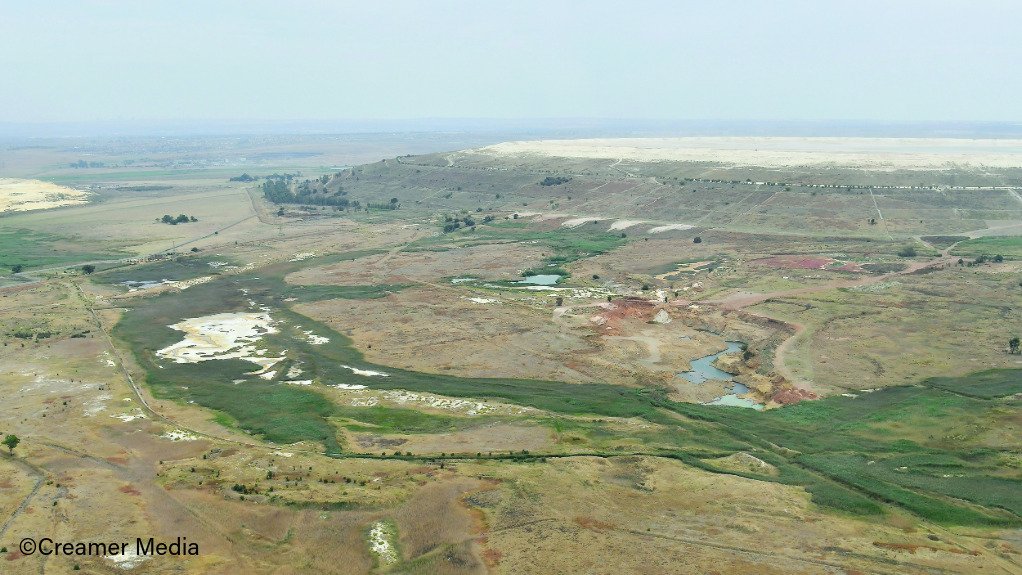
Looking at old tailings dumps, such as the Brakpan tailings dam, in Gauteng, Schoeman noted that the company has implemented concurrent rehabilitation practices.
“While we are depositing onto it, we are revegetating the side slopes and also maintaining and ensuring that there’s no pollution plume from contaminated water by doing scavenger bore holes, cutoff drains and so forth, and collecting all of that water and bringing that into the circuit,” he said, adding that the company has started measuring the success of the project in terms of biodiversity outcomes.
“It’s a lot more expensive to try and do rehabilitation at the back end of your operations once you want to get closure than spending the money upfront whilst you’re operating and doing your rehabilitation as far as possible, setting it up so that when you do get to closure, it’s a case where you shut shop and the environment is taken care of.”
In this vein, Ergo MD Henry Gouws explained that, while Ergo previously had the capacity to treat over 2.1-million tonnes in a single facility, it is currently at about 1.65-million to 1.7-million tonnes.
He said such volumes are necessary to deal with the low grades the operation currently processes.
Gouws noted that, while current high commodity prices provide the company with additional margin, long-term facilities need to be designed to process large volumes and operate at grades of about 0.3 g/t. This requires significant throughput, and he warned that overdesign could lead to process interruptions owing to overfilling of facilities.
“Stability is key,” he said, adding that the company’s extensive use of supervisory control and data acquisition systems, telemetry and algorithms helps to effectively monitor the status of major pipelines and pump stations. This is particularly important, given that Ergo currently pumps about 70 km through densely populated parts of Johannesburg.
“We’ve got to be on top of exactly what is happening at any one point in time and the current technology that’s out there in terms of communication and observation of systems certainly allows us to do that.”
Along similar lines, Otto discussed how technology is changing the way tailings facilities are managed over their full life cycle.
He explained that there have been several “technological breakthroughs” in the sector, such as improvements in seed technology, geochemistry and the introduction of remote sensing.
He also noted that there are performance indicators that can be used to ensure that rehabilitated tailings facilities deliver measurable environmental and social outcomes.
These include monitoring air and water quality, vegetation and a company’s social licence to operate.
Policy Matters?
In addition to discussing practical aspects of the retreatment and rehabilitation process, the panellists touched on the policy changes required to unlock South Africa’s tailings opportunities.
Given that responsible tailings management and effective land rehabilitation systems are essential for environmental protection, public health and sustainable economic development, regulatory frameworks and polices, therefore, require more streamlined implementation to accelerate progress in South Africa.
Otto explained that there are new regulations and legislation being developed around rehabilitation and closure funding, which he labelled as “the elephant in the room”.
He described the impending legislation, which is expected to address latent and residual risks in more detail, as being “well handled” by the industry, adding that South Africa’s legislative framework is “pretty good”.
Similarly, Schoeman described South Africa’s regulatory framework and policies as “up there with the best in the world”.
However, he said policy implementation, adherence to timelines and obtaining authorisations timeously remain challenging, noting that the Department of Mineral and Petroleum Resources is under-resourced in terms of human and technology capacity to process applications.
“I don’t think that there’s anything wrong with our regulations or our policies. It’s a case of, can we speed up the process? Can we move things along sooner?”
Gouws agreed, adding that there are limited avenues to discuss project-related challenges, which can result in a “tick box exercise” approach for companies.
“We’ve got to try and find a pragmatic solution to be able to engage with these authorities,” he said.
Article Enquiry
Email Article
Save Article
Feedback
To advertise email advertising@creamermedia.co.za or click here
Research Reports

Projects

Latest Multimedia
Latest News
Showroom
Leading condition monitoring specialists, WearCheck, help boost machinery lifespan and reduce catastrophic component failure through the scientific...
VISIT SHOWROOM


Press Office
Announcements
What's On
Subscribe to improve your user experience...
Option 1 (equivalent of R125 a month):
Receive a weekly copy of Creamer Media's Engineering News & Mining Weekly magazine
(print copy for those in South Africa and e-magazine for those outside of South Africa)
Receive daily email newsletters
Access to full search results
Access archive of magazine back copies
Access to Projects in Progress
Access to ONE Research Report of your choice in PDF format
Option 2 (equivalent of R375 a month):
All benefits from Option 1
PLUS
Access to Creamer Media's Research Channel Africa for ALL Research Reports, in PDF format, on various industrial and mining sectors
including Electricity; Water; Energy Transition; Hydrogen; Roads, Rail and Ports; Coal; Gold; Platinum; Battery Metals; etc.
Already a subscriber?
Forgotten your password?
Receive weekly copy of Creamer Media's Engineering News & Mining Weekly magazine (print copy for those in South Africa and e-magazine for those outside of South Africa)
➕
Recieve daily email newsletters
➕
Access to full search results
➕
Access archive of magazine back copies
➕
Access to Projects in Progress
➕
Access to ONE Research Report of your choice in PDF format
RESEARCH CHANNEL AFRICA
R4500 (equivalent of R375 a month)
SUBSCRIBEAll benefits from Option 1
➕
Access to Creamer Media's Research Channel Africa for ALL Research Reports on various industrial and mining sectors, in PDF format, including on:
Electricity
➕
Water
➕
Energy Transition
➕
Hydrogen
➕
Roads, Rail and Ports
➕
Coal
➕
Gold
➕
Platinum
➕
Battery Metals
➕
etc.
Receive all benefits from Option 1 or Option 2 delivered to numerous people at your company
➕
Multiple User names and Passwords for simultaneous log-ins
➕
Intranet integration access to all in your organisation