


Regenerative agriculture is no longer a sustainability conversation. It is a business imperative

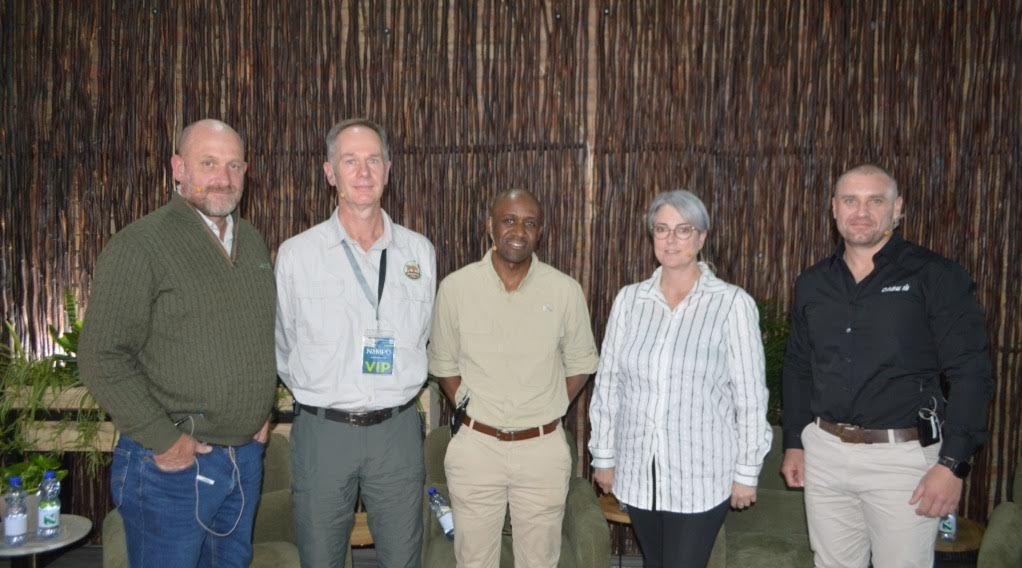
Facilitator Chris Burgess, editor-in-chief, Landbouweekblad and African Farming, with speakers Dr Hendrik Smith, regenerative and conservation agriculture specialist, Asset Research; Kudzayi Mazikana, head of sustainability, Nedbank Commercial Banking; Dr Karin Nel, microbiologist, University of Stellenbosch; and Stephan Nel, managing director, Case IH.



At a panel discussion hosted by Nedbank at this year's NAMPO Harvest Day, one message emerged clearly from farmers, scientists, financiers and technology providers: the future resilience of agriculture will depend on how quickly the sector restores soil health, improves the intelligence of its data systems, and transitions toward more regenerative farming systems.
What was once primarily viewed as a sustainability conversation is rapidly becoming a commercial necessity. Climate volatility, soil degradation, biodiversity loss and rising input costs are creating a new operating environment in which long-term productivity and profitability depend on rebuilding the natural systems that underpin farming itself.
The discussion highlighted this significant shift in thinking: regenerative agriculture is no longer simply about 'doing less harm'. It's about building farming systems that are more productive, more resilient, more efficient, and ultimately more bankable.
Soil health is becoming agriculture's strategic asset
For decades, modern agriculture has focused on maximising yields through mechanisation, synthetic inputs, and scale efficiencies. While these advances delivered major productivity gains, they also accelerated soil degradation in many regions. South Africa has already experienced significant losses in soil carbon and biodiversity across key cropland regions, with serious implications for water retention, nutrient cycling, and long-term sustainability.
Regenerative agriculture seeks to reverse this trajectory through 5 core principles:
· Minimum soil disturbance
· Permanent soil cover
· Crop diversity
· Maintaining living roots in the soil
· Integrating livestock strategically into farming systems
Stellenbosch University microbiologist, Professor Karin Jacobs, said that while the principles may be straightforward, their implications are profound. 'Healthy soils behave differently. It retains more water during droughts, absorbs rainfall more effectively during floods, supports more efficient nutrient cycling, and reduces dependence on expensive external inputs, all of which improves resilience in increasingly volatile climatic conditions.'
She added that billions of microorganisms in healthy soil drive critical nutrient cycles involving carbon, nitrogen and phosphorus. 'Restoring microbial diversity is therefore not simply an environmental objective; it directly influences productivity and farm performance.'
Data is becoming central to sustainable farming
Modern farming increasingly relies on information ranging from soil chemistry and moisture levels to precision planting, mechanisation, and variable-rate applications. Panellists agreed that data-driven farming is becoming essential not only for operational efficiency, but also for sustainability measurement and financial decision-making.
Stephan Nel, managing director of Case IH, said that precision agriculture technologies are enabling farmers to apply inputs more accurately, reduce compaction, improve resource efficiency, and better protect soil structure. 'We are redesigning machinery around minimum disturbance principles and advanced application systems that support regenerative outcomes rather than undermine them, and the shift among our clients to this system over the past 3 years has been remarkable.'
However, the discussion also identified a major challenge: fragmented data systems. Information often sits across disconnected platforms owned by machinery manufacturers, technology providers, and input suppliers, making it difficult to build integrated sustainability and financial models.
This matters, because sustainable finance depends on measurable outcomes. Financial institutions require credible indicators like soil carbon, water infiltration, and regenerative practice adoption to assess resilience and risk within agricultural lending and sustainability frameworks.
In other words, the future of agricultural finance may depend as much on data quality as it does on traditional balance sheets.
Financing the transition
The discussion also highlighted the financial realities farmers face when transitioning to regenerative systems.
Kudzayi Mazikana, head of sustainability at Nedbank Commercial Banking, said that many producers experience an initial 'J-curve' period during which yields or cash flows may temporarily decline before long-term benefits emerge. 'For many farmers, this transition period creates significant financial pressure and risk. For agriculture to transition successfully, financial systems need to evolve alongside farming systems, and collaboration between commercial banks, development finance institutions, insurers, and agricultural stakeholders needs to grow.'
Encouragingly, this shift is already underway. 'Banks like Nedbank are increasingly investing in climate-risk capabilities, environmental management systems, and specialised financing products that support resilience-building practices. This represents an important evolution in agricultural finance – from funding production alone to funding resilience,' says Mazikana.
Regenerative agriculture is inclusive
Regenerative agriculture is sometimes incorrectly perceived as a premium or highly specialised system accessible only to large commercial operations. Dr Hendrik Smith, regenerative and conservation agriculture specialist at Asset Research, dismissed this perception, stressing that the principles are universally applicable across scale, geographies and production models.
'Whether implemented through sophisticated precision technologies on large commercial farms or through low-cost adaptive systems among smallholders, the underlying principles remain the same: protect soil function, improve biodiversity, increase resilience and reduce vulnerability to climatic shocks,' he said. 'For smaller-scale farmers especially, regenerative systems may offer pathways to improved profitability through diversified enterprises, lower input dependency and improved ecosystem performance.'
Collaboration will determine success
The panel discussion made it clear that regenerative agriculture cannot succeed in isolation.
Farmers, scientists, financiers, agribusinesses, and technology providers all have a role to play in accelerating adoption. Education, knowledge-sharing, and collaboration were repeatedly identified as critical to overcoming barriers and scaling regenerative practices.
The discussion also highlighted the need to involve consumers more directly in sustainability conversations. Ultimately, long-term agricultural transformation will depend not only on what happens on farms, but also on whether markets begin to value resilience, sustainability, and ecosystem stewardship more explicitly.
A defining decade for agriculture
The pressures facing the sector are no longer hypothetical. Climate volatility is intensifying. Soil degradation is accelerating. Water stress is increasing. Input costs remain elevated. At the same time, global markets are placing growing emphasis on traceability, sustainability, and environmental performance.
The conversation at NAMPO made one thing clear: farms that fail to build healthier soils, improve water resilience, and reduce input dependency may become increasingly vulnerable financially, operationally, and environmentally.
Against this backdrop, regenerative agriculture is increasingly viewed not as an ideological choice or sustainability exercise, but as a commercial necessity. It is swiftly becoming central to the future competitiveness, resilience, and long-term viability of agriculture itself.
Article Enquiry
Email Article
Save Article
Feedback
To advertise email advertising@creamermedia.co.za or click here
Research Reports

Projects


Latest Multimedia




Showroom

Sulzer South Africa, established in 1922, partners with critical industries like power, oil & gas, water, mining, and chemicals to boost...
VISIT SHOWROOM
Rooted in the hearts of South Africans, combining technology and a quest for perfection to bring you a battery of peerless standing. Willard...
VISIT SHOWROOM



Press Office
Announcements
What's On
Subscribe to improve your user experience...
Option 1 (equivalent of R125 a month):
Receive a weekly copy of Creamer Media's Engineering News & Mining Weekly magazine
(print copy for those in South Africa and e-magazine for those outside of South Africa)
Receive daily email newsletters
Access to full search results
Access archive of magazine back copies
Access to Projects in Progress
Access to ONE Research Report of your choice in PDF format
Option 2 (equivalent of R375 a month):
All benefits from Option 1
PLUS
Access to Creamer Media's Research Channel Africa for ALL Research Reports, in PDF format, on various industrial and mining sectors
including Electricity; Water; Energy Transition; Hydrogen; Roads, Rail and Ports; Coal; Gold; Platinum; Battery Metals; etc.
Already a subscriber?
Forgotten your password?
Receive weekly copy of Creamer Media's Engineering News & Mining Weekly magazine (print copy for those in South Africa and e-magazine for those outside of South Africa)
➕
Recieve daily email newsletters
➕
Access to full search results
➕
Access archive of magazine back copies
➕
Access to Projects in Progress
➕
Access to ONE Research Report of your choice in PDF format
RESEARCH CHANNEL AFRICA
R4500 (equivalent of R375 a month)
SUBSCRIBEAll benefits from Option 1
➕
Access to Creamer Media's Research Channel Africa for ALL Research Reports on various industrial and mining sectors, in PDF format, including on:
Electricity
➕
Water
➕
Energy Transition
➕
Hydrogen
➕
Roads, Rail and Ports
➕
Coal
➕
Gold
➕
Platinum
➕
Battery Metals
➕
etc.
Receive all benefits from Option 1 or Option 2 delivered to numerous people at your company
➕
Multiple User names and Passwords for simultaneous log-ins
➕
Intranet integration access to all in your organisation
