Global logistics company to develop new centre

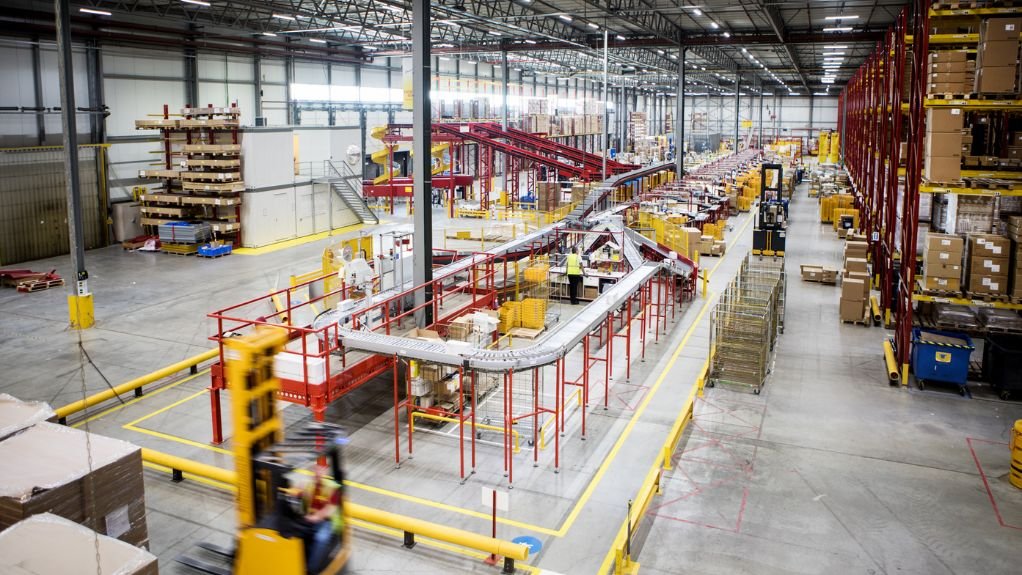
SUSTAINABLE HUB To achieve carbon neutrality, DHL will focus on reducing emissions using efficient building design, operational optimisation and the renewable-energy sources


Signalling its confidence in South Africa’s role as a regional logistics and distribution hub for sub‑Saharan Africa, global logistics company DHL will invest R220-million in a new multi user distribution centre in Johannesburg, Gauteng, with construction scheduled to start in July 2026.
Expected to become operational in July 2027, the facility will support customers in the consumer goods sector, including fast-moving consumer goods, allowing for local and cross border order fulfilment while providing operational flexibility and long term scalability, says DHL Supply Chain Middle East and Africa chief commercial officer and Africa MD Bremer Pauw.
The project involves demolishing the existing site to replace it with of a “brand new greenfield distribution centre”.
The facility will be developed as a carbon‑neutral site and certified in accordance with development finance institution International Finance Corporation Excellence in Design for Greater Efficiencies Advanced standard, which requires minimum reductions of 40% in energy use and 20% each in water consumption and embodied carbon, when compared with conventional local building standards.
To achieve carbon neutrality, DHL will focus on reducing emissions using efficient building design, operational optimisation and the renewable-energy sources, where available, Pauw explains.
Further, solar PV systems will be incorporated into the facility and used to support the charging of lithium‑ion electric materials handling equipment, thereby maximising the use of renewable energy, and reducing reliance on grid power.
Any remaining unavoidable emissions will be addressed through verified carbon-offset mechanisms aligned with recognised carbon-accounting frameworks. Carbon neutrality will be independently assessed to ensure transparency and credibility, he adds.
DHL embeds sustainability into operations through an end‑to‑end approach, which includes working with suppliers and partners that demonstrate measurable sustainability performance, as well as its optimising warehouse flows and energy efficient handling processes, Pauw says.
In transport and last‑mile delivery, sustainability is achieved through on-route optimisation, load efficiency and the gradual introduction of lower‑emission solutions, where feasible.
“These elements are integrated into customer solutions rather than treated separately, allowing [for] sustainability improvements to be built into contract design, service models and performance metrics,” he explains.
Meanwhile, to ensure greater supply‑chain efficiency, the facility will be operated on the latest version of DHL Supply Chain’s warehouse management systems, which can integrate with broader supply chain visibility tools used by customers.
Digital tools allow for visibility, coordination and optimisation across increasingly complex supply chains, particularly as operations scale and involve multiple origins and markets. Engineering and analytics tools, such as process mining, inventory optimisation and digital‑twin modelling, will support continuous operational improvement by identifying inefficiencies and reducing waste across the value chain.
Additional digital solutions may be introduced over time as technology matures and customer requirements evolve, Pauw adds.
“The integration of physical assets with digital systems [enables] customers to manage complexity more effectively, improve decision‑making and unlock additional value from their supply chains,” he says.
DHL is strategically positioned across key African markets, with integrated warehousing, transport and distribution capabilities, so the multi‑user distribution centre is expected to further enhance its capabilities, allowing for scalable and shared solutions for customers operating across numerous markets.
“The facility will enable efficient access into the Southern African Development Community region through established regional corridors, supporting customers’ cross‑border expansion and enabling local producers to reach new markets,” Pauw explains.
Supply-Chain Infrastructure Developments
Meaningful progress has been made in strengthening logistics and trade infrastructure across sub-Saharan Africa, driven by sustained collaboration between the public and private sectors, says Pauw.
Border processes and customs harmonisation are continuing to evolve, with ongoing efforts to streamline trade facilitation and improve the speed and predictability of cross-border flows.
Investment in modern, scalable logistics infrastructure, such as multi-user warehousing, is growing, which supports increasingly sophisticated supply chain models.
Digitalisation represents another important area of momentum, with wider adoption of systems that enhance visibility, data sharing and end-to-end coordination.
Pauw comments that further development in these and other critical areas is steadily gaining focus, which should result in significant efficiency gains and growth opportunities, such as developments in transport infrastructure, particularly the consistency and integration of road and rail networks, along regional trade corridors.
Energy reliability and skills development are also key priorities, with investment needed for alternative energy solutions and focused talent development initiatives.
Meanwhile, the expansion of intra‑African trade under the African Continental Free Trade Area is driving demand for more resilient regional logistics infrastructure, including temperature‑controlled facilities required for life‑sciences and healthcare supply chains, Pauw concludes.
Article Enquiry
Email Article
Save Article
Feedback
To advertise email advertising@creamermedia.co.za or click here
Projects



Latest News

Showroom

Developed to exceed the latest EN 15964 standards for police breathalysers proving that it will remain accurate and reliable for many years to come.
VISIT SHOWROOM
Design, Construction and Maintenance of Site Erected, Welded Bulk Storage Tanks for the Petrochemical, LNG, Ammonia and Sustainable fuel Sectors.
VISIT SHOWROOM


Announcements
What's On
Subscribe to improve your user experience...
Option 1 (equivalent of R125 a month):
Receive a weekly copy of Creamer Media's Engineering News & Mining Weekly magazine
(print copy for those in South Africa and e-magazine for those outside of South Africa)
Receive daily email newsletters
Access to full search results
Access archive of magazine back copies
Access to Projects in Progress
Access to ONE Research Report of your choice in PDF format
Option 2 (equivalent of R375 a month):
All benefits from Option 1
PLUS
Access to Creamer Media's Research Channel Africa for ALL Research Reports, in PDF format, on various industrial and mining sectors
including Electricity; Water; Energy Transition; Hydrogen; Roads, Rail and Ports; Coal; Gold; Platinum; Battery Metals; etc.
Already a subscriber?
Forgotten your password?
Receive weekly copy of Creamer Media's Engineering News & Mining Weekly magazine (print copy for those in South Africa and e-magazine for those outside of South Africa)
➕
Recieve daily email newsletters
➕
Access to full search results
➕
Access archive of magazine back copies
➕
Access to Projects in Progress
➕
Access to ONE Research Report of your choice in PDF format
RESEARCH CHANNEL AFRICA
R4500 (equivalent of R375 a month)
SUBSCRIBEAll benefits from Option 1
➕
Access to Creamer Media's Research Channel Africa for ALL Research Reports on various industrial and mining sectors, in PDF format, including on:
Electricity
➕
Water
➕
Energy Transition
➕
Hydrogen
➕
Roads, Rail and Ports
➕
Coal
➕
Gold
➕
Platinum
➕
Battery Metals
➕
etc.
Receive all benefits from Option 1 or Option 2 delivered to numerous people at your company
➕
Multiple User names and Passwords for simultaneous log-ins
➕
Intranet integration access to all in your organisation