AI can help fill South Africa’s cadastre with deposits, mine modernising event hears

Mine Modernisation Showcase covered by Martin Creamer. Video: Creamer Media's Shadwyn Dickinson. Video Editing: Creamer Media's Nicholas Boyd.


JOHANNESBURG (miningweekly.com) – Instead of relying primarily on traditional geological interpretation, South Africa can turn to AI for help in the same way as has been done with huge success to discover Zambia’s biggest copper deposit in a 100 years, South Africa’s Mining Modernisation Showcase attendees heard.
To achieve this success, KoBold Metals digitised 300 years of handwritten geology reports, taught geology to AI, used AI models to analyse the vast amounts of geological, geophysical, drilling and historical exploration data to predict where high-grade mineralisation was most likely to occur, and then drilled a hole.
The outcome is that ground has already been broken at Mingomba, where the construction of a $2.3-billion copper mine is under way.
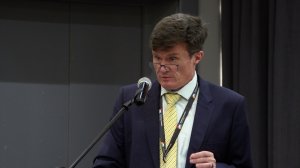
“It's crazy good, and the reason why I've given this example is because this is one of the specific things that South Africa needs to do,” PwC Associate Director Smart Mining South Africa Ian Mackay explained at the mine modernisation event led by Minerals Council South Africa, Research Institute for Innovation and Sustainability (RIIS), the Centre for Science, Technology and Innovation Indicators specialised research unit within South Africa's Human Sciences Research Council, the Department of Science, Technology and Innovation, the National Advisory Council on Innovation, and PwC Smart Mining South Africa. (Also watch attached Creamer Media video.)
The need for South Africa to be able to identify deposits, where its next mines will be built, was emphasised as being ultra urgent given the high dependence of South Africa’s economy on mining.
“Before we can go and talk about investors and all the rest of it, we actually need deposits. We need something to put in the cadastral system in order to be able to sell it,” Mackay outlined.
Mining cadastres track precise geographic boundaries, active operations, permit expiration dates, and the status of applications and South Africa’s has still to be fully developed, amid Minerals Council South Africa pointing out at its 136th AGM in May, that there is an urgent need for a one-stop shop for mineral right applications to coordinate and align all relevant regulations from other departments, to streamline and expedite approval processes.
In addition to optimising exploration, AI can already support a range of mining use cases such as detecting illegal mining using satellite imagery, predicting equipment failures before they happen, improving environmental performance, automating hazardous tasks, and improving metal recovery and processing.
AI could support research into new uses for platinum group metals, find new industrial applications for rare earths and battery chemistries, and potentially help to unlock deep gold resources.
“AI is not magic but used properly, it can help us see earlier, decide faster, operate faster, reduce waste, improve productivity, and unlock new forms of value,” Mackay pointed out at the event covered by Mining Weekly.
PwC’s full study is based on ten structured, anonymised CEO interviews, additional focus group sessions with line management from a diverse range of miners, and industry meetings and strategy sessions.
South Africa’s mining industry is not growing in the way it needs it to grow. Very few large new mines have started in recent years, more mines have closed, economically viable deposits are harder to find, employment continues to decline, and illegal mining, infrastructure failures and community pressure are adding further strain.
Can AI and the Fourth Industrial Revolution help South African mining become safer, smarter, more competitive and more inclusive — or will South Africans allow the opportunity to pass their country by?
Mining is being hit by climate, technology, demographics, a fracturing world, and social instability.
Each of these megatrends creates cost, regulation, skills, supply chain and job pressures, with strategic responses equally broad.
As AI is not arriving in a stable environment, its adoption has to connect to the business agenda.
The first insight is about leadership. Historically, the mining CEO was the custodian of orebodies, production and safety.
That role remains critical. But the study shows that the CEO is now also needing to become a technology champion, a driver of innovation, an architect of digital strategy, and a leader of culture change.
Adoption of AI presents a fundamental shift in how mines operate, how decisions are made and how value is created, with AI permeating everywhere.
AI must become part of strategy, capital allocation, operating model design, risk management, and culture.
One of the strongest lines in the study is that if the CEO does not trigger AI in the business, it will not happen.
But when the CEO leads with clarity, information technology strategies become purposeful, data becomes trustworthy, silos break down, collaboration improves, and people begin to understand the ‘why’ and not just the ‘what’.
"AI only succeeds when it becomes real for the people doing the work. The CEO must create the conditions for experimentation, collaboration, disciplined investment and trust in data. Without that, AI remains a pilot. With it, AI becomes part of how the mine creates value," Mackay emphasised.
Article Enquiry
Email Article
Save Article
Feedback
To advertise email advertising@creamermedia.co.za or click here
Research Reports
Projects
Latest Multimedia
Latest News
Showroom
North Ridge Pumps is an independent manufacturer of pumps. We have a proven track record for product support and customer service throughout the...
VISIT SHOWROOM
As a reticulator, Egoli Gas provides natural gas to homes and businesses via underground pipes.
VISIT SHOWROOM
Announcements
What's On
Subscribe to improve your user experience...
Option 1 (equivalent of R125 a month):
Receive a weekly copy of Creamer Media's Engineering News & Mining Weekly magazine
(print copy for those in South Africa and e-magazine for those outside of South Africa)
Receive daily email newsletters
Access to full search results
Access archive of magazine back copies
Access to Projects in Progress
Access to ONE Research Report of your choice in PDF format
Option 2 (equivalent of R375 a month):
All benefits from Option 1
PLUS
Access to Creamer Media's Research Channel Africa for ALL Research Reports, in PDF format, on various industrial and mining sectors
including Electricity; Water; Energy Transition; Hydrogen; Roads, Rail and Ports; Coal; Gold; Platinum; Battery Metals; etc.
Already a subscriber?
Forgotten your password?
Receive weekly copy of Creamer Media's Engineering News & Mining Weekly magazine (print copy for those in South Africa and e-magazine for those outside of South Africa)
➕
Recieve daily email newsletters
➕
Access to full search results
➕
Access archive of magazine back copies
➕
Access to Projects in Progress
➕
Access to ONE Research Report of your choice in PDF format
RESEARCH CHANNEL AFRICA
R4500 (equivalent of R375 a month)
SUBSCRIBEAll benefits from Option 1
➕
Access to Creamer Media's Research Channel Africa for ALL Research Reports on various industrial and mining sectors, in PDF format, including on:
Electricity
➕
Water
➕
Energy Transition
➕
Hydrogen
➕
Roads, Rail and Ports
➕
Coal
➕
Gold
➕
Platinum
➕
Battery Metals
➕
etc.
Receive all benefits from Option 1 or Option 2 delivered to numerous people at your company
➕
Multiple User names and Passwords for simultaneous log-ins
➕
Intranet integration access to all in your organisation