Sustainability, urbanisation driving demand for efficient systems

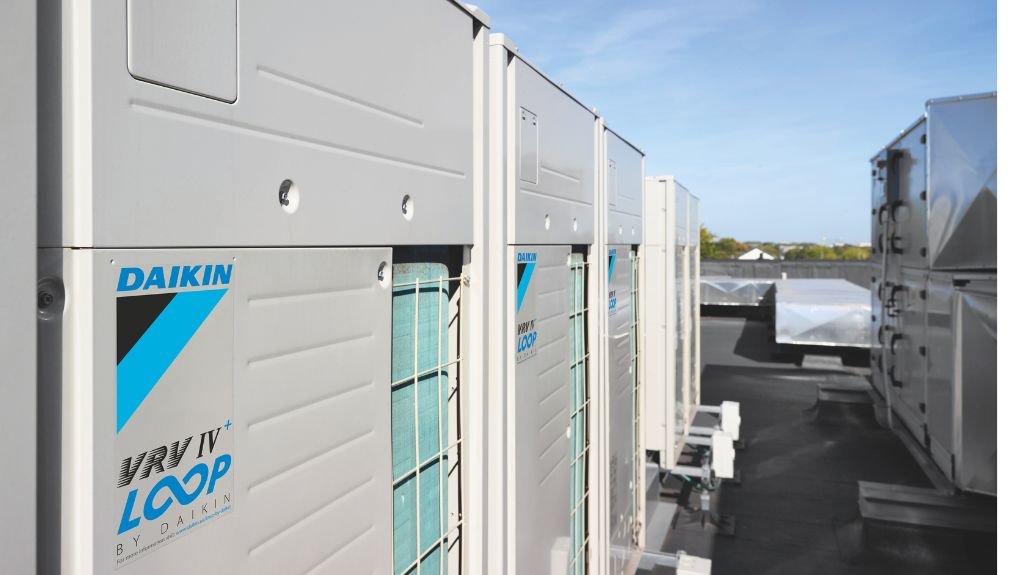
CHALLENGING CLIMATES There is strong demand for energy-efficient HVAC-R systems that can deliver reliable performance in challenging climates


Demand for energy efficient heating, ventilation, air conditioning and refrigeration (HVAC-R) systems is increasing, says air-conditioning manufacturer Daikin South Africa.
Segment manager for industrial and refrigeration products Ian Roelofse says expanding middle-class populations in developing economies and stricter environmental regulations are contributing to this surge.
“There is particularly strong demand for energy efficient systems that can deliver reliable performance in challenging climates,” he states, adding that developing countries’ governments are also increasingly incentivising the adoption of greener technologies.
The company has been advancing lower global warming potential refrigerants, such as R-32, which offer lower environmental impact and improved energy efficiency, compared with previous refrigerants such as R-410A.
It supports customers and contractors through technical guidance, training initiatives and regulatory compliance support to assist with refrigerant transitions.
Roelofse adds that building owners and contractors face several challenges when replacing older refrigerants, including compatibility issues with existing infrastructure and higher upfront costs.
Retrofitting systems often requires redesign work, pipework modifications and technician retraining, particularly when transitioning to next-generation refrigerants.
Another challenge is balancing downtime and business continuity during system upgrades.
Smart Systems
Roelofse says smart HVAC-R technologies and cloud-based systems are improving operational efficiency.
Operators can track performance, identify inefficiencies and adjust operating parameters remotely using connected systems, while facility managers use data visualisation tools to reduce energy consumption and improve operational efficiency.
He adds that Internet of Things (IoT) integration is changing HVAC-R system management, as the systems can continuously communicate performance data, “allowing for automated diagnostics, performance benchmarking and remote access”.
IoT-enabled systems reduce reliance on manual inspections, improve fault detection speed and support proactive maintenance strategies, notes Roelofse.
Predictive maintenance is also becoming increasingly important, with Daikin incorporating sensors, analytics and remote monitoring tools to identify potential failures before they occur.
Analysing operational data and equipment behaviour patterns enables systems to detect anomalies and trigger maintenance alerts, reducing unplanned downtime and lowering service costs.
“For industries reliant on continuous cooling, such as pharmaceuticals or food processing, predictive capabilities are particularly valuable in safeguarding operations,” Roelofse adds.
Meanwhile, integration with building management systems has become essential in modern HVAC-R design.
Daikin systems are designed to communicate with a range of protocols, allowing for centralised control of HVAC-R, lighting and energy systems.
“This integration enables holistic building optimisation, better energy management, and improved operational visibility,” he says.
Additionally, in response to growing demand from data centres and industrial facilities, the company is focusing on precision cooling systems, inverter-driven technologies and modular designs that support scalability and redundancy.
These systems are engineered for continuous operation with minimal energy waste, while innovations in heat recovery and liquid cooling technologies are also gaining traction.
Future developments expected to shape the HVAC-R industry over the next five to ten years include AI-driven optimisation, digital twins, advanced heat pump technologies and expanded IoT ecosystems.
“These developments will redefine how HVAC-R systems are designed, operated, and maintained, with a strong focus on sustainability, resilience and intelligent control,” he concludes.
Article Enquiry
Email Article
Save Article
Feedback
To advertise email advertising@creamermedia.co.za or click here

Projects

Latest Multimedia


Latest News


Showroom
For over 60 years, VEGA has provided industry-leading products for the measurement of level, density, weight and pressure. As the inventor of the...
VISIT SHOWROOM
EIMS is an independent specialised environmental consulting firm offering the full spectrum of environmental management services across all sectors...
VISIT SHOWROOM


Announcements
What's On
Subscribe to improve your user experience...
Option 1 (equivalent of R125 a month):
Receive a weekly copy of Creamer Media's Engineering News & Mining Weekly magazine
(print copy for those in South Africa and e-magazine for those outside of South Africa)
Receive daily email newsletters
Access to full search results
Access archive of magazine back copies
Access to Projects in Progress
Access to ONE Research Report of your choice in PDF format
Option 2 (equivalent of R375 a month):
All benefits from Option 1
PLUS
Access to Creamer Media's Research Channel Africa for ALL Research Reports, in PDF format, on various industrial and mining sectors
including Electricity; Water; Energy Transition; Hydrogen; Roads, Rail and Ports; Coal; Gold; Platinum; Battery Metals; etc.
Already a subscriber?
Forgotten your password?
Receive weekly copy of Creamer Media's Engineering News & Mining Weekly magazine (print copy for those in South Africa and e-magazine for those outside of South Africa)
➕
Recieve daily email newsletters
➕
Access to full search results
➕
Access archive of magazine back copies
➕
Access to Projects in Progress
➕
Access to ONE Research Report of your choice in PDF format
RESEARCH CHANNEL AFRICA
R4500 (equivalent of R375 a month)
SUBSCRIBEAll benefits from Option 1
➕
Access to Creamer Media's Research Channel Africa for ALL Research Reports on various industrial and mining sectors, in PDF format, including on:
Electricity
➕
Water
➕
Energy Transition
➕
Hydrogen
➕
Roads, Rail and Ports
➕
Coal
➕
Gold
➕
Platinum
➕
Battery Metals
➕
etc.
Receive all benefits from Option 1 or Option 2 delivered to numerous people at your company
➕
Multiple User names and Passwords for simultaneous log-ins
➕
Intranet integration access to all in your organisation