BMI revises lithium price forecast upwards amid tightening supply

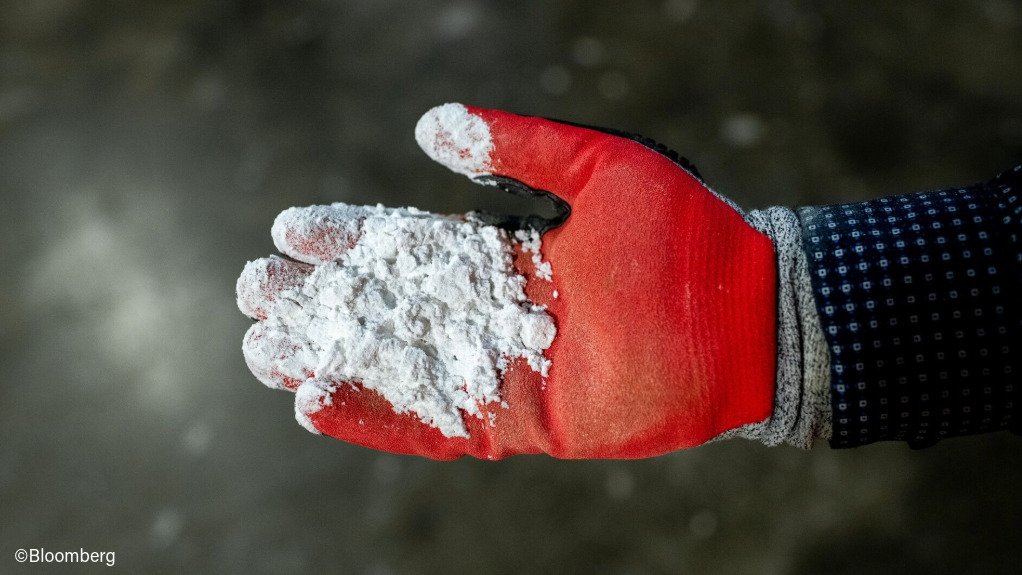



Research firm BMI – a Fitch Solutions Company – is revising up its average lithium price forecast for this year to $17 000/t for Mainland Chinese lithium carbonate 99.5% and $16 700/t for Mainland Chinese lithium hydroxide monohydrate 56.5%.
This follows an earlier out-of-cycle upward revision this year, as prices headed into the year on a firmer footing amid tightening supply expectations, although early-year levels appeared to move beyond what fundamentals alone would justify, given mixed short-term demand signals.
In its latest outlook of lithium prices report, BMI explains that supply-side swings, coupled with potentially stronger demand momentum from low-carbon industries amid the current energy shock, particularly through accelerated electric vehicle (EV) adoption, should support the lithium market's rebalancing after a prolonged period of oversupply.
That said, BMI says swift restarts of previously idled higher-cost capacity during a price recovery could prompt production to ramp up quickly, although a protracted bout of disruptions may still be sufficient to sustain an upward price trajectory.
The year-to-date averages for lithium carbonate and lithium hydroxide for this year stand at $21 892/t and $21 736/t, respectively, as of April 20, with prices rebounding strongly this year as Zimbabwe's export restrictions in late February added to limited visibility over Chinese project restarts, reinforcing structural market tightness and bringing upside risks into sharper focus.
The report explains that January saw lithium carbonate break above $24 000/t and lithium hydroxide above $23 000/t, levels not seen since 2023, supported by robust EV and energy storage demand alongside the continued suspension of Contemporary Amperex Technology’s (CATL)'s Jianxiawo mine, in China.
While a broader market correction throughout February punctured the early-year rally, renewed supply concerns following Zimbabwe's export curbs and post-Chinese New Year restocking helped pare earlier losses.
That said, the market turned more cautious in March as weaker EV demand signals
in China weighed on sentiment, though remained relatively resilient, leaving lithium prices sharply higher by the end of the first quarter, says BMI.
Additionally, the report notes that the US-Iran conflict that erupted in late February bolstered broader demand expectations for low-carbon industries, notably by
potentially providing a stronger EV demand impulse given elevated energy prices, but also revived a more cautious outlook for energy storage system (ESS) projects in the Middle East.
At the same time, the conflict is raising concerns over squeezed margins for lithium producers amid higher energy costs and possible sulphur shortages caused by a tightening chokehold on shipments flowing through the Strait of Hormuz.
“We note that prices remain elevated into April 2026, hovering around year-to-date highs at $25 156/t for lithium carbonate and $24 569/t for lithium hydroxide, as of April 20.”
BMI says prices are likely to stay range-bound in the near term and highly sensitive to geopolitical developments in the Middle East, while the restart of Chinese supply amid robust demand expectations remains the pivotal catalyst for a price retreat, which now looks poised to materialise later than previously anticipated.
On the supply side, market focus will also be centred on regulatory developments in Zimbabwe, where recent reports in early April pointed to a potential thaw in the export suspensions introduced in February.
DEMAND
BMI says still-elevated demand for lithium chemicals for use in EV batteries and ESS is expected to support lithium prices, although the overall outlook for this year remains mixed.
Lithium is poised to be a leading beneficiary of the accelerating adoption of EVs over our forecast period, owing to its crucial role in battery chemistry.
“Our lithium demand expectations are based on our Autos team's EV sales forecasts, and we anticipate global lithium demand to increase by about 4.8% year-on-year in 2026, a notable slowdown from 18.5% year-on-year in 2025”.
BMI says its Autos team forecasts that global passenger EV sales, including battery electric vehicle (BEV) and plug-in hybrid electric vehicle (PHEV) sales, will rise by 6.4% year-on-year this year, following strong growth of 20.0% year-on-year in 2025 and 23.9% year-on-year in 2024, which is likely to place a floor under lithium prices going forward.
Additionally, the report indicates that China will continue to dominate the market, although the country's vehicle sales growth is likely to slow this year as the anti-involution campaign accelerates a shift from volume-led competition towards value and profitability.
BMI explains that policymakers are tightening the framework for competition through amendments to the national Pricing Law to curb below-cost selling, enforced capacity reduction to address excess supply and moral suasion aimed at limiting EV price wars.
According to the China Passenger Car Association (CPCA), China’s retail sales of passenger new-energy vehicles (NEVs) edged down by 14.4% year-on-year in March, marking a third consecutive month of year-on-year decline.
While subdued EV sales early this year and geopolitical uncertainty are contributing to the cautious sentiment, BMI says elevated fuel prices, given the ongoing conflict in the Middle East, are likely to increase interest in more fuel-efficient powertrains, supporting demand for EVs and PHEVs, even in markets where electrification remains at an early stage.
“Notably, our Autos team expects that a sustained period of higher oil prices would improve the running-cost case for EVs across Asia, supporting stronger consumer interest and encouraging governments to accelerate electrification as a long-term solution to imported fuel dependence.
“This would be most supportive for Chinese EV makers, which are aggressively seeking growth in export markets and can compete on price and model breadth, particularly in markets where affordability is a key constraint”.
Apart from the growth in the EV sales segment, the report notes that other trends such as the very likely strong popularity of battery swap stations mean that the actual number of EV batteries manufactured is likely to exceed the number of EVs sold.
Outside of the autos sector, the report says utility-scale batteries, portable electronics and e-mobility devices (e-bikes) will also contribute to lithium demand.
Notably, rising ESS deployment is expected to fuel support to lithium consumption and is poised to become the major growth driver for lithium demand in the coming years.
“Our Power & Renewables team anticipates that the current energy crisis will unlock faster permitting for renewable projects and accelerated deployment of energy storage
Infrastructure,” says BMI.
That said, it notes that the sharp rise in battery metal prices, particularly lithium, seen in early 2026 is likely to increase cost pressures for BESS manufacturers.
“Overall, our Power & Renewables team forecasts global BESS capacity to expand from approximately 325 GW this year to around 1 270 GW by 2035, representing a near fourfold increase over the period”.
The report says Mainland China and the US will remain the dominant markets, together accounting for an estimated 78% of global installed capacity this year and about 69% by 2035, as deployment broadens to other regions.
In Mainland China, BESS capacity is forecast to rise from 193.5 GW this year to about 609 GW by 2035, growing at an average annual rate of 13.6%, supported by the introduction of capacity payments for standalone storage in January and a structural shift from mandate-driven deployment towards market- and reliability-driven investment.
In the US, BMI adds that battery storage capacity is forecast to rise from about 61 GW this year to 271 GW by 2035, driven by grid reliability needs, surging demand from AI data centres and population growth, with the extension of investment tax credits for BESS through to 2032 under the One Big Beautiful Bill Act providing near-term policy visibility.
CLEAN ENERGY
On the supply side, BMI forecasts the lithium market to remain in surplus this year, owing to slower demand growth as EV sales lose momentum and to a still-robust global project pipeline.
“That said, we do not rule out the possibility of the surplus narrowing sharply this year and the market moving into deficit, given lagging supply restarts and that the current energy shock could provide a stronger EV demand impulse than we currently anticipate”.
BMI says it expects global lithium production to grow by 13.2% year-on-year this year, driven mostly by Australia and Mainland China.
“We note that, while higher energy costs and a possible sulphur shortage could
pressure miners' margins, the recent recovery in lithium prices should still support output growth, including a potential restart of previously mothballed higher-cost operations, notably in Australia.”
In the global race to produce and acquire critical raw materials, BMI says Asia will maintain its leading role in the absolute production of lithium concentrates through Australia, which is expected to remain the world's top producer, bolstered by its strong projects pipeline.
Additionally, Mainland China will continue to import lithium concentrates for its battery industry while investing to expand its domestic production capacity and securing the lithium supplies by developing projects overseas.
Chile is also set to remain an important global producer of lithium given its substantial lithium reserves, but we anticipate its share of production to decline by 2035, as its rate of expansion falls behind other markets.
Overall, BMI says the share of the top three lithium producers, Australia, China and Chile, is forecast to decline over 2026 to 2035, given the ramp-up in output from relatively new market players, including Argentina and Zimbabwe.
In Argentina, the report says anticipated growth in the lithium sector looks promising as several pivotal projects begin operations, while Zimbabwe will pave the way for lithium mine advancement in Africa in the coming years.
“Overall, the current project pipeline suggests that global lithium mine production is
expected to double from 2026 to 2035.”
As for the lithium refining market, the Asia-Pacific and Latin America regions are expected to dominate the supply of lithium chemicals.
Lithium extracted from hard-rock mines is converted into lithium concentrate, which is further processed into lithium hydroxide or lithium carbonate.
Conversely, lithium from brine deposits is typically processed directly into lithium chemicals, predominantly in the form of lithium carbonate, which can subsequently be converted into lithium hydroxide.
BMI notes that, according to the International Energy Agency (IEA), conversion of lithium carbonate to hydroxide represents about 20% of the current hydroxide supply and is led by China.
Notably, BMI says China dominates both lithium carbonate and lithium hydroxide production, with Argentina and Chile also among the top lithium chemicals producers, mostly extracting lithium from brine.
As Western markets seek to reduce key-man risk in China's refined lithium supply, BMI says Australia stands to benefit by introducing domestic refineries and processing plants close to its lithium mines.
The report points out that the Australian Office of the Chief Economist estimates that Australia could hold 9% of global lithium hydroxide production by 2027.
“That said, Albemarle's decision to idle the remaining operating Train 1 at its Kemerton lithium hydroxide processing plant in Western Australia in February 2026 reinforces, yet again, the challenges faced by ex-China hard-rock lithium conversion players, presenting downside risks to the outlook”.
LONG-TERM OUTLOOK
Looking beyond this year, BMI says it expects the lithium market to remain in surplus through to 2029, before tipping into deficit over 2030 to 2035.
BMI says it anticipates longer-term lithium supply growth to slow, largely owing to underinvestment and project delays throughout the prolonged period of oversupply and depressed prices over 2024 to 2025.
“We also note that as advancements in battery technologies progress and select types gain precedence in usage, this precipitates corresponding fluctuations in the demand for lithium chemicals, notably lithium carbonate and lithium hydroxide.”
Lithium hydroxide is particularly required for high-nickel cathodes used in nickel manganese cobalt (NMC) batteries, while lithium carbonate is extensively used in lithium iron phosphate (LFP) batteries, which are gaining popularity owing to their safety and longevity.
BMI notes that rising adoption of the LFP batteries at the expense of NMC batteries is likely to exert downward pressure on lithium hydroxide prices in the mid to long-term.
According to the IEA, in 2024, LFP batteries accounted for 50% of EV sales compared to 41% in 2023 and 38% in 2022, mainly driven by adoption in Mainland China.
“Beyond lithium-ion chemistries, the adoption of sodium-ion batteries, which do not contain lithium, may pose risks to long-term lithium demand, should their development and potential adoption progress further,” says BMI.
Article Enquiry
Email Article
Save Article
Feedback
To advertise email advertising@creamermedia.co.za or click here
Research Reports

Projects

Latest Multimedia

Latest News


Showroom
Multotec, recognised industry leaders in metallurgy and process engineering help mining houses across the world process minerals more efficiently,...
VISIT SHOWROOM
ISO-certified Condra manufactures overhead cranes, portal cranes, cantilever cranes and crane components: hoists, drives, end-carriages, brakes and...
VISIT SHOWROOM

Announcements
What's On
Subscribe to improve your user experience...
Option 1 (equivalent of R125 a month):
Receive a weekly copy of Creamer Media's Engineering News & Mining Weekly magazine
(print copy for those in South Africa and e-magazine for those outside of South Africa)
Receive daily email newsletters
Access to full search results
Access archive of magazine back copies
Access to Projects in Progress
Access to ONE Research Report of your choice in PDF format
Option 2 (equivalent of R375 a month):
All benefits from Option 1
PLUS
Access to Creamer Media's Research Channel Africa for ALL Research Reports, in PDF format, on various industrial and mining sectors
including Electricity; Water; Energy Transition; Hydrogen; Roads, Rail and Ports; Coal; Gold; Platinum; Battery Metals; etc.
Already a subscriber?
Forgotten your password?
Receive weekly copy of Creamer Media's Engineering News & Mining Weekly magazine (print copy for those in South Africa and e-magazine for those outside of South Africa)
➕
Recieve daily email newsletters
➕
Access to full search results
➕
Access archive of magazine back copies
➕
Access to Projects in Progress
➕
Access to ONE Research Report of your choice in PDF format
RESEARCH CHANNEL AFRICA
R4500 (equivalent of R375 a month)
SUBSCRIBEAll benefits from Option 1
➕
Access to Creamer Media's Research Channel Africa for ALL Research Reports on various industrial and mining sectors, in PDF format, including on:
Electricity
➕
Water
➕
Energy Transition
➕
Hydrogen
➕
Roads, Rail and Ports
➕
Coal
➕
Gold
➕
Platinum
➕
Battery Metals
➕
etc.
Receive all benefits from Option 1 or Option 2 delivered to numerous people at your company
➕
Multiple User names and Passwords for simultaneous log-ins
➕
Intranet integration access to all in your organisation