



Strict liabilities – who is responsible?

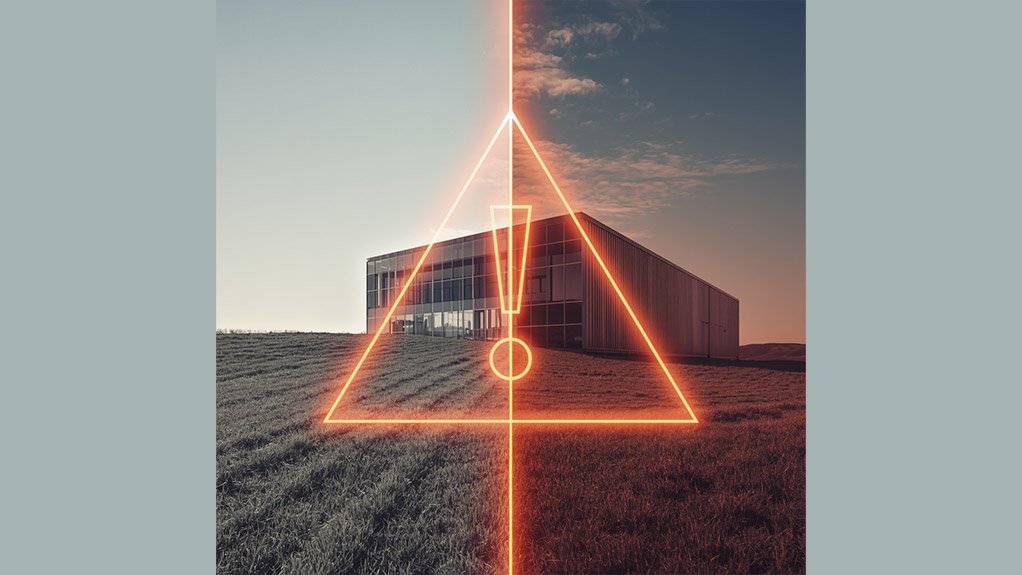


Understanding Public Liability Insurance
Public Liability insurance is designed primarily to provide indemnity to the Insured in respect of legal liability for accidental injury to, or damage sustained by, third parties for which the Insured is legally responsible.South African law is based on Roman-Dutch law. However, it has been adapted and amended through statutes, legislation, and case law to suit South Africa’s particular circumstances and evolving risk environment.
Liability for incidents and accidents involving members of the public arises from the branch of common law known as the law of delict. A delict occurs when a person breaches a legal duty owed to another party. Every person is required to act in a manner that does not cause bodily injury to, or damage to the property of, another person. A breach of this duty may constitute negligence.
A classic definition of negligence reads:
‘Negligence is the omission to do something which a reasonable man, guided upon those considerations which ordinarily regulate the conduct of human affairs, would do, or doing something which a prudent and reasonable man would not do’ (Blyth v Birmingham Waterworks Co [1856]).
The evolution of strict liability
As society developed, mankind introduced motorcars, railways, and various other industrial activities that significantly increased exposure to risk. With the ever-increasing world population, these risks are likely to escalate further.
Governments and the courts took notice of this phenomenon, which ultimately gave rise, in practice, to liability based on risk rather than fault alone — commonly referred to as strict liability. Under strict liability, fault or negligence may no longer be a substantive requirement for liability to arise.
Today, several activities fall within this category. In the engineering insurance sector of the short-term insurance market, two particularly important examples of strict liability are fire risks and support risks, each of which is discussed below.
Strict liability: fire risks in rural or densely populated areas
Liability for damage caused by the spreading of fire should be carefully considered as a major risk factor when underwriting contracts in rural or densely populated areas, whether under specific or annually renewable works and liability policies, as well as Plant All Risks policies.
The National Veld and Forest Fire Act, 1998 — noting that the National Veld and Forest Fire Amendment Act, 2023 has been promulgated (signed and published), but has not yet been brought into operation — makes it a criminal offence for the owner or occupier of any land to fail to create firebreaks or to take adequate steps to contain or extinguish fires originating on that land.
Section 34 of the National Veld and Forest Fire Act, 1998 states:
‘(1) If a person who brings civil proceedings proves that he or she suffered loss from a veldfire which — (a) the defendant caused; or (b) started on or spread from land owned by the defendant, the defendant is presumed to have been negligent in relation to the veldfire until the contrary is proved, unless the defendant is a member of a fire protection association in the area where the fire occurred.
(2) The presumption in subsection (1) does not exempt the plaintiff from the onus of proving that any act or omission by the defendant was wrongful.’
This effectively creates a presumption of negligence, placing the burden on the landowner or occupier to prove otherwise.
Consort’s Public Liability insurance policy provides cover for loss or damage caused by fire, up to the limit of indemnity stated in the policy schedule.
Strict liability: support risks of property, land, or buildings
Construction Public Liability policies generally exclude claims arising from, or in connection with:
• damage to any property, land, or buildings caused by vibration; or
• the removal or weakening of support to such property, land, or buildings.
These risks remain insurable, but should be separately insured under a Removal of Support Liability policy, with each risk individually underwritten according to the specific exposure involved. Such specialist cover is available from Consort.
To find out more about strict liabilities, contact Consort today.
Consort Technical Underwriting Managers
Article Enquiry
Email Article
Save Article
Feedback
To advertise email advertising@creamermedia.co.za or click here
Research Reports

Projects

Latest Multimedia
Latest News
Showroom
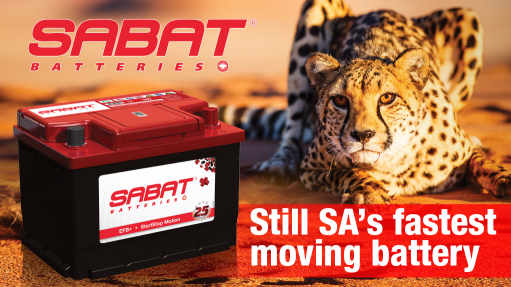
From batteries for boats and jet skis, to batteries for cars and quad bikes, SABAT Batteries has positioned itself as the lifestyle battery of...
VISIT SHOWROOM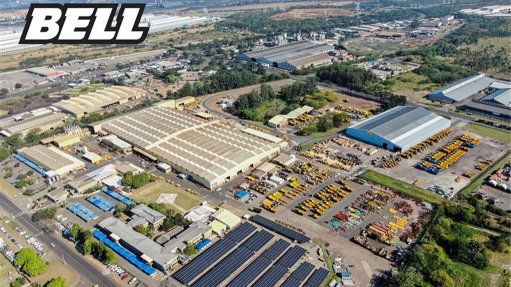
As one of South Africa's leading manufacturers, Bell Equipment distributes and exports its wide range of heavy equipment globally to mining,...
VISIT SHOWROOM
Announcements
What's On
Subscribe to improve your user experience...
Option 1 (equivalent of R125 a month):
Receive a weekly copy of Creamer Media's Engineering News & Mining Weekly magazine
(print copy for those in South Africa and e-magazine for those outside of South Africa)
Receive daily email newsletters
Access to full search results
Access archive of magazine back copies
Access to Projects in Progress
Access to ONE Research Report of your choice in PDF format
Option 2 (equivalent of R375 a month):
All benefits from Option 1
PLUS
Access to Creamer Media's Research Channel Africa for ALL Research Reports, in PDF format, on various industrial and mining sectors
including Electricity; Water; Energy Transition; Hydrogen; Roads, Rail and Ports; Coal; Gold; Platinum; Battery Metals; etc.
Already a subscriber?
Forgotten your password?
Receive weekly copy of Creamer Media's Engineering News & Mining Weekly magazine (print copy for those in South Africa and e-magazine for those outside of South Africa)
➕
Recieve daily email newsletters
➕
Access to full search results
➕
Access archive of magazine back copies
➕
Access to Projects in Progress
➕
Access to ONE Research Report of your choice in PDF format
RESEARCH CHANNEL AFRICA
R4500 (equivalent of R375 a month)
SUBSCRIBEAll benefits from Option 1
➕
Access to Creamer Media's Research Channel Africa for ALL Research Reports on various industrial and mining sectors, in PDF format, including on:
Electricity
➕
Water
➕
Energy Transition
➕
Hydrogen
➕
Roads, Rail and Ports
➕
Coal
➕
Gold
➕
Platinum
➕
Battery Metals
➕
etc.
Receive all benefits from Option 1 or Option 2 delivered to numerous people at your company
➕
Multiple User names and Passwords for simultaneous log-ins
➕
Intranet integration access to all in your organisation

