Platinum investment demand broadening to minor PGM metals, SFA (Oxford) points out

SFA (Oxford) CEO Henk de Hoop interviewed by Mining Weekly's Martin Creamer. Video: Darlene Creamer.
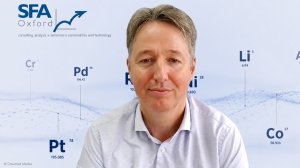


JOHANNESBURG (miningweekly.com) – The strong ongoing investment demand for platinum is broadening to the minor platinum group metals (PGMs) such as ruthenium and iridium, SFA (Oxford) CEO Henk de Hoop pointed out on Wednesday June 3.
Questioned by Mining Weekly on the prospect of platinum investment demand remaining strong, De Hoop noted that up to half of some of the ruthenium imports into China had been for investment purposes rather than industrial demand.
Iridium is also being stocked away, and part of that might be strategic, part of it also the private sector seeing it as an investment opportunity, De Hoop added. ((Also watch attached Creamer Media video.)
“Probably the upside will be more limited as we start to move down, but I'm not necessarily so convinced that if platinum prices weaken, we're going to see a similar flood of platinum investment bonds coming back to the market, as has been seen in the past, which is good because it basically manages liquidity a bit better than what has happened in the past.
“Historically, when platinum prices would run up, for example, we would see Japanese bar buying ramping up quite enthusiastically, especially at certain price points in yen. In our last visit to Japan, it was also clear that because the gold price kept on rising, people who bought platinum investment bars did not come back and sell them on any dip in platinum prices.
“They've kept on buying on the way up, and we think a part of that has to do with the very uncertain environment out there. Direction is very difficult to read. It's also nervousness about stock markets, nervousness about global political events.
"There's a lot of stress from a political level, and we sense that it could well be that the investment angle for platinum is getting stronger and stronger, and we're not going to get this ride down to the same extent as what we had in the past. When platinum prices would weaken, it would almost get accelerated down with a lot of bars ending up being thrown back into the market and providing lots of liquidity.
“The big drainer of liquidity, I would say, would have been China over the last two years, where investment bar demand is very strong. It's a diversifier. Because of the gold bar demand being very strong, it helps to diversify holdings. But it was also easy to access. The manufacturers were putting a lot more platinum bars on display, and we heard stories there of wealthy individuals having hundreds of kilos of platinum bars stacked away at home.
"We're not so convinced necessarily that they'll rush back to the market, either, because remember the investment opportunities in China, particularly the housing market, have weakened dramatically, and people are very nervous about that. The stock markets are very volatile and have not been necessarily that good consistently for the Chinese,” De Hoop explained.
The recent SFA (Oxford) Platinum Lectures 2026 had record attendance. “We had to actually stop registrations at one point, because we were going beyond the lecture hall capacity", and this was followed by the vibrant London Platinum Week.
The high attendance arose against the background of “a lot of buzz, a lot of positiveness, partly obviously because the prices were pretty good as a background, but also I think because there was a broad range of market participants. We saw a lot more bankers and financial people there and there was more junior activity as well.”
Mining Weekly: What do you foresee being spotlighted at the upcoming Shanghai Platinum Week in China?
De Hoop: First of all, the Shanghai Platinum Week is a really valuable conference. It's organised with the help of the World Platinum Investment Council. It's a combination of presentations and lectures, followed by site visits. We have two people going there this year again because I think it's an increasingly important conference on the agenda. It’s very well attended by, particularly, the Chinese recyclers, refineries, consumers of PGMs. There's a lot of information shared also by the car sector on what the trends are on emission loadings, and it's important because China is the largest car market in the world. There's very fast penetration of battery electric vehicles, but there's still a very substantial car sales fleet that consumes PGMs and China is becoming the most important exporter of cars in the world. There's normally quite open information sharing about what the trends are, what will the new legislation – China Five, China Six, and even China Seven – look like. What we also normally get is updates on progress on the hydrogen plans in China, and they are normally also quite good in sharing information. The site visits are normally very useful as well. I've seen that quite a few more South Africans will be going this year because, first of all, China is the most important market for PGMs and particularly its industrial demand is quite important, and we see a lot of the miners going there now as well. It’s a great conference for information sharing in one of the most important markets we have for PGMs. It's an important event in the PGM calendar.
To what extent is green hydrogen back on the radar and to what extent can this drive platinum demand?
It's a question we get a lot and you're right, after the initial enthusiasm, say 2021, 2022, things have slowed down a bit, because reality has hit. Green hydrogen technology is not cheap, and it needs to be subsidised to get off the ground. As there is more demand on government budgets, be it defence, be it supporting their economies as they're struggling through the oil crises, it is more difficult to get stimulus measures committed to, and longer-term projects committed to, but industrial clients are taking a stab at this, although we're seeing a lot of projects being cancelled. At the same time in Europe, some of the projects that were committed to two to three years ago, are very close to getting commissioned, and that gives hope, combined with the fact that the dependency on oil and gas imports, for example, in Europe and China, in particular, is a weak point, and it's being recognised as a weak point, and it's hence the green hydrogen, or the hydrogen option is getting an extra stimulus in those particular regions. In the US, progress is very weak because of the government there not necessarily being pro greening the economy at all. But in China, and that’s probably now your biggest hope, hydrogen’s formally in the Five Year Plan and we’re seeing lots of hydrogen projects being rolled out across provinces. China's also been probably the most successful when a new technology emerges on the horizon, getting that scaled up, getting the cost down, and being able to lead the world, as they did in solar panels, windmills, electric vehicles, in making a technology affordable and technically capable of being executed. The upside for PGMs is the big question because the volume of PGMs going into a green hydrogen ecosystem is very much driven by the mobility sector, so we need cars and we need trucks. In cars, it's probably more and more difficult to see, in our view, that cars will be a volume game, and it's mainly because the battery technology is getting so good and is so scaled up ahead of the hydrogen car side that it's difficult to see how that can really scale equivalently. In China as well, we should not forget that their heavy duty trucks are getting electrified at this stage as well and getting hydrogen into the heavy duty side is still our big opportunity. China is going to give the example there again, where they're putting up big corridors where hydrogen will be available for heavy duty trucking. There are lots of heavy duty trucks being built as well, which would be good for platinum, because some of these trucks will take two to three ounces of platinum each, and if it will succeed somewhere, it will be in China, and that's the one we follow closely, and that's also where I think at the next Shanghai Platinum Week, there will be quite a bit of attention given to how will this work out and how fast will China actually ramp up in being able to show the world that the hydrogen economy could be led by China.
Will automotive demand still be platinum’s biggest demand driver in ten years’ time?
First of all, I guess, just to highlight, platinum is probably in a stronger position than the other two metals, partly because automotive is currently not the dominant demand sector. It's an important demand sector. It's about 40% or so, and in the years ahead that will fade a bit, partly because of electrification of the fleet, but it's still going to be probably around a third or so of demand ten years from now. Jewellery is still very important, but for platinum, and particularly the industrial, diversity of demand is very important, and longer term as well, the new demand sector coming up, hydrogen, is an important growth factor as well, although the scale of that is still very uncertain. In the case of palladium and rhodium, they will both still be very important in ten years' time and I think despite all the electrification, we should not forget that combustion engines will still be sold in the millions and millions ten years from now, 15 years from now. They're not gone, but I think we might have seen peak combustion engine a couple of years back. It still depends on overall global car sales holding up, and one of the slides we've also shown at one of our events was that if China's export model, whereby they're currently trying to get rid of their overcapacity by exporting cheap cars into the rest of the world – South Africa is a clear case of that, and we see that in the UK here as well, lots of Chinese models on the road. It does mean that at those lower price points people can afford a car early, or people can continue to afford a car, and we think in time, though, that export boom from China – yes, it will displace some Western cars – but it could also lift overall global car sales. We should not forget as well, lots of those cars – probably about two-thirds at this stage in a combination of combustion engines and hybrids – will have catalysts, will comply with local legislation, and hence it will still be good for PGM demand if China's export boom leads to higher car sales overall.
Tell us about the main insights that the SFA (Oxford) Platinum Standard 2026 provided.
First, we gave a bit of a history of how did we get to these prices, and we shouldn't forget this has been a very politically wild year behind us. We started off January 25 with the tariffs, we had the gold price starting to run that pulled up some of the first legs of platinum. Then there were threats of tariffs on platinum going into the US, so a lot of platinum moved into the US, then the Chinese woke up. There was a jewellery boom happening, we thought, because a lot of platinum jewellery was being manufactured. In the months following, that didn't translate into sales, but it did suck in at that point in time a lot of additional platinum into China. It then resulted after that in a second run up when there were particular Chinese announcements around VAT on imports of platinum via the Shanghai Gold Exchange. They had had an exemption for two decades, and that got removed. Then we had the announcement, finally, after one-and-a-half, two years, of the Guangzhou Futures Exchange, which traded very large volumes in December last year that pushed prices to record levels as well. We then had the Iran war starting up, we had some of the tariffs being taken away again, and these announcements and these very specific events ended up rushing the gold price up. Platinum and palladium and rhodium got sucked up into it as well. There was a better background picture being painted because of battery electric vehicle (BEV) sales being disappointing. So, all in all, it ended up with a whole range of kicks that helped the PGM market to really get running. What we were trying to highlight in the Platinum Standard was, okay that’s fine, but we normally look at what’s going to happen in 2026, we should not forget, and that’s what we’re trying to remind people, that a lot of exposure of particularly palladium and rhodium is to car sales. So, if car sales get affected, palladium and rhodium demand will get affected. It’s 85% to 90% of their end demand, and oil crises like the one underway now are normally not good for car sales. Historically, we’ve showed it at one of the presentations we did for Heraeus in Platinum Week as well. All the past oil crises led to lower car sales, and that's where we say we have to be cautious. This is not a time to think that these platinum prices are here forever, or these PGM prices are here forever. There are risks developing in the economic pictures. Growth rates are being adjusted downwards on macroeconomics, in particular in Japan, in Europe, which is very weak. US growth rates are being downgraded, and that impacts sentiment, it impacts people's willingness to go out and buy a new car, and that’s where we cautioned a bit in the Platinum Standard. At the same time, it's very difficult to predict direction at the moment based on fundamentals alone. There are some big crises out there, still. We haven't solved the Hormuz crisis. We still have Greenland occasionally popping up. We have Cuba, Panama and the NATO crisis to deal with, and we still have the Ukraine war as well. Any of these in either direction will have quite an impact on gold and PGM prices, and hence it's difficult to predict the next leg up or leg down on fundamentals alone.
What were the main takeaways from the London Platinum Week?
There were a lot of questions on the impact of Hormuz and what that could do, but I would say it was not necessarily seen as a really big risk factor for PGMs. At the same time, there was a lot of discussion on recycling. At our lectures, we had a presentation on recycling by one of the biggest recyclers in the world, and they gave quite optimistic views on how recycling had recovered on the back of high prices. There were concerns by some of the audience that the numbers were a bit too high, and there was a lot of debate on where we are with recycling. Recycling was very poor in 2023 and 2024 after the peak scene in 2021, which some believed was the last peak we would ever see. Others are not so convinced, and there will be a strong recovery, and it's important because it will particularly be influential on the palladium and rhodium supplier situation. As we see penetration of BEVs moving ahead, there are questions about how big the upcoming recycling supply is because it will probably set the scene for palladium and rhodium rather than primary supply. One of the biggest debates was where recycling is going to be driven to, and whether that is sustainable, even if prices weaken owing to, say, a slightly weaker car sales outlook on the back of the Strait of Hormuz.
Finally, what’s the big takeaway?
I think from outside, yes, we have great PGM prices, not all of it explained by fundamentals in our view. I do think that over the last one-and-a-half to two years, there are a couple of things that have provided PGMs with a firmer floor than just demand. Firstly, critical minerals, the geopolitical beak-ups, have emphasised again how scarce PGMs are, and it's not only platinum, palladium, rhodium, but particularly ruthenium and iridium, as they're getting more featured in, for example, the AI industry and the data centre build-outs, the hydrogen industry. The recognition of those metals being very important, very scarce, is, I think, helping, because we’re seeing more countries focusing on maybe we should stack away some of these metals and some companies building larger inventories than what they have historically done. Secondly, I think the increased stickiness of flows of metals that we've seen, and that’s partly because of tariff threats, so metal moving to certain exchanges, also again emphasising this critical metals theme. Also, if we have these metals on shore, the emphasis on keeping them onshore. So, there will probably be further restrictions imposed on recycling industry flows and compulsory use of recycled ounces in products going forward in Europe, for example, and that could increase the stickiness again as well. That should give a firmer floor to PGM prices. What we also should remember, though, is we have one of the most important channels for commodity transfers, Hormuz, closed still. That's been going on for a while. It's affecting not only oil and energy products, it's affecting the fertiliser sector, it's affecting aluminium, so inflation threats are building up. There are certain industries that are starting to shut down because of lack of access to raw materials or too pricey raw materials. There’s a big issue developing in the sulphur markets, and as a result, we do believe that that is not good, obviously, for economic growth prospects. That lasting longer will eventually also impact PGMs, despite the positive reasons why the floor prices are probably going to be stronger or at higher levels than what we've seen in the past. So it's, I guess, a word of caution. We're having good prices now. It is important to keep in mind that the biggest demand driver is still catalysts for combustion engine cars loaded with PGMs, and if car sales get impacted by the Hormuz crisis increasingly, and we've seen the first downgrades coming through, that is not necessarily great news for PGM markets, and one should be cautious and keep a rein in on costs in the industry as well, as far as you can, to make sure that you can get through the tougher times as well if they come again.
Article Enquiry
Email Article
Save Article
Feedback
To advertise email advertising@creamermedia.co.za or click here

Projects

Latest Multimedia

Latest News
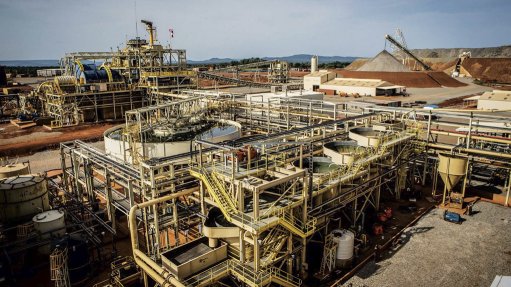
Showroom
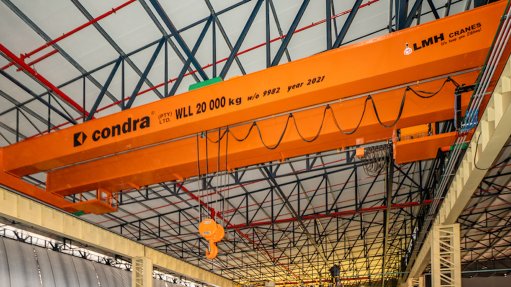
ISO-certified Condra manufactures overhead cranes, portal cranes, cantilever cranes and crane components: hoists, drives, end-carriages, brakes and...
VISIT SHOWROOM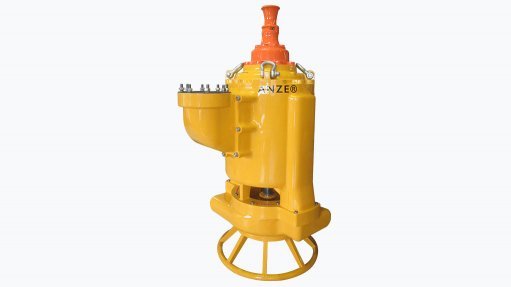
Goodwin Submersible Pumps Africa is sole distributors for Goodwin electrically driven, submersible, abrasion resistance slurry pumps.
VISIT SHOWROOM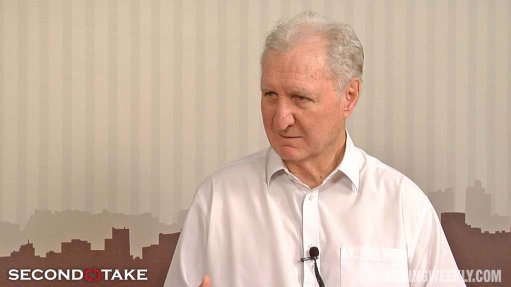


Announcements
What's On
Subscribe to improve your user experience...
Option 1 (equivalent of R125 a month):
Receive a weekly copy of Creamer Media's Engineering News & Mining Weekly magazine
(print copy for those in South Africa and e-magazine for those outside of South Africa)
Receive daily email newsletters
Access to full search results
Access archive of magazine back copies
Access to Projects in Progress
Access to ONE Research Report of your choice in PDF format
Option 2 (equivalent of R375 a month):
All benefits from Option 1
PLUS
Access to Creamer Media's Research Channel Africa for ALL Research Reports, in PDF format, on various industrial and mining sectors
including Electricity; Water; Energy Transition; Hydrogen; Roads, Rail and Ports; Coal; Gold; Platinum; Battery Metals; etc.
Already a subscriber?
Forgotten your password?
Receive weekly copy of Creamer Media's Engineering News & Mining Weekly magazine (print copy for those in South Africa and e-magazine for those outside of South Africa)
➕
Recieve daily email newsletters
➕
Access to full search results
➕
Access archive of magazine back copies
➕
Access to Projects in Progress
➕
Access to ONE Research Report of your choice in PDF format
RESEARCH CHANNEL AFRICA
R4500 (equivalent of R375 a month)
SUBSCRIBEAll benefits from Option 1
➕
Access to Creamer Media's Research Channel Africa for ALL Research Reports on various industrial and mining sectors, in PDF format, including on:
Electricity
➕
Water
➕
Energy Transition
➕
Hydrogen
➕
Roads, Rail and Ports
➕
Coal
➕
Gold
➕
Platinum
➕
Battery Metals
➕
etc.
Receive all benefits from Option 1 or Option 2 delivered to numerous people at your company
➕
Multiple User names and Passwords for simultaneous log-ins
➕
Intranet integration access to all in your organisation