South Africa can become strong value-add minerals player again, PyroFuZA points out

PyroFuZA spells out that it's possible for South Africa to put its own distinctive correct measures in place that will enable this country to, once again, become a strong player within the value-add ecosystem, amid different measures being applied at different stages of advancement so that long-term momentum is assured.
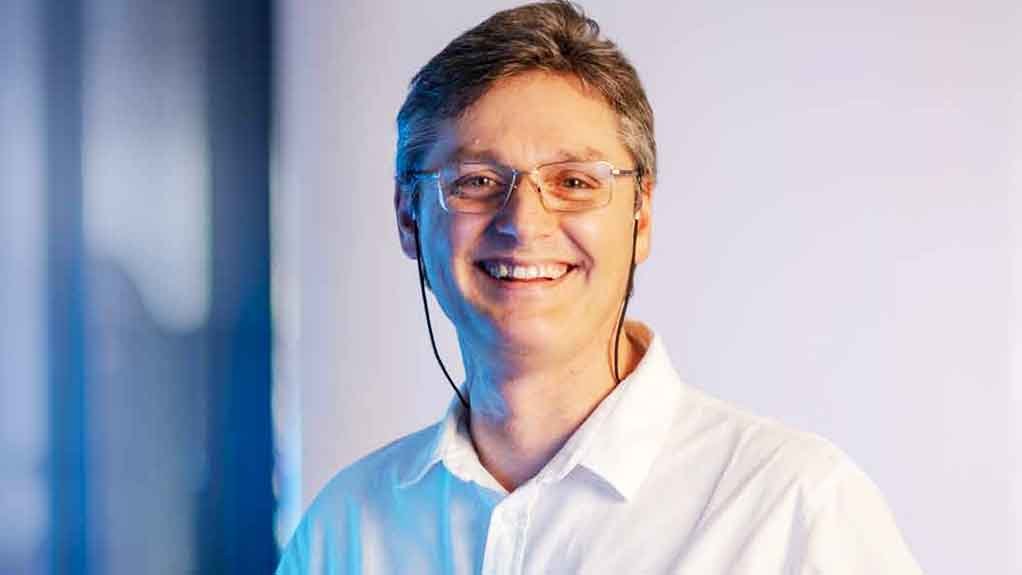
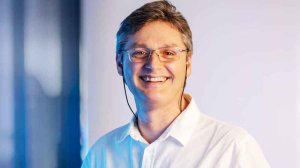
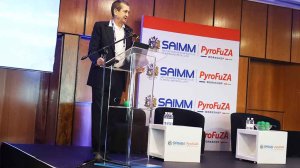
PyroFuZA's Dr Johan Zietsman.
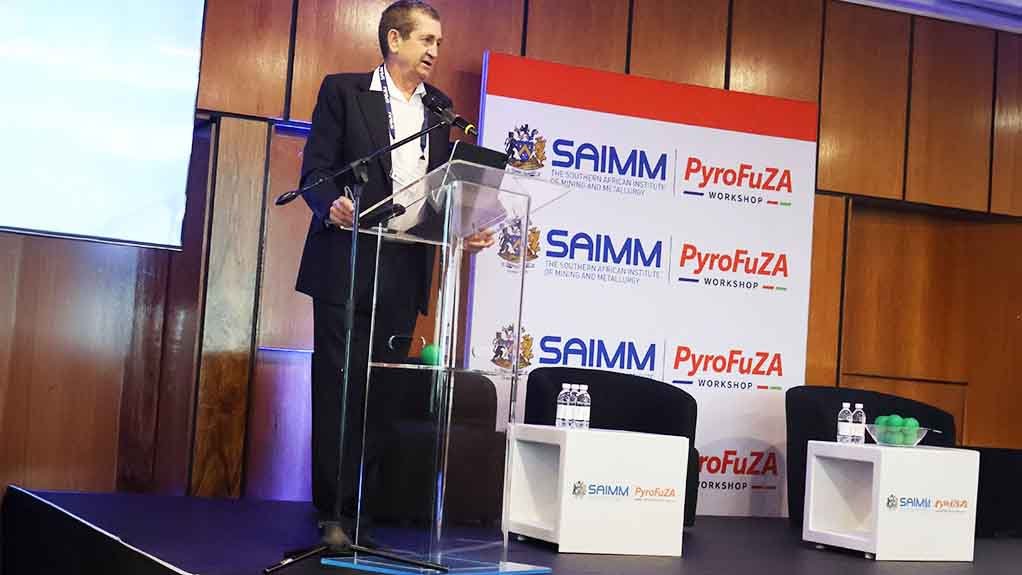
PyroFuZA's Bernard Swanepoel.


JOHANNESBURG (miningweekly.com) – Look out for PyroFuZA. Those eight letters have the potential to make best use of South Africa’s natural resources and restore South Africa’s value-adding power, which, in turn, can help to foot the bill for the innovative rebuilding of this country’s economy.
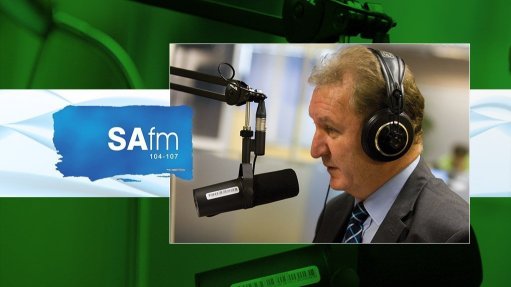
PyroFuZA spells out that it's possible for South Africa to put its own distinctive correct measures in place that will enable this country to, once again, become a strong player within the value-add ecosystem, amid different measures being applied at different stages of advancement so that long-term momentum is assured. (Also watch attached Creamer Media video.)
Pointed out is that, even now, South Africa is not totally bereft of momentum, and will not have to restart from scratch, but needs a stand-together approach, a same-direction aim, and a new-foundation-laying agenda.
While PyroFuZA acknowledges that “the needle has to be threaded very carefully”, the eight letters also come with the conviction that both internal and external win-win synergies can be turned to positive account if conscientiously sought.
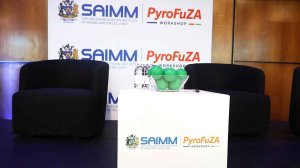
Creamer Media’s Engineering News & Mining Weekly spoke to PyroFuZA stalwart Dr Johan Zietsman and mining luminary Bernard Swanepoel following the Southern African Institute of Mining and Metallurgy’s Pyrometallurgy International Conference 2026, which shone a bright spotlight on the future of the South Africa’s pyrometallurgical industry, which spans the worlds of iron and steel, ferroalloys, platinum group metals and base metals.
Mining Weekly: The conference opened with something quite unusual — a full-day workshop called PyroFuZA, bringing together CEOs, government officials, and senior industry figures behind closed doors. What was the purpose of that day, and why was it necessary?
Zietsman: Thanks for the opportunity to chat about this, which I think is essential to our country and our economy. We are blessed with minerals of great value in the ground, and it has been the platform for building our economy for the previous 100 years. But in the last 30 or so years, that has all been in decline, and there are geopolitical issues at play. There are local issues at play. It's by no means a simple matter, but it's a fact that this industry and the value addition of these minerals that we have can pay the bills for rebuilding our economy, again to be leading in Africa and in some respects leading in the world. I think we owe it to the future generations to do this and not just accept the direction in which our industry is going, and that's why we invited industry leaders, government participation. In my view, one company cannot solve this on its own. As other countries operate in national unity in some respects, we need to do something similar in South Africa. This industry specifically is fragmented. There is no unified effort to build the common infrastructure that we need, and that's a great opportunity. The decline that we are seeing does not need to continue. It's a choice, and rebuilding the industry is also a choice, but it's a choice that we have to make together.
South Africa has lost more than two-million tonnes of smelting capacity since 2014. At least 30 of 59 chrome furnaces are on care and maintenance or closed. Last year South Africa exported 24-million tonnes of chrome ore while producing less than one-million tonnes of ferrochrome, against nearly five-million tonnes of installed capacity. How did this happen?
It's a structural decline. If we consider the major ferrochrome producers in the world, it's South Africa, Kazakhstan, and China. Our energy cost is basically double that of our competitors, and we have not sustainably renewed our energy generation capacity. This means that we have come to a point where it's basically impossible for us to compete, because energy is such an important input, the main operating cost input into producing ferrochrome. If you cannot compete on energy, you cannot compete on ferrochrome, and that's something that we need to fix. Part of the argument is that our smelters are old and inefficient, and that's perhaps part of the argument that we can make. But we cannot buy efficiency improvements, close the gap of 100% energy price. There are structural things in our economy, logistics and rail capacities are literally in decline, whereas one of the key investment points of a country like Kazakhstan was to increase logistics. Then, the third point I think is fragmentation. We do not collectively improve structural matters as an industry, so each company basically bargains on its own or tries to improve its own energy situation, logistics situation, et cetera, and we are losing many opportunities in this way by being fragmented.
A striking point was made at the workshop about the thermodynamic floor — the argument that there is a minimum energy required to smelt an ore, a minimum set by physics, that no amount of technology can reduce. What does that mean for the debate about modernising the industry?
I think the analogy that one of our colleagues in industry made is if you want to boil water for a cup of coffee, it will cost you a certain amount of energy and if you buy a better kettle, that amount of energy is not necessarily going to change much. When it comes to furnaces, it's similar. There's a base minimum part of the energy requirement that is determined by nature, the laws of physics and chemistry. We cannot change that. It doesn't matter what type of technology we use. We can shift things around by using more coal, et cetera, but we basically need to change the fundamental input costs to the smelters to make this a viable business again, and the most important aspect of that is energy. The other point is really that we can build better kettles. We are busy developing new technologies. African Rainbow Minerals has been very successful in pioneering a new technology, so we can do that as well, but we cannot run the 100 m race against Usain Bolt with one leg amputated.
Before the workshop, participants were polled on the state of the industry. The words they used to describe the industry today included "dying", "ICU", "trapped in a death spiral," "on its knees". But when asked what the industry could become, the same people said "thriving", "world leaders", "global benchmark", and "innovation led". What do you make of that contrast?
I think this was for me the fundamental question on the day. I answered “unsure” to the question “can this industry be saved”, because I didn't know what the response from all the participants would be. I know fundamentally there's nothing holding us back. It's basically choice, but it's a choice that we have to make together, and it was overwhelming for me to hear the response when we asked the questions. Nobody is denying the current reality, but also nobody is denying that we can make this work. It is worthwhile to make this industry work, and this places us in a position where PyroFuZA does not need to end with only a single workshop, but it can indeed be the start of a process.
China now supplies roughly 60% of the world's ferrochrome and dominates refined production across most metals. The workshop examined four countries that responded to Chinese pressure in very different ways — Indonesia, Kazakhstan, Saudi Arabia, and the United States. What did South Africa learn from those cases?
I think the core message to us is we should not try to replicate what another country is doing. There are a multitude of options to evaluate when trying to have a thriving industry in our country. China, and its competitiveness, is often at the centre of these discussions. I think it's dangerous if we only become China-focused. What we have to do is learn from Kazakhstan, which invested, for example, in rail and reducing the cost of production, or Saudi Arabia, that has a very aggressive growth strategy for a metals industry, and the United States, which has strong government support for funding research and industrial renewal in that country. In South Africa's case, we will have to pick the right measures to put in place to become a strong player in this ecosystem again. Is it possible? Yes, indeed it is possible. Indonesia, for example, put export restrictions in place on their ores. Now, this is something that is scoffed at in many public forums. I think, as humans, we tend to not always think in a time-wise fashion over 50 years, but we rather think about what will happen in the short term, and I believe different measures would be applicable at different stages as we walk into the future. But the bottom-line message for me is, yes, it is possible. Different countries place different measures in place to make sure that they can make the best use of their natural resources.
For ferroalloy commodities, only about 20% of the value is captured at the ore stage. Walking away from smelting means walking away from 80% of the value. Yet government policy nominally supports beneficiation. How do you explain that disconnect?
I think the word beneficiation is an abstract term, and that's actually one of the observations that I made during the workshop. In some cases, there is literally not a connection that people have in their minds between beneficiation and the role that something like pyrometallurgy plays, and as an industry, it is our responsibility to communicate the value that we add and the role that we play in the value chain, more clearly. Just the word pyrometallurgy is, I think, already an intimidating entry into a conversation. I can use all kinds of big words, and then you lose people, and you lose the simplicity of the conversation. In ferrochrome, it's actually quite simple. There is a five times multiplier when comparing ore exports with ferrochrome exports. This means that five times more money is distributed in the ecosystem in South Africa when you produce ferrochrome. I think it was last year that we exported R5-billion worth of chromite ore, so what we've lost by not smelting is R20-billion. Now, that R20-billion can pay a few bills of recreating energy infrastructure, and we can return to become one of the lowest cost energy producers in the world again. If we design the ecosystem correctly in an integrated way, and if we do things for the right reasons, we can definitely become one of the most cost-competitive ecosystems in the world again.
The workshop brought together people who are normally competitors — ferrochrome producers, platinum group metal smelters, steel companies, the State-owned Industrial Development Corporation, Minerals Council South Africa. That kind of cross-sector gathering seems rare. Was it significant?
I absolutely believe it was significant. Someone said it might have been the first time. I find that hard to believe, but I think it's at least rare, and it's not often enough that we have these conversations because there are more things that we should be talking about together. Energy is one of them. I think there's a massive opportunity for economy of scale, new energy generation in South Africa. The competition regulations preclude companies from speaking about certain things, and I think we have to be realistic about what are the things that we should be able to talk about as an industry that will allow South Africa to become more competitive without being anti-competitive in the market. That overlap is not clear, and it's precluding some of these conversations from happening. So, if we remove some of the friction from the conversations, and we give people a good enough reason to sit in a room again and have these conversations, and have a realistic expectation that some action will come out of it, I think it can be very fruitful.
One theme running through the day was the idea that South Africa should not just try to preserve its smelting base but should aim much higher — towards becoming a global leader in high-temperature science and technology. You have described this as a draft concept that is being developed. What does that direction mean in practical terms?
The current draft vision that Bernard and I worked on was very deliberately chosen not to have the word pyrometallurgy in it, because we want to move beyond this current production ecosystem in 50 years’ time, so we want to think beyond who we are at the moment, and we want to deliberately think beyond our own lifetimes, because that holds an opportunity for us to solve the current problems in a long-term, more sustainable way, where some of these conversations would make more sense than thinking in a five-year horizon. One CEO would recommend a change, and then three other persons would tell you why it won't work. I think the problem is we don't have a target. We have nothing that we're aiming towards. Once we have a clear, meaningful, realistic target that we're aiming for, we will find a path to get there, and this is not a pipe dream. Other countries have shown this. Swiss watchmaking is an example where watchmaking was in decline, and they used that ecosystem to become global leaders in the manufacture of specialist medical equipment. Posco, the South Korean steel company, started Postech, the university, which then produced people that went into Samsung and Hyundai, and they are now some of the world's leaders in EV batteries. I think Norway is another example of a natural endowment of oil that they are using to fund different ecosystems that will outlast their oil reserves. So, what we're trying to do is first of all trying to get people to stand together to aim in the same direction, but also to catalyse something that can outlast the immediate assets that we have in the ground.
A century ago Hendrik van der Bijl laid three foundations for South Africa's industrial economy — affordable electricity through Eskom, domestic steel through Iscor, and development capital through the IDC. Those foundations carried the country for a hundred years. What are the new foundations that need to be laid?
The first foundation is, in fact, the same as Hendrik van der Bijl laid, and that is low-cost energy, and we still have room to manoeuvre in South Africa with our natural resources, to re-establish ourselves as one of the lowest cost energy producers. When you want to extract metals at high temperatures, this is a non-negotiable. The second is to smelt efficiently at scale. This is partly the better kettle, but also a bigger kettle. Some of our furnaces are smaller scale, and when we reinvigorate the industry, we will have some of the largest furnaces in the world with the lowest heat losses and the best energy efficiencies, which will definitely make us globally competitive. The third item is to build a technical class again, and we've lost many people from South Africa, but we cannot move past this. That was not one of Hendrik van der Bijl’s headline items, but it's something that he very deliberately did to establish South Africa as a leader globally. We already have some momentum, so we're not starting from zero, but we have to do much better in building our technical class. The fourth foundation is that, in a much more globally integrated world than what Van der Bijl had to work with, we have to start to trade pragmatically. That's one of the trickiest problems to solve, but there are solutions for that as well. In all of what we are trying to build and to renew, I think we have to thread the needle very carefully and look for win-win situations, which may initially appear to be competitive and perhaps a zero sum game, but if we consider this carefully enough, we will find synergies between ourselves internally and also externally with countries like China.
The workshop closed with a powerful image — a 12-year-old in Rustenburg or Kuruman who does not yet know that pyrometallurgy is the future, and the question of whether this industry can create a space where that child falls in love with the field. Is this industry thinking about the next generation?
Swanepoel: Obviously, as one journeys and gets older, you either become totally selfish, very few people do, or you start to care about the next generation and generations beyond. All of us can tell a story of how we were beneficiaries of a set of circumstances, an industry that we didn't know existed. I grew up in a mining town, quite unaware of mining until it came to a bursary, so a lot of us, I think, are very deeply caring about those foundational industries of which mining and value-adding to our resources and pyrometallurgy are subsets. We do need to care deeply about the technical quality of our education. Yes, at school level, but the centres of excellence that we still have, we need to invest in those – our time, our money. We need to create bursaries, we need to be an exporter of skills. It’s another commodity, a value add that we can bring to the world. I’ve found huge consensus evolving that whilst we are in a crisis, which we are so good at dealing with, declare a state of emergency, fight the crisis, get negotiated price agreements, save the industry, have all relevant conversations. This counter position of 50 years into the future, if you haven't planted a tree 50 years ago, today is the best time. If you haven't created a technical environment for future pyrometallurgists and other technical experts, if you haven't done that 50 years ago, 20 years ago, last year, then today is the best time. So, for me, that was like such an easy summary of why we need to do all the things Johan so eloquently spelt out. We need to lay foundations, we need to collaborate, we need to function in a complex world, different to Van der Bijl, but let's not be ignorant to the lessons of giants of the past either, and by doing that, we will leave behind a world full of South Africans that are technically qualified to do the things we can't even contemplate, perhaps. That is the last responsibility on our shoulders, to leave behind an environment and young people adequately qualified for this uncertain future, but it can be an exciting one, I would always conclude, as an optimist.
What concrete next steps came out of the workshop — and what's the PyroFuZA initiative going to do in the coming months?
I think the first thing that I'm grateful for is that we have this unity and buy-in and commitment, and based on that, the first following step is to have another discussion within the next three months, at most, to formalise the draft vision, the five-year goal, and the road map, because with what we’ve walked out of the room with at the moment, CEOs will not have something tangible enough to act on, but we have the buy-in to get that. Some of them at the end of the workshop said that they would commit resources to take this further, so to formalise the concept that we've been talking about. That's very important. I think the other deliverables are to spread the word. We will write a paper that will be published in the Journal of the Southern African Institute of Mining and Metallurgy, that captures what has happened so far, and the plans ahead. Then, one of the concepts that we have is to make an animation film to communicate the message to a broader audience, to perhaps find the ear of that 12-year-old or the university student that doesn't know yet what career to, and then conversations like the one we're having at the moment with Mining Weekly. This is part of the post-workshop activity to turn the event into a process.
Article Enquiry
Email Article
Save Article
Feedback
To advertise email advertising@creamermedia.co.za or click here
Research Reports
Projects
Latest Multimedia
Latest News
Showroom
Rentech provides renewable energy products and services to the local and selected African markets. Supplying inverters, lithium and lead-acid...
VISIT SHOWROOM
Press Office
Announcements
What's On
Subscribe to improve your user experience...
Option 1 (equivalent of R125 a month):
Receive a weekly copy of Creamer Media's Engineering News & Mining Weekly magazine
(print copy for those in South Africa and e-magazine for those outside of South Africa)
Receive daily email newsletters
Access to full search results
Access archive of magazine back copies
Access to Projects in Progress
Access to ONE Research Report of your choice in PDF format
Option 2 (equivalent of R375 a month):
All benefits from Option 1
PLUS
Access to Creamer Media's Research Channel Africa for ALL Research Reports, in PDF format, on various industrial and mining sectors
including Electricity; Water; Energy Transition; Hydrogen; Roads, Rail and Ports; Coal; Gold; Platinum; Battery Metals; etc.
Already a subscriber?
Forgotten your password?
Receive weekly copy of Creamer Media's Engineering News & Mining Weekly magazine (print copy for those in South Africa and e-magazine for those outside of South Africa)
➕
Recieve daily email newsletters
➕
Access to full search results
➕
Access archive of magazine back copies
➕
Access to Projects in Progress
➕
Access to ONE Research Report of your choice in PDF format
RESEARCH CHANNEL AFRICA
R4500 (equivalent of R375 a month)
SUBSCRIBEAll benefits from Option 1
➕
Access to Creamer Media's Research Channel Africa for ALL Research Reports on various industrial and mining sectors, in PDF format, including on:
Electricity
➕
Water
➕
Energy Transition
➕
Hydrogen
➕
Roads, Rail and Ports
➕
Coal
➕
Gold
➕
Platinum
➕
Battery Metals
➕
etc.
Receive all benefits from Option 1 or Option 2 delivered to numerous people at your company
➕
Multiple User names and Passwords for simultaneous log-ins
➕
Intranet integration access to all in your organisation