Sonic drilling critical to continuous high-quality core recovery

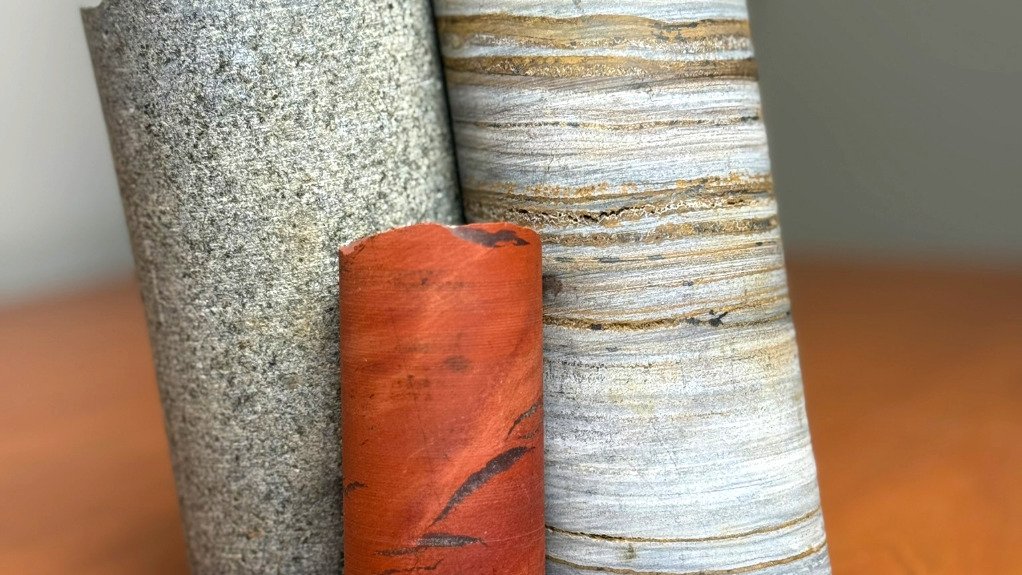
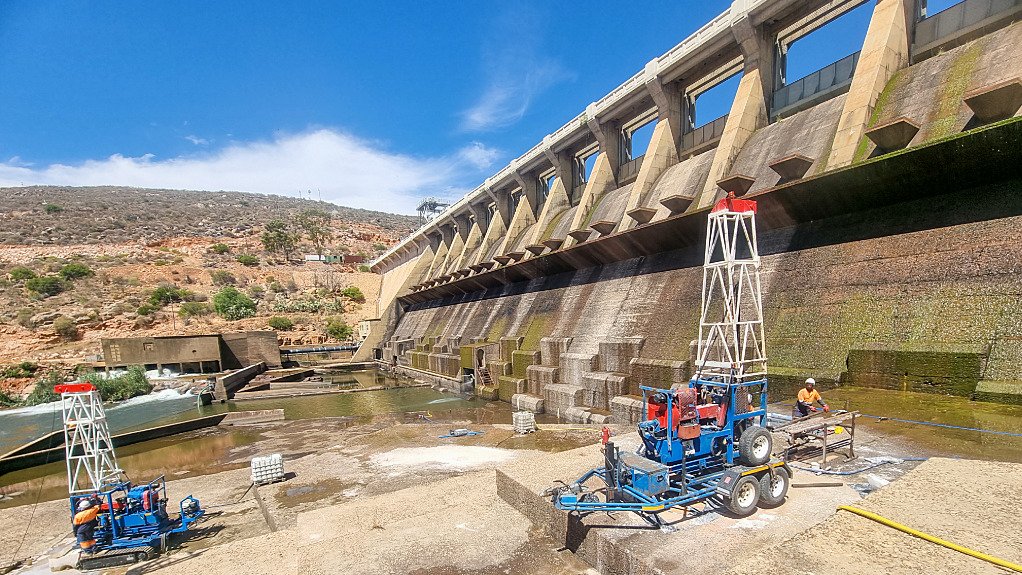
FAST IDENTIFICATION By using high-frequency oscillations to fluidise unconsolidated and mixed material formations, sonic drilling can penetrate at rates up to two to three times faster than conventional methods
NEAR-REAL-TIME INFORMATION Through the use of instrumentation in complex geological environments, project managers can move from guessing what is happening underground to knowing in near real time


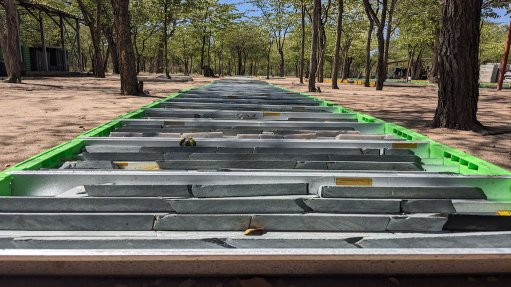
In loose tailings material, where traditional drilling methods struggle, sonic drilling provides accurate stratigraphy and representative samples, improving confidence in assessments of liquefaction risk, consolidation and overall facility safety, explains geotechnical, civil and mining services group GeoGroup operations director Grant Rijsmus.
Sonic drilling is an advanced method of drilling which makes use of high-frequency energy – known as oscillation – that is generated inside of the sonic head, he explains.
Throughout sonic drilling, the high-frequency oscillation will be transferred down the drill string to the bit face at various sonic frequencies of up to 150 Hz while simultaneously rotating the drill string, for a total limit of 90 rpm. This serves to evenly distribute the energy and impact of the bit face, enabling increased sample preservation and recovery.
“Efficiency is a key benefit of sonic drilling. By using high-frequency oscillations to induce temporary vibration-driven fluidisation of the formation immediately surrounding the coring bit [without influencing the retrieved core], it can penetrate at rates up to two to three times faster than conventional methods while requiring minimal drill fluid, reducing its impact on the environment,” adds Grant Rijsmus.
This is particularly important for the identification of thin or weak layers, or changes in density and zones of high moisture content which directly influence the stability of the drill site, he says.
As sonic drilling becomes a popular method in the geotechnical investigation industry, it also delivers several significant advantages over traditional drilling methods, such as rotary core drilling and percussion drilling, by offering advanced technology that will deliver “exceptional precision and efficiency” across a wide range of applications, states GeoGroup cone penetration test senior manager Meldt van der Spuy.
From Static to Dynamic
By implementing a near-real-time monitoring solution, a static investigation can become a dynamic safety system, which enables project managers to make immediate, data-driven decisions.
These decisions will then prevent instability in complex geological environments before it becomes a crisis, says geotechnical instrumentation equipment supplier and GeoGroup subsidiary Terra Monitoring operations manager Schalk Prinsloo.
Additionally, using technologies such as seismic piezocone testing and electronic vane shear testing allows operators to capture critical geotechnical data “right there and then”, he says.
Further, by using instrumentation in complex geological environments where the ground is constantly reacting to stresses – either from excavation or waste deposition pressure – project managers can move from guessing what is happening underground to having near-real-time enhanced data from which decisions can be made, says Prinsloo.
“The days of manual readings are being replaced by automated remote data logging. We install specialised sensors that transmit frequency or digital signals to a central gateway on-site,” he adds.
This sensor-derived data is then uploaded through cellular or ethernet networks to a central control room or a cloud-based system for further computation.
In addition to this, by integrating drilling, in-situ testing and instrumentation under a single provider, such as GeoGroup, a project’s risk profile can fundamentally change, explains GeoGroup accounts and marketing director Laura-Lee Rijsmus.
“Instead of managing multiple vendors, a client has one point of accountability, ensuring that the transition from site investigation to long-term monitoring is seamless,” she states.
This further reduces downtime as it will eliminate any waiting period between different contractors, in terms of reporting.
For example, Laura-Lee Rijsmus points out, as soon as a drill rig finishes a borehole, GeoGroup’s in-situ testing team or Terra Monitoring’s team can then step in immediately to undertake seismic cone penetration testing, Marchetti dilatometer testing, electronic vane shear testing and vibrating wire piezometer installation.
By using unified data standards across GeoGroup’s drilling and testing teams, the risk of data misinterpretation is eliminated during the transition to in-situ testing and monitoring technicians, she explains.
In addition, if a driller notices an unexpected change in the strata, they can immediately alert the in-situ testing team to adjust their parameters, notes Laura-Lee Rijsmus.
“This internal feedback loop ensures we capture the highest quality data the first time, significantly reducing the need for costly re-drilling or site revisits,” she notes.
As the mining industry undergoes rapid changes, it is moving away from the era of “delayed data” toward a future defined by actionable intelligence, sooner, states Van der Spuy.
There are several key trends that are driving this shift, including digital in-situ testing, which provides the ability to move from physical sampling to immediate digital characterisation, he notes.
“By integrating these with digital dashboards, we can generate reports as soon as the digital data is received from our site technicians,” concludes Van der Spuy.
Article Enquiry
Email Article
Save Article
Feedback
To advertise email advertising@creamermedia.co.za or click here
Research Reports


Projects

Latest Multimedia
Latest News

Showroom

The Steel Tube Export Association of South Africa was established to develop sustainable, internationally competitive carbon steel tube and pipe...
VISIT SHOWROOM
At Airshrink - CiP, we surpass customer expectations with innovative MV and LV cable accessories, including heat shrink joints, terminations,...
VISIT SHOWROOM
Announcements
What's On
Subscribe to improve your user experience...
Option 1 (equivalent of R125 a month):
Receive a weekly copy of Creamer Media's Engineering News & Mining Weekly magazine
(print copy for those in South Africa and e-magazine for those outside of South Africa)
Receive daily email newsletters
Access to full search results
Access archive of magazine back copies
Access to Projects in Progress
Access to ONE Research Report of your choice in PDF format
Option 2 (equivalent of R375 a month):
All benefits from Option 1
PLUS
Access to Creamer Media's Research Channel Africa for ALL Research Reports, in PDF format, on various industrial and mining sectors
including Electricity; Water; Energy Transition; Hydrogen; Roads, Rail and Ports; Coal; Gold; Platinum; Battery Metals; etc.
Already a subscriber?
Forgotten your password?
Receive weekly copy of Creamer Media's Engineering News & Mining Weekly magazine (print copy for those in South Africa and e-magazine for those outside of South Africa)
➕
Recieve daily email newsletters
➕
Access to full search results
➕
Access archive of magazine back copies
➕
Access to Projects in Progress
➕
Access to ONE Research Report of your choice in PDF format
RESEARCH CHANNEL AFRICA
R4500 (equivalent of R375 a month)
SUBSCRIBEAll benefits from Option 1
➕
Access to Creamer Media's Research Channel Africa for ALL Research Reports on various industrial and mining sectors, in PDF format, including on:
Electricity
➕
Water
➕
Energy Transition
➕
Hydrogen
➕
Roads, Rail and Ports
➕
Coal
➕
Gold
➕
Platinum
➕
Battery Metals
➕
etc.
Receive all benefits from Option 1 or Option 2 delivered to numerous people at your company
➕
Multiple User names and Passwords for simultaneous log-ins
➕
Intranet integration access to all in your organisation