Integrating design, contract mining to fast-track projects

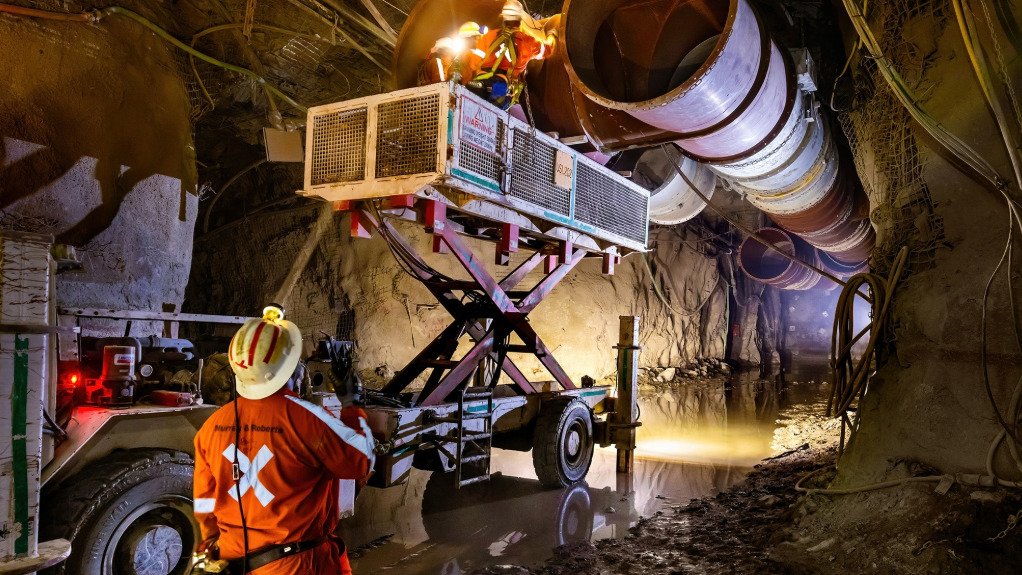
DO IT IN-HOUSE In-house engineering and proven technologies enable Cementation Africa to deliver practical, low-risk solutions for complex underground mines


Integrated project delivery, which spans in-house engineering, shaft sinking and contract mining, is gaining traction as mine owners seek faster, lower-risk routes – from the concept phase to steady-state production, says underground mining contractor Cementation Africa new business director Graham Chamberlain.
Cementation Africa’s clients are increasingly prioritising expediency and early access to ore, particularly as capital intensity and investor scrutiny rise across deep and complex underground mining projects, he says.
“. . . from a client’s perspective, it’s all about expediency – the speed of getting a project from conceptual stage to when you’ve actually got boots on the ground.”
The company’s operational model consolidates conceptual design, feasibility input, training and execution under a single delivery structure.
When multiple independent entities are involved, project alignment often requires extended debate and coordination, he highlights.
Therefore, Cementation Africa’s consolidation, especially at the project establishment stage, limits mismatched thinking among consultants, contractors and client teams – a common source of delays, cost escalations and risk factor introduction.
In-house design capacity enables Cementation Africa to test what is practically achievable before starting execution, drawing on institutional knowledge and lessons learned from previous mining projects, Chamberlain explains. This results in designs that are matched to underground mining application realities.
Under Cementation Africa’s methodical approach to project delivery, underground mining projects move from conceptual design phases, shaft sinking and tunnelling to contract mining and steady-state operations within one accountability framework.
Chamberlain highlights the company’s in-house training capability as a key differentiator, which supports operational readiness and performance from the first day of project involvement.
Risk Reduction
Complexity in deep-level and technically challenging underground mining projects is “a real beast on its own, requiring meticulous planning and disciplined execution”, says Chamberlain.
He emphasises that risk mitigation starts at the design stage, with a clearly defined end-goal and detailed upfront alignment on development requirements, equipment selection, productivity assumptions and critical path activities.
For applicable projects, Cementation Africa applies a conservative technology philosophy, avoiding untested methods that may result in avoidable uncertainty, relying instead on established technologies that are matched appropriately to project type. Integrated systems – spanning safety, quality, efficiency testing, equipment standards and codes of practice – are brought together within one project management framework.
Further, digital mine design tools are used to simulate practical hypothetical scenarios beyond formal feasibility studies, enabling teams to interrogate variables and stress-test development sequences, thereby supporting early access strategies, which Chamberlain identifies as central to improving internal rates of return.
“Mining projects are by nature capital intensive, and the quicker a client gets cash back from their investment, the better for them.”
He also notes that early ore- access and disciplined critical path management are designed into the company’s underground mining projects from the outset, whether greenfield or brownfield.
Mining mechanisation underpins Cementation Africa’s safety and productivity strategy and Chamberlain recounts strategic decisions taken to remove personnel from high-risk contact areas, including eliminating persistent hand-held mining equipment and discontinuing certain legacy shaft-cleaning methods that pose inherent safety risks.
While some traditional mining equipment offers high efficiency, the company rather prioritises safer alternatives and is investigating redesigned solutions that retain productivity without compromising safety.
On the importance of effective underground mining equipment, Chamberlain highlights that productivity rates are a derivative of how personnel use this equipment, adding that linking equipment performance directly to operator competence and structured training remains a key operational priority.
Training is positioned as a commercial and environmental, social and governance differentiator. Cementation Africa trains more than 1 000 individuals a year under the Mining Qualifications Authority (MQA) unemployed training scheme, preparing candidates from labour-sending areas by accrediting them with core safety, firefighting and risk training modules, followed by elective artisanal or operator streams.
Cementation Africa’s training academy is MQA-certified and has recently secured Quality Council for Trades and Occupations certification, thereby enabling nationally transferable qualifications.
Unlike some international contractors that exit mining projects without transferring embedded skills capacity, the company incorporates local recruitment, procurement and skills transfer into its operating model.
Further, governance compliance remains a focus for the company, with the contractor historically maintaining a Level 1 broad-based black economic- empowerment status and awaiting updated certification following ownership changes.
As for company sustainability, environmental initiatives implemented by Cementation Africa include the installation of a large-scale solar PV plant at its Bentley Park training and warehousing facilities in Carletonville, Gauteng. This plant supplies about 80% of the facility’s electrical demand.
Article Enquiry
Email Article
Save Article
Feedback
To advertise email advertising@creamermedia.co.za or click here
Research Reports
Projects

Latest Multimedia


Latest News

Showroom
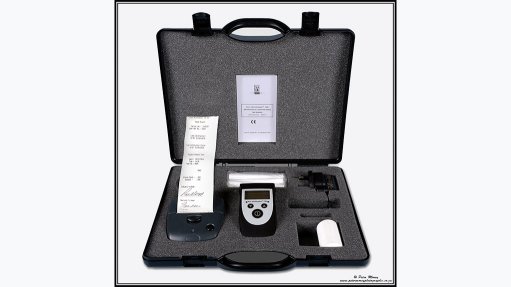
Developed to exceed the latest EN 15964 standards for police breathalysers proving that it will remain accurate and reliable for many years to come.
VISIT SHOWROOM
Axiom Hydraulics is a trusted leader in South Africa’s hydraulic industry, delivering world-class components, systems, and engineering expertise...
VISIT SHOWROOM
Press Office
Announcements
What's On
Subscribe to improve your user experience...
Option 1 (equivalent of R125 a month):
Receive a weekly copy of Creamer Media's Engineering News & Mining Weekly magazine
(print copy for those in South Africa and e-magazine for those outside of South Africa)
Receive daily email newsletters
Access to full search results
Access archive of magazine back copies
Access to Projects in Progress
Access to ONE Research Report of your choice in PDF format
Option 2 (equivalent of R375 a month):
All benefits from Option 1
PLUS
Access to Creamer Media's Research Channel Africa for ALL Research Reports, in PDF format, on various industrial and mining sectors
including Electricity; Water; Energy Transition; Hydrogen; Roads, Rail and Ports; Coal; Gold; Platinum; Battery Metals; etc.
Already a subscriber?
Forgotten your password?
Receive weekly copy of Creamer Media's Engineering News & Mining Weekly magazine (print copy for those in South Africa and e-magazine for those outside of South Africa)
➕
Recieve daily email newsletters
➕
Access to full search results
➕
Access archive of magazine back copies
➕
Access to Projects in Progress
➕
Access to ONE Research Report of your choice in PDF format
RESEARCH CHANNEL AFRICA
R4500 (equivalent of R375 a month)
SUBSCRIBEAll benefits from Option 1
➕
Access to Creamer Media's Research Channel Africa for ALL Research Reports on various industrial and mining sectors, in PDF format, including on:
Electricity
➕
Water
➕
Energy Transition
➕
Hydrogen
➕
Roads, Rail and Ports
➕
Coal
➕
Gold
➕
Platinum
➕
Battery Metals
➕
etc.
Receive all benefits from Option 1 or Option 2 delivered to numerous people at your company
➕
Multiple User names and Passwords for simultaneous log-ins
➕
Intranet integration access to all in your organisation