Gold remains a safe-haven investment – Heraeus

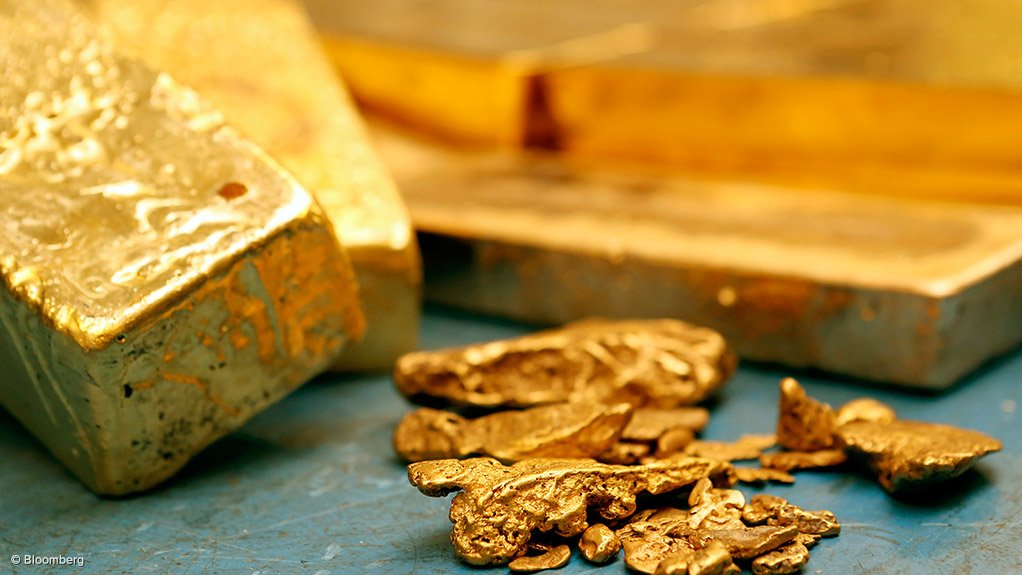



Throughout history, gold has been seen as a safe-haven asset, although recent price movements have not been what might be expected, metals refinery services provider Heraeus says.
In its latest ‘Precious Appraisal’ report, Heraeus notes that, to date this year, the gold price has been exposed to both fundamental and speculative demand that is antecedent to these price moves.
Most notably, over the trading days immediately following the beginning of the US–Israel military operation in Iran, on March 2 and 3, gold prices, along with stocks, fell.
Further, as the geopolitical situation worsened, gold continued to decline from its highs of just over $5 400/oz posted on the first trading day of the month. Gold fell dramatically after breaking below its 50-day moving average on March 18.
Heraeus explains that it remained weak until hitting its 200-day moving average on March 23, coinciding with the first signs of the conflict easing emerging on March 26, when Trump claimed attacks on Iran’s energy infrastructure were delayed following constructive peace talks.
Following this, another upward trend seems to have started, which has subsequently been bolstered by the temporary ceasefire announcement on April 7, the company says.
The fundamental case for gold investment comes from it being counterparty-free, if held physically, and maintaining its buying power against centuries of monetary inflation and currency debasement, says Heraeus.
The company explains that the demand that follows this is consistent with a long-term focus coming from central banks, institutions and some retail investors.
However, the report indicates that there is a speculative aspect of gold investment which is essentially a trade on price momentum and technicals with the goal of capital appreciation.
This demand comes from institutions and retail investors seeking to buy and sell with a short-term focus.
During 2025 and early this year, the report notes, the rapid price gains attracted more speculative activity that compounded the attraction of gold, which was based on the rise in geopolitical and economic uncertainty.
This has reduced the investment time horizon of the average market participant as more speculators have entered the market.
Heraeus explains that there are likely to be instances where the gold price moves in the opposite direction to what would be expected from a flight to safety.
“These moves do not reflect a change to the fundamental case for gold. Some repositioning and deleveraging during times of cross-asset volatility should be expected,” the report says, adding that the gold price responding to technical indicators is also an expected symptom of shorter-term speculative market participants.
Heraeus posits that this volatility is likely to last for some time but, in the long run, gold will retain its fundamental attraction to retain buying power.
Meanwhile, the report notes that gold exploration budgets have risen by 11% to $6.15-billion on the back of the record gold prices achieved in recent months.
It explains that major companies dominate this expenditure, accounting for 57% of total budgets.
Heraeus says their spending is primarily focused on extending the life of existing mines by exploring nearby areas for additional ore, adding that they have also been investing in already operational mines to expand production and improve recovery rates.
While nearby mine exploration rises, spending on grassroots exploration has fallen.
Heraeus explains that it takes longer, and is much riskier, to develop earlier-stage sites to production.
This, combined with increased financing costs driven by a higher interest rate environment, has reduced the incentive for greenfield exploration relative to brownfield development.
The company warns that the lack of grassroots development could lead to future supply constraints as mines age and ore grades fall.
SILVER
Meanwhile, the report notes that silver climbed above nickel to become the fourth most explored target in 2025, below only gold, copper and lithium.
Similarly to gold, silver exploration budgets are focused on extensions and improvements to existing mine sites and come mostly from major silver miners.
The report indicates that a large run-up in silver prices in 2025 led to more drilling and significant results.
Silver projects were up 26% in 2025, while those meeting the estimated grade to be economically viable rose by 37%.
Heraeus says Indian demand for silver rose significantly in the financial year through to end of March.
India imported 7 334.96 t, or 235.8-million ounces, of silver in the last financial year, an increase of 42% year-on-year. The total cost of these imports surged by 149.5% to $12.05-billion.
Heraeus says this reflects strong demand from India for precious metals both for investment purposes as an inflation hedge and for use in jewellery.
Additionally, global mined silver supply grew to 846.6-million ounces in 2025, an increase of 3% from 2024.
This expansion was led by Central and South America where higher grades and early-stage mines combined to lift supply from the region by 5% from 2024.
Elsewhere, output from North America, Asia and Oceania contracted in 2025.
Moreover, Heraeus also notes that secondary supply also increased in 2025 with recycling boosting available ounces.
Recycled supply grew to 197.6-million ounces in 2025, up 2% from 2024.
Jewellery and silverware were the largest contributors to this, with year-on-year increases of 6% and 7%, respectively.
PLATINUM
Heraeus notes that South Africa’s platinum group metals (PGM) production was the highest for several years in February.
Statistics South Africa’s (Stats SA’s) recent publication shows that January and February PGM output from South Africa surpassed 2025 levels with less disruption than last year.
Refined production should also be higher year-on-year as Valterra has moved its yearly processing maintenance to the third quarter of the year from the first quarter, says Heraeus.
Additionally, it notes that Impala Platinum is expected to complete its maintenance work on the Number 4 furnace this month, which will improve the available smelting capacity, possibly allowing the company to draw down more excess work-in-progress stocks over the coming months, which stood at 400 000 oz of platinum, palladium, rhodium, ruthenium, iridium and gold (6E) at the end of December 2025.
The company explains that total refined platinum production in South Africa is projected to be about 3.7-million ounces this year, although it notes that that is dependent on whether there are any unforeseen disruptions and how well projects that are ramping up perform.
Moreover, Heraeus says high PGM prices continue to support PGM miners’ revenues.
However, increasing costs driven by higher oil prices, more expensive electricity and rising labour rates will eat into margins.
The cost of diesel in South Africa is expected to double by May compared with its level before the Iran conflict began, which will directly impact on openpit and mechanised mining operations, while State-owned Eskom has implemented an 8.76% increase in electricity tariffs as of April 1.
“These impacts, combined with higher capital expenditure, will lift the cost base of the industry as a whole in South Africa in 2026 to well above inflation,” says Heraeus.
The report also notes that the total ounces registered in platinum exchange-traded funds (ETFs) peaked on January 28 at 3.37-million ounces.
Since then, it notes that there have been outflows of 10.6%, leaving 3.02-million ounces registered.
This marks an 8.6% reduction year-to-date as of April 16.
Heraeus says ETFs act as a store of metal that adds an extra source of demand during periods of speculation and then re-enters as extra supply later.
It notes that these outflows are currently increasing the supply on the market, helping to alleviate market tightness and bring down lease rates.
RHODIUM, RUTHENIUM, IRIDIUM
Further, the report also notes that green ammonia, using green hydrogen made through iridium- and ruthenium-based proton-exchange membrane (PEM) electrolysis, is increasingly attractive to replace ammonia in existing industrial processes that use fossil fuels.
This helps the adoption of PEM electrolyser technology in established agriculture, fuel and energy markets.
Plug Power will supply 275 MW of PEM electrolyser systems for the Courant Decarbonized Ammonium Nitrate plant in Québec, Canada.
Heraeus explains that it will supply ammonium nitrate explosives for the mining industry in Québec, Central and Eastern Canada and elsewhere.
First Ammonia is building a hub in Texas, in the US, for green ammonia production.
It originally partnered with Topsoe to supply 100 MW of solid oxide electrolyser (SOEC) modules, but this partnership has recently been terminated.
First Ammonia has now issued a request for proposal for a new electrolyser supplier, likely PEM or alkaline, after perceived difficulties scaling the SOEC technology.
Article Enquiry
Email Article
Save Article
Feedback
To advertise email advertising@creamermedia.co.za or click here
Research Reports

Projects


Latest Multimedia

Latest News
Showroom

For over 60 years, VEGA has provided industry-leading products for the measurement of level, density, weight and pressure. As the inventor of the...
VISIT SHOWROOM


Announcements
What's On
Subscribe to improve your user experience...
Option 1 (equivalent of R125 a month):
Receive a weekly copy of Creamer Media's Engineering News & Mining Weekly magazine
(print copy for those in South Africa and e-magazine for those outside of South Africa)
Receive daily email newsletters
Access to full search results
Access archive of magazine back copies
Access to Projects in Progress
Access to ONE Research Report of your choice in PDF format
Option 2 (equivalent of R375 a month):
All benefits from Option 1
PLUS
Access to Creamer Media's Research Channel Africa for ALL Research Reports, in PDF format, on various industrial and mining sectors
including Electricity; Water; Energy Transition; Hydrogen; Roads, Rail and Ports; Coal; Gold; Platinum; Battery Metals; etc.
Already a subscriber?
Forgotten your password?
Receive weekly copy of Creamer Media's Engineering News & Mining Weekly magazine (print copy for those in South Africa and e-magazine for those outside of South Africa)
➕
Recieve daily email newsletters
➕
Access to full search results
➕
Access archive of magazine back copies
➕
Access to Projects in Progress
➕
Access to ONE Research Report of your choice in PDF format
RESEARCH CHANNEL AFRICA
R4500 (equivalent of R375 a month)
SUBSCRIBEAll benefits from Option 1
➕
Access to Creamer Media's Research Channel Africa for ALL Research Reports on various industrial and mining sectors, in PDF format, including on:
Electricity
➕
Water
➕
Energy Transition
➕
Hydrogen
➕
Roads, Rail and Ports
➕
Coal
➕
Gold
➕
Platinum
➕
Battery Metals
➕
etc.
Receive all benefits from Option 1 or Option 2 delivered to numerous people at your company
➕
Multiple User names and Passwords for simultaneous log-ins
➕
Intranet integration access to all in your organisation