Consultancy unpacks why gold prices are trending lower despite high demand

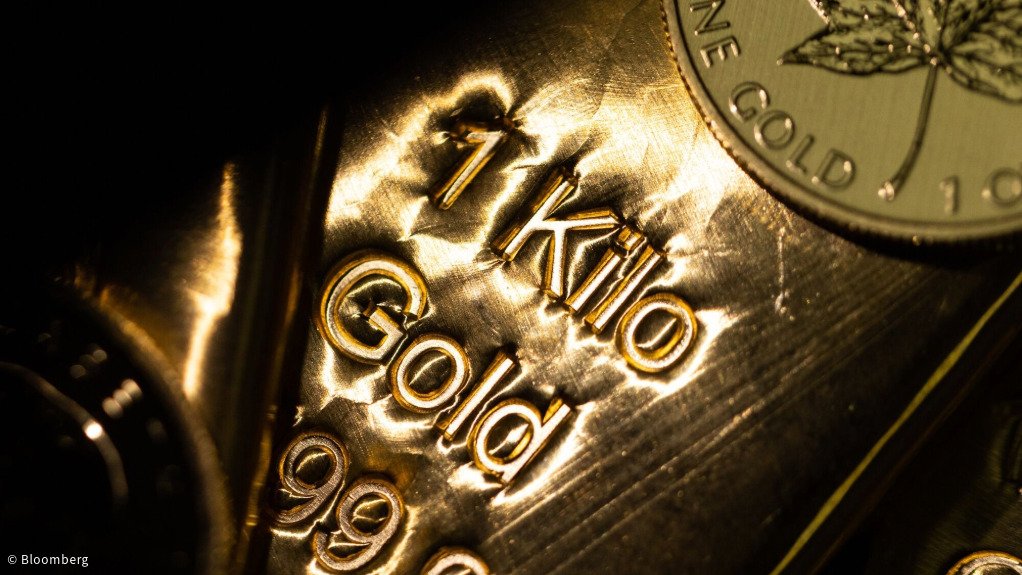



Gold is no longer moving according to the classical rules investors are accustomed to, which reflects a deeper structural shift in the market, says brokerage and consultancy XS.com senior market analyst Rania Gule.
In her view, the notable decline in gold prices near $4 626 despite escalating geopolitical risks and heightened global uncertainty reveals that traditional drivers such as the “safe haven” narrative are no longer sufficient to explain short-term price action.
“We are facing a market that is being repriced based on more complex determinants, primarily US monetary policy and real yields, which requires a more nuanced analysis beyond conventional narratives.”
She believes the decisive factor at this stage is not demand for gold itself, but the cost of holding it.
When real yields rise as a result of tight monetary policy, gold — as a non-yielding asset — becomes relatively less attractive. This explains the recent decline despite record global demand.
“From my perspective, the market is not denying the strength of structural demand, but rather postponing its impact in favour of more influential cyclical variables in the near term, reflecting the dominance of monetary policy over investor behaviour in the current environment,” Gule says.
She also see the Federal Reserve’s stance as the central anchor in determining direction. Persistent inflationary pressures and rising indicators such as Personal Consumption Expenditures suggest that any shift toward monetary easing remains distant.
On the contrary, the possibility of further rate hikes has already been priced in by markets.
This creates a bearish environment for gold in the short term, as higher rates strengthen the dollar and lift real yields, thereby increasing pressure on the metal.
What further complicates the outlook is the indirect role of energy markets. Gule explains that rising oil prices, which historically supported gold through risk sentiment, have now become a negative factor.
Gule’s analysis suggests that the relationship is no longer direct but operates through the inflation channel: higher oil prices fuel inflation, inflation reinforces Federal Reserve tightening, tightening raises real yields, and real yields pressure gold.
“In my opinion, this feedback loop represents one of the most important shifts in understanding current market dynamics, where geopolitics no longer automatically supports gold.
“Despite these pressures, the strong long-term fundamentals supporting gold cannot be ignored. Sovereign demand, particularly from central banks, provides a solid floor for the market,” Gule says.
She adds that this type of demand is not driven by speculation but reflects a strategic restructuring of global reserves and a gradual move away from reliance on the US dollar.
Therefore, Gule believes that any sharp declines in price will likely be met with strategic buying, limiting downside and laying the groundwork for future bullish cycles.
In the near term, however, she expects the bearish trend to persist or at least remain within a pressured range. This is because the catalysts needed for a reversal have yet to emerge.
Gule confirms that gold requires one of three key triggers: a clear decline in inflation, a shift in the Federal Reserve’s tone toward easing, or a geopolitical de-escalation that reduces energy pressures. Without these, cyclical bearish forces will remain in control.
As for price expectations, Gule says gold may face further downside pressure in the short term, potentially testing lower levels before finding strong institutional support. However, over the medium- to long term, she believes the broader trend remains bullish, with the potential to target new record highs in the $5 500/oz to $6 400/oz range, particularly if the Federal Reserve begins easing or the global economy enters a slowdown phase that necessitates policy support.
Ultimately, I see the market in a genuine struggle between supportive structural forces and suppressive cyclical pressures.
“This conflict will not be resolved quickly but will continue shaping gold’s trajectory in the coming period. In my view, the smart investor is one who understands this balance — neither blindly following traditional narratives nor ignoring long-term fundamentals.
“Gold has not lost its shine; it is simply undergoing a repricing phase that reflects a more complex economic reality — making its analysis today both more challenging and more essential,” Gule concludes.
Article Enquiry
Email Article
Save Article
Feedback
To advertise email advertising@creamermedia.co.za or click here
Research Reports

Projects

Latest Multimedia


Latest News


Showroom

For over 60 years, VEGA has provided industry-leading products for the measurement of level, density, weight and pressure. As the inventor of the...
VISIT SHOWROOM
ZF Aftermarket is the after-sales division of the world-renowned German ZF group, a global leader in mobility technology.
VISIT SHOWROOM
Announcements
What's On
Subscribe to improve your user experience...
Option 1 (equivalent of R125 a month):
Receive a weekly copy of Creamer Media's Engineering News & Mining Weekly magazine
(print copy for those in South Africa and e-magazine for those outside of South Africa)
Receive daily email newsletters
Access to full search results
Access archive of magazine back copies
Access to Projects in Progress
Access to ONE Research Report of your choice in PDF format
Option 2 (equivalent of R375 a month):
All benefits from Option 1
PLUS
Access to Creamer Media's Research Channel Africa for ALL Research Reports, in PDF format, on various industrial and mining sectors
including Electricity; Water; Energy Transition; Hydrogen; Roads, Rail and Ports; Coal; Gold; Platinum; Battery Metals; etc.
Already a subscriber?
Forgotten your password?
Receive weekly copy of Creamer Media's Engineering News & Mining Weekly magazine (print copy for those in South Africa and e-magazine for those outside of South Africa)
➕
Recieve daily email newsletters
➕
Access to full search results
➕
Access archive of magazine back copies
➕
Access to Projects in Progress
➕
Access to ONE Research Report of your choice in PDF format
RESEARCH CHANNEL AFRICA
R4500 (equivalent of R375 a month)
SUBSCRIBEAll benefits from Option 1
➕
Access to Creamer Media's Research Channel Africa for ALL Research Reports on various industrial and mining sectors, in PDF format, including on:
Electricity
➕
Water
➕
Energy Transition
➕
Hydrogen
➕
Roads, Rail and Ports
➕
Coal
➕
Gold
➕
Platinum
➕
Battery Metals
➕
etc.
Receive all benefits from Option 1 or Option 2 delivered to numerous people at your company
➕
Multiple User names and Passwords for simultaneous log-ins
➕
Intranet integration access to all in your organisation