ARM highlights value of Bokoni platinum project, restart of nickel mine

ARM investor conference covered by Mining Weekly's Martin Creamer. Video: Darlene Creamer.
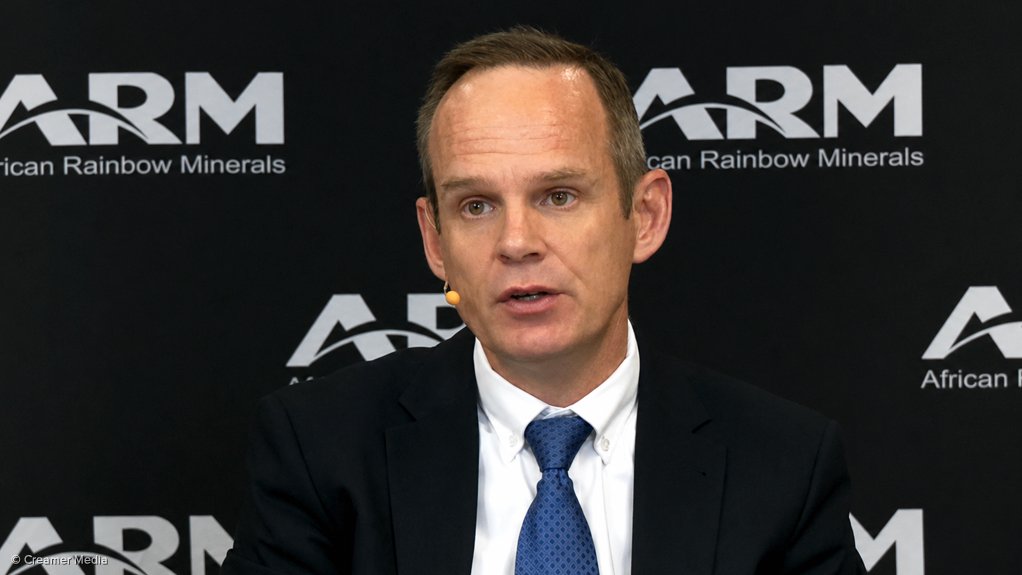
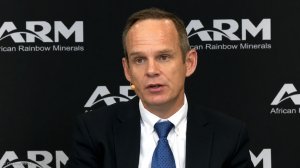
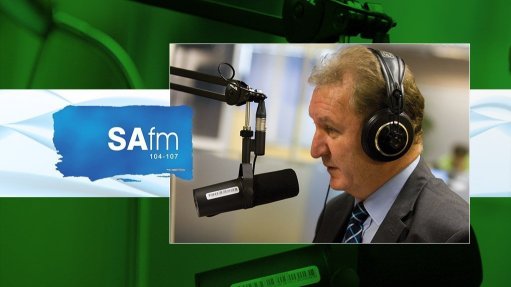
ARM COO Jacques van der Bijl.
Photo by Creamer Media
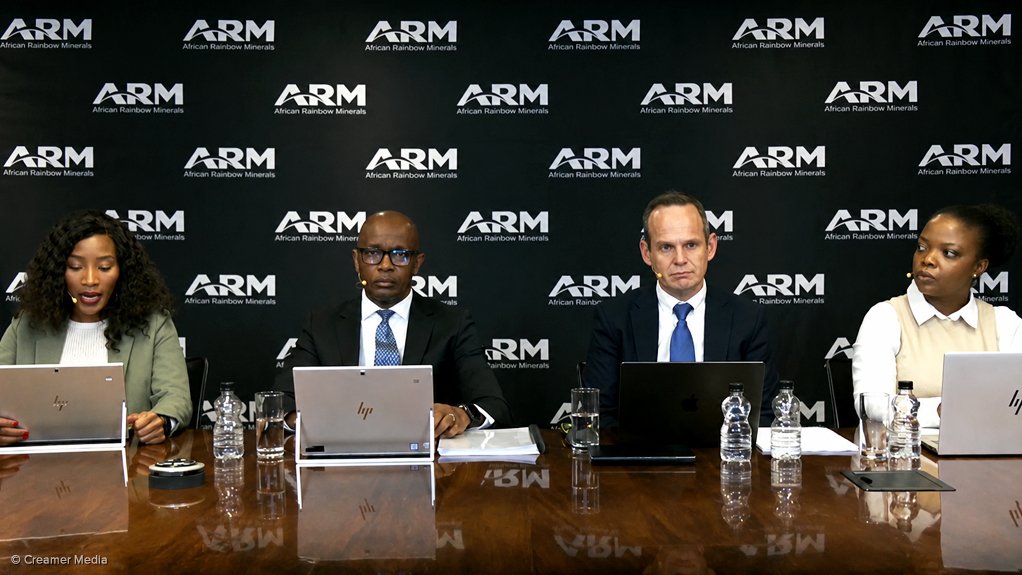
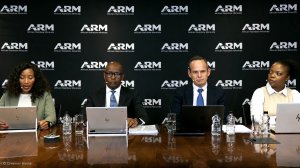
ARM investor conference team.
Photo by Creamer Media


JOHANNESBURG (miningweekly.com) – Bokoni and Nkomati are two of African Rainbow Minerals’ (ARM’s) 100%-owned flagship projects that are poised to unlock significant long-term value for ARM and its shareholders, ARM CEO Phillip Tobias emphasised during an investor conference call on Friday, July 31 to discuss the outcomes of Bokoni’s 180 000-t-a-month development project and the recommencement of the Nkomati opencast mine.
Tobias described Bokoni as a high-grade growth platform that was positioning ARM as a globally competitive, low-cost platinum group metals (PGMs) producer and pointed out that the recommencement of operations at Nkomati re-established South Africa's only primary nickel producer through a low capital intensity and a value-enhancing restart. (Also watch attached Creamer Media video.)
The Bokoni project, valued at R15.2-billion with a 15% contingency, is expected to generate a post-tax net present value of R5.9 billion and an internal rate of return of 28%.
The Nkomati restart, with a R753-million capital expenditure (capex), aims for a payback period of 5.3 years and a 28.4% internal rate of return.
Both projects are designed to enhance ARM's long-term value and resilience.
“What gives us confidence is not only the quality of these assets, but the strength, the depth, the expertise, and the experience of the management team responsible for delivering them,” Tobias stated during the conference call covered by Mining Weekly.
“ARM currently manages most of its joint venture operations, and that proven hands-on operating experience is exactly what underpins our confidence in delivering these projects. These are disciplined, well-defined plans, built on proven infrastructure, and rigorous, independently peer-reviewed studies.
“They are also led by a team with an operational track record, and execution capability and capacity to bring them to successful realisation. Having carefully evaluated these investment opportunities, we are now taking decisive action to position ARM for long-term resilience through the commodity cycle.
“At the same time, these investments will create lasting value for our host communities through job creation, economic opportunities, and sustainable development,” Tobias explained.
Bokoni had existing workings, concentrator plant, chrome recovery plant, and surface infrastructure that provided a platform for development. That combination of study work, independent review, and brownfield infrastructure gave management confidence in the execution basis, ARM COO Jacques van der Bijl pointed out.
At steady state, Bokoni will add 350 000 to 400 000 six-element (6E) PGM ounces annually.
“It also improves the quality and resilience of the portfolio by adding a large high-grade asset with a competitive cost position. What is particularly important is that the current 19-year plan only depletes 13% of the measured and indicated upper group two (UG2) resource.
“We therefore see Bokoni not simply as another operation, but as a cornerstone asset that materially strengthens ARM’s platinum for decades. The project combines a high-grade UG2 orebody, meaningful scale, and existing infrastructure,” said Van der Bijl.
Bokoni has a measured resource of 31-million 6E ounces, with a long-term milled grade of 6.1 grams per ton.
The approved 180 000-t-a-month system is designed to improve fixed cost absorption and support margin resilience.
“Grade, scale, and existing infrastructure are rarely available together, and that’s what makes Bokoni strategically compelling.
“Grade is one of the most powerful value drivers in underground mining. A higher grade generally means more metal per ton mined and processed. We support margin resilience and lower capital intensity per ounce.
“Bokoni's planned average wasted grade compares favourably with ARM's existing platinum operations. What matters is not simply having a higher grade, but what that grade does to margins, capital efficiency, and resilience through the cycle.
“That grade advantage is one of the reasons why management believes Bokoni can generate attractive long-term returns through the cycle,” Van der Bijl noted.
NKOMATI INVESTMENT CASE
In 2021, Nkomati was placed on care and maintenance owing to the low nickel price and its restart is based on the leveraging of existing infrastructure, existing operating knowledge, and a defined commercial route to market at comparatively low capital intensity and attractive economics.
One of the attractive features of Nkomati is the relatively short time frame to production.
The restart and plant refurbishment are expected to be completed within one year, with first production planned in the second half of financial year 2027. This shorter execution timeline is possible because the restart leverages existing infrastructure and established operating knowledge.
Nkomati has a well-understood orebody, supported by more than 30 years of operating history.
The opencast resources include geological zones with different nickel and chromatite characteristics.
“The operation is not purely a nickel story. In fact, almost half of the revenue is expected to come from commodities other than nickel,” Van der Bijl pointed out.
The proposed plan provides a mine life of 13 years with mining operations and an average of 250 000 t a month.
The plan also notes potential to bring higher-grade ore forward, which gives management additional flexibility.
The processing strategy mirrors the mining strategy and is structured to optimise recovery and product value over time.
A major attraction of the Nkomati restart is the relatively modest capital requirement. The total R753-million capex is primarily associated with restarting the mining operations as well as plant and tailings storge facility refurbishing.
Nkomati benefits from a diversified revenue stream, with nickel contributing 49% of revenue, PGMs a further 29% while other base metal contributes 15%.
The internal rate of return is 28.4% with payback in 5.3 years.
Article Enquiry
Email Article
Save Article
Feedback
To advertise email advertising@creamermedia.co.za or click here
Research Reports
Projects
Latest Multimedia
Latest News
Showroom
The SAIMM started as a learned society in 1894 after the invention of the cyanide process that saved the South African gold mining industry of the...
VISIT SHOWROOM
Multotec, recognised industry leaders in metallurgy and process engineering help mining houses across the world process minerals more efficiently,...
VISIT SHOWROOM
Announcements
What's On
Subscribe to improve your user experience...
Option 1 (equivalent of R125 a month):
Receive a weekly copy of Creamer Media's Engineering News & Mining Weekly magazine
(print copy for those in South Africa and e-magazine for those outside of South Africa)
Receive daily email newsletters
Access to full search results
Access archive of magazine back copies
Access to Projects in Progress
Access to ONE Research Report of your choice in PDF format
Option 2 (equivalent of R375 a month):
All benefits from Option 1
PLUS
Access to Creamer Media's Research Channel Africa for ALL Research Reports, in PDF format, on various industrial and mining sectors
including Electricity; Water; Energy Transition; Hydrogen; Roads, Rail and Ports; Coal; Gold; Platinum; Battery Metals; etc.
Already a subscriber?
Forgotten your password?
Receive weekly copy of Creamer Media's Engineering News & Mining Weekly magazine (print copy for those in South Africa and e-magazine for those outside of South Africa)
➕
Recieve daily email newsletters
➕
Access to full search results
➕
Access archive of magazine back copies
➕
Access to Projects in Progress
➕
Access to ONE Research Report of your choice in PDF format
RESEARCH CHANNEL AFRICA
R4500 (equivalent of R375 a month)
SUBSCRIBEAll benefits from Option 1
➕
Access to Creamer Media's Research Channel Africa for ALL Research Reports on various industrial and mining sectors, in PDF format, including on:
Electricity
➕
Water
➕
Energy Transition
➕
Hydrogen
➕
Roads, Rail and Ports
➕
Coal
➕
Gold
➕
Platinum
➕
Battery Metals
➕
etc.
Receive all benefits from Option 1 or Option 2 delivered to numerous people at your company
➕
Multiple User names and Passwords for simultaneous log-ins
➕
Intranet integration access to all in your organisation