Workforce, warehouse data systems must align – company

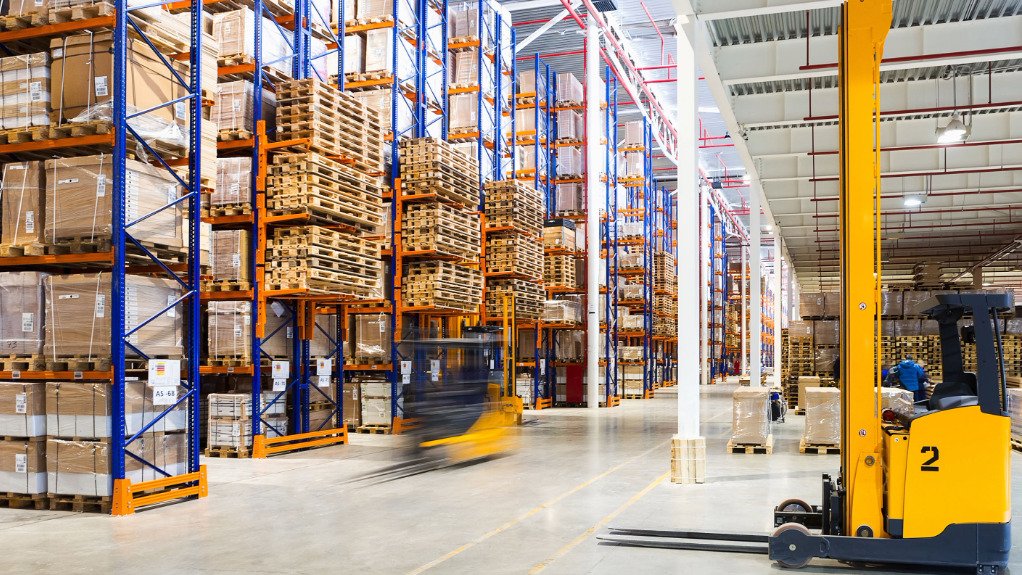
BEHIND THE SYSTEMS While responding to changes in demand businesses in the warehousing and logistics sector must look closely at the workforce behind the systems



Following the Covid-19 lockdowns, outsourcing and management services provider Programmed Process Outsourcing (PPO) has seen a large push toward cloud-based stock visibility and radio-frequency identification (RFID) networks, which has, in a very short time, “completely changed the day-to-day flow of warehouses”.
“With the growing pressure on South Africa’s warehousing and logistics sector to improve efficiency, while responding to changes in demand, businesses must look closely at the workforce behind these systems, whether they have the right skills, are in the right roles and whether productivity is being properly measured,” PPO national operations manager Athol Holloway states.
He notes that when a shift or a team encounters something unexpected, then instead of supervisors “hunting down” misplaced pallets or attempting to fix paper trail mistakes, cloud-based systems can provide real-time information on what is moving, where it is moving to and the effects, flattening out operational blind spots that existed before the use of digitised systems.
However, while digitised systems can improve some facets of the operation, “there is a big misconception in corporate boardrooms that simply buying an expensive software package or upgrading the company’s tracking technology can magically fix the company’s bottlenecks”.
Further, from a skills perspective, PPO has observed that, when new systems are introduced, there is a disconnect between what upper management expects from the system and what the ‘boots-on-the-ground’ worker can deliver while using it.
“Companies need to remember that introducing complex, data-heavy systems onto their floor without the relevant training beforehand will not necessarily bring the results that the software developers envisioned,” Holloway states.
Companies can fix this problem by adopting standard operating procedures alongside the software rollout, with Holloway adding that they should also rewrite their workflows to match the new technology, thereby avoiding staff workarounds or reversion to manual operations.
It would also avert the potential risk of companies investing in a multimillion-rand asset that is underused, because the human processes were not synchronised to the digital systems.
“The net effect is that money is lost on resources and system development that should instead have resulted in money saved,” Holloway emphasises.
Combined Roll-Out
Rather than viewing new technology procurement and development and historical people-heavy processes as two separate budget pillars, Holloway suggests that they should be rolled out together.
When planning to invest in new services – such as warehouse management systems or real-time tracking – it should be paired with a comparable amount of time and capital invested in workforce training to ensure readiness and efficacy.
“We believe the smartest way is to do this incrementally. Implement your electronic tracking, barcoding and performance systems, but do it in the quieter or off-seasons, as it will give the company the leeway to train its managers on the floor to understand the transition to data-based systems, allowing them to set clear performance benchmarks,” Holloway explains.
Additionally, this provides the company with time to “guide its workforce so they can become completely comfortable with a data-driven environment” that was previously paper-driven.
The results are that the technology handles all the background tasks, allowing human roles to change “fundamentally”, because the frontline staff are no longer forced to do repetitive manual tasks, he explains.
“What the staff are actually moving towards is almost a management function, using digital handheld interfaces with live data streams while operating battery-powered pallet movers. Technology is moving forward, and the staff and systems need to align to move forward together,” he concludes.
Article Enquiry
Email Article
Save Article
Feedback
To advertise email advertising@creamermedia.co.za or click here
Research Reports


Projects


Latest Multimedia


Latest News

Showroom

The Steel Tube Export Association of South Africa was established to develop sustainable, internationally competitive carbon steel tube and pipe...
VISIT SHOWROOM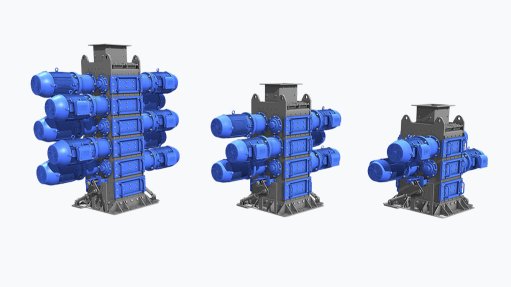
Energy and Densification Systems (EDS) has developed equipment for crushing, milling, blending and densifying products. Based on its globally...
VISIT SHOWROOM


Press Office
Announcements
What's On
Subscribe to improve your user experience...
Option 1 (equivalent of R125 a month):
Receive a weekly copy of Creamer Media's Engineering News & Mining Weekly magazine
(print copy for those in South Africa and e-magazine for those outside of South Africa)
Receive daily email newsletters
Access to full search results
Access archive of magazine back copies
Access to Projects in Progress
Access to ONE Research Report of your choice in PDF format
Option 2 (equivalent of R375 a month):
All benefits from Option 1
PLUS
Access to Creamer Media's Research Channel Africa for ALL Research Reports, in PDF format, on various industrial and mining sectors
including Electricity; Water; Energy Transition; Hydrogen; Roads, Rail and Ports; Coal; Gold; Platinum; Battery Metals; etc.
Already a subscriber?
Forgotten your password?
Receive weekly copy of Creamer Media's Engineering News & Mining Weekly magazine (print copy for those in South Africa and e-magazine for those outside of South Africa)
➕
Recieve daily email newsletters
➕
Access to full search results
➕
Access archive of magazine back copies
➕
Access to Projects in Progress
➕
Access to ONE Research Report of your choice in PDF format
RESEARCH CHANNEL AFRICA
R4500 (equivalent of R375 a month)
SUBSCRIBEAll benefits from Option 1
➕
Access to Creamer Media's Research Channel Africa for ALL Research Reports on various industrial and mining sectors, in PDF format, including on:
Electricity
➕
Water
➕
Energy Transition
➕
Hydrogen
➕
Roads, Rail and Ports
➕
Coal
➕
Gold
➕
Platinum
➕
Battery Metals
➕
etc.
Receive all benefits from Option 1 or Option 2 delivered to numerous people at your company
➕
Multiple User names and Passwords for simultaneous log-ins
➕
Intranet integration access to all in your organisation