When the fuel price becomes a strategy problem





South African industry has long treated diesel as a cost of doing business. That calculation has now changed.
From 1 April 2026, diesel prices increased by between R7,37 and R7,51 per litre, among the sharpest monthly adjustments in recent history. The increase reflects heightened volatility in international crude markets, with Brent prices surging past $100 a barrel in recent weeks.
Central Energy Fund data for 9 April points to diesel under-recoveries of between R10,80 and R10,84 per litre for May. While this is lower than the R17 level earlier in the month, it still signals another substantial increase—and underscores how quickly the picture can shift.
For South Africa, the exposure is acute. The country now refines less than 35% of the fuel it consumes domestically, following the 2022 closure of the Sapref refinery in Durban. When global markets move, South African industry absorbs the full impact with little protection.
Manufacturing plants, logistics operators, mines and farms cannot pass every fuel price shock through immediately. Higher fuel costs cut into margins, make contracts harder to price and push up the cost of goods across the economy. Businesses cannot plan ahead.
The deeper problem is not the cost alone. It is the unpredictability. A business cannot budget for a fuel price that moves R10 per litre in a single month, faces another substantial increase the month after, then shifts again as international market conditions evolve.
Renewable energy solutions
What solar and battery storage offer is certainty. Once a system is installed, generation costs are fixed. Battery storage extends availability beyond daylight hours, delivering round-the-clock operational flexibility and energy security. Together, they address the most volatile item on the operating cost sheet with something that can actually be planned around.
Beyond cost certainty and energy independence, solar and storage also move operations meaningfully toward decarbonisation targets—an increasingly important consideration for export-oriented businesses facing customer and investor pressure on Scope 1 and 2 emissions.
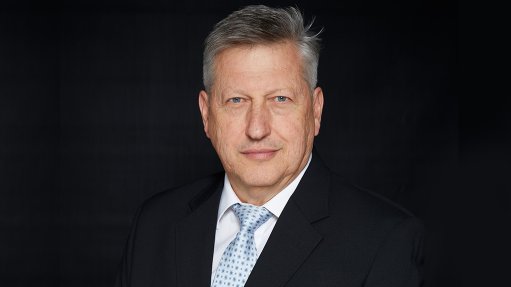
“South African industry has known for some time that diesel dependency carries risk,” says Nigel Sun, Head of Sungrow Sub-Saharan Africa. “What the current fuel price environment has done is make that risk impossible to ignore. The conversation has shifted from ‘should we consider renewables’ to ‘how quickly can we move.’”
For commercial and industrial operations, Sungrow’s Microgrid Solution combines solar generation, battery storage and conventional backup to reduce diesel dependence without disrupting operations. For mining businesses, where remote locations and high energy demand create particular pressures, this solution provides a reliable, scalable energy mix that ensures operational continuity while lowering fuel costs and emissions.
A mine or factory that generates a meaningful share of its electricity from solar, stored and dispatched through a battery system, removes that portion of its energy use from the fuel price cycle entirely. For operations most exposed to diesel price shocks, that is a significant and permanent reduction in risk.
“We are seeing real urgency from businesses that would have described this as a five-year conversation two years ago,” says Sun. “Companies that move now won’t be scrambling when the next cycle hits.”
Global oil prices may ease in the short term. But a country that imports most of its fuel, priced in dollars and tied to international market cycles, does not become structurally less vulnerable because of any single news cycle. Businesses that use this moment to reduce diesel dependency are not just responding to today’s pressures—they are building resilience for whatever comes next.
Article Enquiry
Email Article
Save Article
Feedback
To advertise email advertising@creamermedia.co.za or click here
Research Reports

Projects

Latest Multimedia
Latest News
Showroom
Axiom Hydraulics is a trusted leader in South Africa’s hydraulic industry, delivering world-class components, systems, and engineering expertise...
VISIT SHOWROOM
Sulzer South Africa, established in 1922, partners with critical industries like power, oil & gas, water, mining, and chemicals to boost...
VISIT SHOWROOM
Announcements
What's On
Subscribe to improve your user experience...
Option 1 (equivalent of R125 a month):
Receive a weekly copy of Creamer Media's Engineering News & Mining Weekly magazine
(print copy for those in South Africa and e-magazine for those outside of South Africa)
Receive daily email newsletters
Access to full search results
Access archive of magazine back copies
Access to Projects in Progress
Access to ONE Research Report of your choice in PDF format
Option 2 (equivalent of R375 a month):
All benefits from Option 1
PLUS
Access to Creamer Media's Research Channel Africa for ALL Research Reports, in PDF format, on various industrial and mining sectors
including Electricity; Water; Energy Transition; Hydrogen; Roads, Rail and Ports; Coal; Gold; Platinum; Battery Metals; etc.
Already a subscriber?
Forgotten your password?
Receive weekly copy of Creamer Media's Engineering News & Mining Weekly magazine (print copy for those in South Africa and e-magazine for those outside of South Africa)
➕
Recieve daily email newsletters
➕
Access to full search results
➕
Access archive of magazine back copies
➕
Access to Projects in Progress
➕
Access to ONE Research Report of your choice in PDF format
RESEARCH CHANNEL AFRICA
R4500 (equivalent of R375 a month)
SUBSCRIBEAll benefits from Option 1
➕
Access to Creamer Media's Research Channel Africa for ALL Research Reports on various industrial and mining sectors, in PDF format, including on:
Electricity
➕
Water
➕
Energy Transition
➕
Hydrogen
➕
Roads, Rail and Ports
➕
Coal
➕
Gold
➕
Platinum
➕
Battery Metals
➕
etc.
Receive all benefits from Option 1 or Option 2 delivered to numerous people at your company
➕
Multiple User names and Passwords for simultaneous log-ins
➕
Intranet integration access to all in your organisation