WGC unpacks gold, silver market differences as investors seek crisis diversification

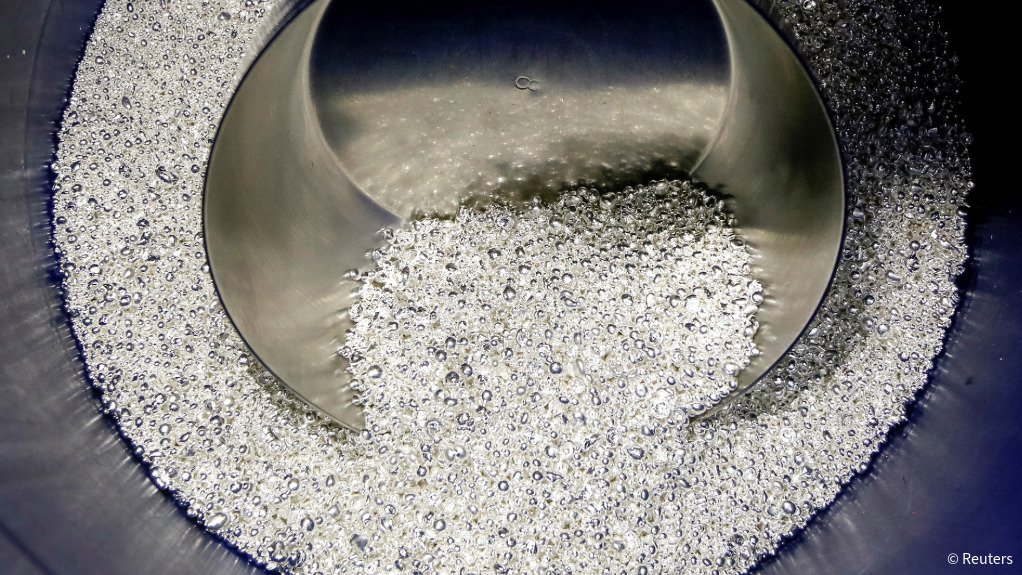



During times of global uncertainty and geopolitical uncertainty, commodities such as gold and silver tend to benefit from increased demand; however, the World Gold Council (WGC) says the demand drivers for the two precious metals are distinct and behave quite differently during periods of market stress.
Gold has historically acted as the more defensive, lower-volatility diversifier, while silver tends to behave as a hybrid – part precious metal and part industrial metal – with higher volatility and greater equity sensitivity during drawdowns.
Both gold and silver have delivered strong returns over the past year, with silver prices having surged to levels above $100/oz early in this year. Silver prices also increased more than 147% in 2025, which outpaced gold’s growth by a significant margin.
Gold prices have averaged at levels above $4 000/oz for the past six months and grew by 60% in 2025.
Silver currently trades at between $75/oz and $81/oz, while gold remains high at between $4 800/oz and $5 000/oz.
Despite gold and silver sitting under the precious metals label, gold benefits from a more balanced demand base, deeper liquidity and materially lower volatility. Silver, with its industrial bias and higher volatility, behaves more cyclically and is more sensitive to broader commodity flows, the WGC explains.
These distinctions shape how each metal performs in portfolios, with gold consistently offering diversification during times of stress as a strategic and defensive asset while silver tends to amplify moves – both up and down – acting more like a “high-beta complement” instead of a substitute.
Gold is typically demanded by consumers, investors and central banks. Owing to gold being likened to a financial asset, it becomes sensitive to policy decisions and credit conditions – often supporting its role as a hedge.
Silver demand, on the other hand, is dominated by industry demand, which increases its exposure to pro-cyclical risk sentiment. Silver is, therefore, more likely to trade closer to industrial metals and risky assets during periods of market stress and economic deceleration.
In terms of supply, the WGC distinguishes between gold’s broad supply globally from being mined as a primary product and silver stemming from by-product production of copper, lead and zinc. Silver is, therefore, more exposed to disruptions in those sectors. Silver output is concentrated in Latin America while gold production is more geographically diverse.
Recycling also plays a much larger role in gold supply compared with silver.
The WGC says gold recycling contributes about one-third of global supply, but silver recycling accounts for about 19% of supply. The council adds that silver is dispersed across electronics, solar panels and industrial applications and, therefore, recovery is often uneconomical.
As a result, gold benefits from a more stable secondary supply, whereas silver faces structurally tighter physical market conditions.
TRADING ACTIVITY
The WGC says the size and liquidity of the gold and silver markets also differ markedly. Gold is a deep market with an estimated $15-trillion in financial form – mostly physical bullion – and a liquid global asset with trading activity comparable to major bond and currency markets.
The silver market is considerably smaller.
For example, gold exchange-traded funds (ETFs) have averaged $2.3-billion a day over the past five years, compared with $700-million for silver. The gap widens further with futures and over-the-counter (OTC) trading – $55-billion compared with $11-billion a day and $97-billion compared with $13-billion a day, respectively, over the same period.
Through February, silver ETF volumes reached $11.4-billion, which is nearly nine times the 2025 average while futures jumped to $71-billion a day, which is nearly four times that of the 2025 average. OTC silver activity increased to $59-billion in February, which is three times the 2025 average.
While trading activity has increased, a clearer measure of market depth is the intraday bid-ask spread. The WGC says, by this metric, silver is meaningfully less liquid with an average spread of nine basis points, which is more than four times wider than gold’s two basis points.
Silver spreads also spike up in periods of risk to very high levels, making it costly for investors to initiate or liquidate positions. The result of wider spreads is higher volatility, which has direct implications for investors. To target equal risk contribution, the notional allocation to silver typically needs to be materially smaller than for gold.
Ultimately, for portfolios seeking crisis diversification, gold’s negative correlation to the stock market during drawdowns underpins its role as a hedge. Silver, in turn, does not consistently provide the same protection, which limits its stabilising role.
Silver remains a tactical complement to strategic gold allocations rather than a substitute.
Article Enquiry
Email Article
Save Article
Feedback
To advertise email advertising@creamermedia.co.za or click here
Research Reports

Projects
Latest Multimedia

Latest News
Showroom

Developed to exceed the latest EN 15964 standards for police breathalysers proving that it will remain accurate and reliable for many years to come.
VISIT SHOWROOM
Rittal is a world leading provider of top-quality integrated systems for enclosures, power distribution, climate control, IT infrastructure and...
VISIT SHOWROOM
Press Office
Announcements
What's On
Subscribe to improve your user experience...
Option 1 (equivalent of R125 a month):
Receive a weekly copy of Creamer Media's Engineering News & Mining Weekly magazine
(print copy for those in South Africa and e-magazine for those outside of South Africa)
Receive daily email newsletters
Access to full search results
Access archive of magazine back copies
Access to Projects in Progress
Access to ONE Research Report of your choice in PDF format
Option 2 (equivalent of R375 a month):
All benefits from Option 1
PLUS
Access to Creamer Media's Research Channel Africa for ALL Research Reports, in PDF format, on various industrial and mining sectors
including Electricity; Water; Energy Transition; Hydrogen; Roads, Rail and Ports; Coal; Gold; Platinum; Battery Metals; etc.
Already a subscriber?
Forgotten your password?
Receive weekly copy of Creamer Media's Engineering News & Mining Weekly magazine (print copy for those in South Africa and e-magazine for those outside of South Africa)
➕
Recieve daily email newsletters
➕
Access to full search results
➕
Access archive of magazine back copies
➕
Access to Projects in Progress
➕
Access to ONE Research Report of your choice in PDF format
RESEARCH CHANNEL AFRICA
R4500 (equivalent of R375 a month)
SUBSCRIBEAll benefits from Option 1
➕
Access to Creamer Media's Research Channel Africa for ALL Research Reports on various industrial and mining sectors, in PDF format, including on:
Electricity
➕
Water
➕
Energy Transition
➕
Hydrogen
➕
Roads, Rail and Ports
➕
Coal
➕
Gold
➕
Platinum
➕
Battery Metals
➕
etc.
Receive all benefits from Option 1 or Option 2 delivered to numerous people at your company
➕
Multiple User names and Passwords for simultaneous log-ins
➕
Intranet integration access to all in your organisation