Water is not endless, let’s protect this precious resource

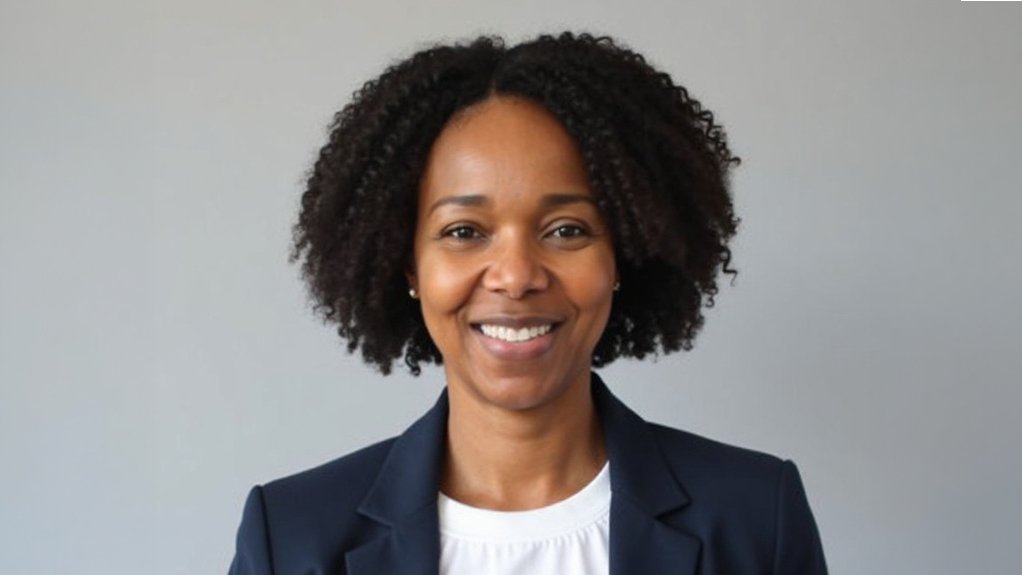



By Rand Water spokesperson Makenosi Maroo
Water is life. It really is that simple, yet it is something we often take for granted. Every person, every animal, every plant on this planet depends on it. For humans, water is essential in countless ways: we drink it to survive and rely on it to run industries and support life.
Even though water is a precious resource, we often act as if it is unlimited. In reality, if we continue to take it for granted, the consequences could be severe.
Protecting water is a necessity. It requires awareness, responsibility, action from every individual, community and government. It is our duty to use water wisely and conserve it diligently.
A key question we must ask ourselves is whether we are truly treating water as the valuable resource that it is. We likely already know the answer and although it may be worrying and uncomfortable, it is necessary to confront it honestly.
In South Africa, this reality is clear. Rand Water is one of the largest water utilities in South Africa as well as on the African continent, supplying water to about 18-million people and industries across Gauteng, parts of Mpumalanga, the Free State and North West.
Rand Water abstracts raw water from the Vaal Dam under a licence issued by the Department of Water and Sanitation.
Once the raw water is extracted, it undergoes a rigorous purification and treatment process at the Zuikerbosch and Vereeniging Water Treatment Plants. These plants are responsible for removing impurities, harmful bacteria and pollutants, ensuring that the water meets strict safety and quality standards before it is released into the distribution network. From there, the treated water is pumped to a wide range of users, including municipal water systems that supply households and mining operations that require water for their processes.
This system highlights both the complexity and the importance of water management in South Africa. It is not just about having water available; it is about carefully monitoring, treating and distributing it in a way that meets the needs of millions while protecting the long-term sustainability of the resource.
The Zuikerbosch and Vereeniging Water Treatment Plants can produce up to
5 000-megalitres a day, excluding the newly constructed Station 5A at the Zuikerbosch Water Treatment Plant, which adds a further 600-megalitres a day. The Zuikerbosch Water Treatment Works System is the largest state-of-the-art water purification plant in Africa and remains one of Rand Water’s most critical supply infrastructures.
This expansion is a key part of Rand Water’s long-term plan. It aims to provide a steady, reliable water supply for millions of people. However, even the best infrastructure cannot replace responsible water management.
We frequently report that municipalities, particularly in Gauteng, experience low reservoir levels owing to excessively high-water consumption, which is often worsened by heatwaves. Does this mean we are blaming residents? No, we are simply presenting the facts.
In technical terms, high consumption refers to the System Input Volume. This is the total amount of water that Rand Water supplies to the municipal system. It includes both the water used by households and non-revenue water.
As consumers, we have the responsibility to use water efficiently and to pay for water services. Bulk water utilities, such as Rand Water, are responsible for abstracting, purifying, treating and supplying bulk water to municipalities and industries.
Similarly, municipalities are responsible for maintaining water infrastructure, distributing water to households, and ensuring accurate billing.
We now focus on an important topic: Non-Revenue Water (NRW), which is a major driver of high-water consumption. According to an article by the Water Research Commission, NRW is defined as “water that is produced and supplied but does not generate revenue because of various losses throughout the distribution system. These losses are generally categorised into physical losses and commercial losses. Physical losses refer to leaks in the distribution system, theft and unauthorised consumption, while commercial losses are attributed to meter inaccuracies, billing errors, and data handling issues.”
Rand Water’s current raw water abstraction limit is 1 803-million cubic metres a year, equivalent to about
4 936-megalitres a day. On February 19, 2026, Minister of Water and Sanitation
Ms Pemmy Majodina approved a temporary increase of 200-megalitres a day to support municipal reservoirs that are struggling to recover.
This additional supply will only be available from February to June 2026 and is therefore not a permanent solution. It serves as a stark reminder that the system is operating close to its maximum capacity, and that sustainable water management, ongoing infrastructure maintenance, and responsible water-use behaviour are all critical to ensuring a reliable water supply.
We cannot solve water scarcity by pumping and using more of this precious resource. We must carefully manage the water we have.
We can start with low-hanging fruits: fixing leaks in distribution systems, replacing and refurbishing infrastructure and removing illegal connections.
This responsibility does not rest solely with the government. Every household, business and institution has a role to play. Simple actions such as taking shorter showers, fixing dripping taps, using water-efficient appliances and avoiding unnecessary irrigation can make a real difference. When millions of people adopt these small changes, the collective impact is significant.
As we commemorated National Water Month in March, it is worth remembering that water connects us all. It sustains our health, supports our economy, and secures our future. Most importantly, it belongs not only to us but also to the generations that will follow. Water conservation is not optional; it is both a duty and a responsibility.
Article Enquiry
Email Article
Save Article
Feedback
To advertise email advertising@creamermedia.co.za or click here
Research Reports

Projects

Latest Multimedia

Latest News
Showroom
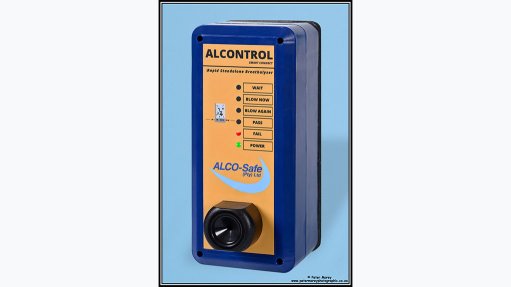
Developed to exceed the latest EN 15964 standards for police breathalysers proving that it will remain accurate and reliable for many years to come.
VISIT SHOWROOM
ESAB South Arica, the leading supplier of high-end welding and cutting products to the Southern African industrial market is based in...
VISIT SHOWROOM
Press Office
Announcements
What's On
Subscribe to improve your user experience...
Option 1 (equivalent of R125 a month):
Receive a weekly copy of Creamer Media's Engineering News & Mining Weekly magazine
(print copy for those in South Africa and e-magazine for those outside of South Africa)
Receive daily email newsletters
Access to full search results
Access archive of magazine back copies
Access to Projects in Progress
Access to ONE Research Report of your choice in PDF format
Option 2 (equivalent of R375 a month):
All benefits from Option 1
PLUS
Access to Creamer Media's Research Channel Africa for ALL Research Reports, in PDF format, on various industrial and mining sectors
including Electricity; Water; Energy Transition; Hydrogen; Roads, Rail and Ports; Coal; Gold; Platinum; Battery Metals; etc.
Already a subscriber?
Forgotten your password?
Receive weekly copy of Creamer Media's Engineering News & Mining Weekly magazine (print copy for those in South Africa and e-magazine for those outside of South Africa)
➕
Recieve daily email newsletters
➕
Access to full search results
➕
Access archive of magazine back copies
➕
Access to Projects in Progress
➕
Access to ONE Research Report of your choice in PDF format
RESEARCH CHANNEL AFRICA
R4500 (equivalent of R375 a month)
SUBSCRIBEAll benefits from Option 1
➕
Access to Creamer Media's Research Channel Africa for ALL Research Reports on various industrial and mining sectors, in PDF format, including on:
Electricity
➕
Water
➕
Energy Transition
➕
Hydrogen
➕
Roads, Rail and Ports
➕
Coal
➕
Gold
➕
Platinum
➕
Battery Metals
➕
etc.
Receive all benefits from Option 1 or Option 2 delivered to numerous people at your company
➕
Multiple User names and Passwords for simultaneous log-ins
➕
Intranet integration access to all in your organisation