Unpacking the National Water Action Plan amid lingering concerns over effectiveness



South Africa’s new National Water Action Plan (NWAP), developed and being implemented by the National Water Crisis Committee (Watercom), sets out several strategic interventions over the short, medium and long term aimed at addressing the root causes of the country’s long-standing water supply challenges.
While longer-term reforms by the Department of Water and Sanitation (DWS) have been under way over the past few years, the water crisis has reached breaking point, requiring more urgent, strategic and coordinated national interventions to arrest and reverse the significant decline seen over more than a decade.
“The NWAP is based on a thorough analysis of the root causes of the water crisis at municipal level and what needs to be done to address the challenges. It identifies actions that will significantly improve water service delivery in the short term, as well as actions, such as legislative and other reforms, that will take longer,” explains President Cyril Ramaphosa, who also chairs the Watercom.
The plan highlights the need to act on two fronts: working with municipalities to resolve the immediate crises, and changing the way water services are delivered.
According to the NWAP, one of the root causes of the crisis is an inappropriate delivery model for water services, characterised by the absence of ring-fencing, as water revenues are often used to fund other municipal functions, thereby reducing the resources available for water infrastructure maintenance, investment and the hiring of skilled staff.
To mitigate the various challenges, the NWAP outlines five interlinked strategies. These include addressing challenges in municipal water and sanitation delivery, through which most South Africans receive water; expediting reforms to address the systemic causes of the water crisis; increasing investment in infrastructure, including through private-sector investment; exploring legal and regulatory mechanisms to improve municipal service delivery; and tackling corruption and criminality in the water sector.
Government is drawing on the experience of the country’s response to its electricity crisis and has taken the same approach of focused, coordinated actions in developing the NWAP, says Ramaphosa.
“The implementation of the Energy Action Plan (EAP) ended more than a decade of persistent loadshedding. We have shown tremendous progress with the EAP implementation and, similarly, I have no doubt that having come up with a clear plan, which was crafted not only by the department but by a variety of role-players, we will be able to attend to the various challenges.”
Both the EAP and the NWAP form part of Operation Vulindlela, a reform programme coordinated and driven by the Presidency.
WaterCAN executive director Dr Ferrial Adam notes that the plan correctly diagnoses – and acknowledges the scale of – the underlying crisis. However, its credibility will depend on whether it produces action rather than adding another layer to an already complex system.
“South Africa has seen numerous strategies, committees and turnaround plans before. The creation of Watercom will only be meaningful if it has the authority and political will to enforce deadlines, demand transparent reporting and hold institutions accountable for repeated failures.”
Many of the measures and solutions contained in the NWAP are not new, with the challenge having been weak implementation, fragmented responsibility and the absence of meaningful consequences for institutional failure.
Proposals to ring-fence municipal water revenue, reduce water losses, repair ageing infrastructure, improve billing, strengthen technical capacity, reform institutions and attract additional investment have appeared in government policy and planning documents for years, she says.
“The NWAP continues to treat water primarily as an engineering, management and service delivery issue rather than as a systemic national crisis driven by the interaction of failing institutions, financial instability, corruption, deteriorating infrastructure, pollution, degraded rivers, wetlands and catchments, climate change and deep social inequality. These forces do not operate in isolation. They reinforce one another, creating what can only be described as a water polycrisis.”
Adam points out that the plan assumes the crisis will improve if water and sanitation services are taken away from the hundreds of failing municipalities, private-sector investment is leveraged, infrastructure is repaired, corruption is reduced and investment increases.
“The plan will not solve the crisis if the same governance failures, political interference, poor procurement practices and the absence of consequences are simply transferred into a new structure,” adds advocacy group AfriForum environmental manager Lambert de Klerk, warning that Ramaphosa’s comparison between the water crisis and government’s response to loadshedding should be treated with caution.
He points out that the end of regular loadshedding is not attributable solely to the efforts of State-owned power utility Eskom, with reduced demand, increased private self-generation and households and businesses spending their own money on solar energy also contributing factors.
“Ageing infrastructure and deep institutional weaknesses at Eskom have not disappeared. If this is the model for water, South Africans should expect another crisis to be poorly managed rather than properly solved at its source.”
South African Human Rights Commission (SAHRC) commissioner Dr Henk Boshoff agrees that the NWAP identifies the symptoms and provides a proper diagnosis of the problem. But he questions whether the action plan adequately addresses the challenges going forward, noting that water-related complaints continue to rank among the top five complaints received by the SAHRC.
Given the scale, scope and magnitude of the water crisis, he reiterates the SAHRC’s call for the water crisis to be declared a national disaster to enable the mobilisation of emergency funds, better intergovernmental collaboration and a coordinated process.
“Government simply does not have sufficient funds at this stage to address the water crisis, and it will be a process that will be unfolding over quite a few years.”
DWS director-general Dr Sean Phillips, however, says that a state of disaster would not achieve much more than what is already being undertaken to ensure water security.
While agreeing that urgent action is needed to address immediate crises, he argues that reforming the sector for long-term sustainability is also necessary.
A national state of disaster would not address the core causes of the challenges, and would not result in a sustainable sector, he adds.
“I can understand the reasoning for it, but I am still not convinced that it would result in much more than is currently the case. Unless you address the root causes, the problems are going to keep coming back,” Phillips notes.
Not from Scratch
Ramaphosa assures that implementation of the NWAP will result in the resolution of the water crisis.
“We are pulling out all the stops and taking all measures to make sure that all these challenges are resolved. Our main priority lies in implementation, clear responsibilities and accountability,” he says, adding that the Watercom will meet regularly to oversee implementation, track progress and hold the responsible departments and public entities accountable for delivery.
He points out that the plan is not starting from scratch and that progress has been made in resolving the challenges, including legislative and regulatory measures and funding reforms.
“Over the last few months, work has been under way to implement the action plan. This includes immediate interventions in poorly performing municipalities, including, for example, water boards helping struggling municipalities to drill boreholes and provide emergency supply.”
In addition, grant money has been redirected to the worst-performing municipalities, while legal action has been taken against dozens of municipalities that have violated the National Water Act.
Other key actions taken include the establishment of the National Water Resources Infrastructure Agency (NWRIA) as a specialised agency to develop, operate, maintain and finance national water resources infrastructure, and the establishment of six Catchment Management Agencies across South Africa to protect and manage major water systems.
“We are channelling more funds from national government into water infrastructure. Through national grants, we are investing R24-billion a year in municipal water and sanitation, with about 800 projects under way nationwide. Additional funding is being mobilised for municipal water infrastructure through a mix of financial instruments and public-private partnerships.”
Further, through government’s unserved rural communities programme, 71 borehole projects have been completed in Mpumalanga, Gauteng, KwaZulu-Natal and the Eastern Cape, reaching about 30 000 households.
Between 80 and 100 more boreholes will be drilled this year, and 500 over the next two years, extending water to about 250 000 households.
Larger projects are also progressing, Ramaphosa says, citing as examples R1.3-billion in grant-funded projects set to improve the reliability of water services to more than 130 000 households in the uMkhanyakude district municipality, in KwaZulu-Natal, and a R2-billion project, now 80% complete, in the Thembisile Hani local municipality, in Mpumalanga, which will provide access to 65 000 unserved households.
In Limpopo, mining companies are funding half of a R26-billion pipeline project that will reach 180 000 households, and in Emfuleni Rand Water has partnered with the municipality to create a new entity called the Vaal Corporation Water Utility, establishing a professionally run and financially self- sustaining water service provider to improve water services in the struggling municipality.
Moving forward, the NWAP also incorporates the critical reduction of nonrevenue water (NRW), which includes losses from leaks, theft or faulty meters, from 47% to 39.5% by 2031.
With almost half of pumped water lost or unaccounted for before it generates revenue, reducing NRW is one of the most important opportunities to improve water service delivery.
Several key catalytic actions are already under way to support this, including the Metro Trading Services Reform programme, which is being implemented across the eight metropolitans, with the aim of reducing NRW and establishing single-point accountability for the water function, as well as licensing reforms, which provide the framework for appointing competent water service providers to be accountable for reducing NRW.
Other actions include piloting alternative service delivery mechanisms, including long-term concessions or public-private partnerships, and the Water Partnerships Office (WPO) NRW programme.
“The successful expansion of this national programme facilitates private-sector participation to help municipalities reduce water losses and improve revenue collection,” the plan outlines.
To unlock infrastructure investment and delivery, the DWS is developing a pipeline of projects for private-sector participation, with at least three projects brought to market before the end of this year. The National Treasury is also establishing the Infrastructure Finance and Implementation Support Agency to collaborate with the WPO and project sponsors to structure projects for greater private-sector participation.
Further, to strengthen governance and accountability, the Presidency is reviewing and proposing amendments to the legislation governing national government intervention in failing municipalities. The DWS and the National Treasury are developing budgeting requirements and incentives to ensure that water revenues are ring-fenced and reinvested into water services.
Meanwhile, the DWS is finalising amendments to the Water Services Act, appointing the NWRIA board and CEO and drafting legislation to establish an independent water regulator, which will bring greater oversight and accountability to the sector.
“Together, these immediate actions exemplify the prioritisation, decisiveness, and commitment that are required for change, and lay some fundamental groundwork for the plan’s five areas of focus.”
Working in Silos a Recipe for Disaster
Adam warns that implementation requires a model of co-governance in which the State, business and civil society each play distinct but complementary roles.
“Implementation cannot rest on government alone, nor can responsibility simply be outsourced to the private sector.”
Association of Water and Sanitation Institutions of South Africa chairperson Ramateu Monyokolo says stronger partnerships are needed among government, municipalities, business, organised labour, academia and civil society.
“The NWAP’s greatest strength lies in recognising that water security is a shared national responsibility. Government must provide leadership and an enabling policy environment, but municipalities, business, organised labour, research institutions, civil society and communities all have indispensable roles to play.”
Consulting Engineers South Africa (CESA) warns that infrastructure investment and institutional reform will only deliver results if South Africa urgently closes the technical skills gap in the water and wastewater sector.
Structured, ongoing technical training needs to be incorporated into all phases of the rollout, as no amount of ring-fencing or reform will hold water if there are not enough competent people to run the plants, maintain the assets and make sound engineering decisions on the ground, says CESA CEO Chris Campbell.
He points to a direct correlation between the decline in South Africa’s Blue Drop and Green Drop performance and the loss of technical skills from municipalities over the past three decades.
“Reversing this trend requires sustained, practical, engineering-led skills development, not short-term interventions on the eve of looming local government elections. The warning lights had come on more than two decades ago and, just as in the case of our energy crisis, we kicked the can down the road up to now.”
Recovering the sector will require a pipeline of competent, professionally registered local practitioners who can take responsibility for these assets and keep them operating for the next 30 years and beyond.
“Skills development is therefore not separate from the water response. It is one of the foundations on which the response must be built.”
Article Enquiry
Email Article
Save Article
Feedback
To advertise email advertising@creamermedia.co.za or click here
Research Reports


Projects

Latest Multimedia


Latest News

Showroom
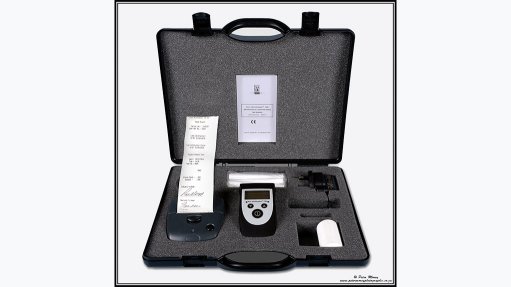
Developed to exceed the latest EN 15964 standards for police breathalysers proving that it will remain accurate and reliable for many years to come.
VISIT SHOWROOM
Axiom Hydraulics is a trusted leader in South Africa’s hydraulic industry, delivering world-class components, systems, and engineering expertise...
VISIT SHOWROOM


Press Office
Announcements
What's On
Subscribe to improve your user experience...
Option 1 (equivalent of R125 a month):
Receive a weekly copy of Creamer Media's Engineering News & Mining Weekly magazine
(print copy for those in South Africa and e-magazine for those outside of South Africa)
Receive daily email newsletters
Access to full search results
Access archive of magazine back copies
Access to Projects in Progress
Access to ONE Research Report of your choice in PDF format
Option 2 (equivalent of R375 a month):
All benefits from Option 1
PLUS
Access to Creamer Media's Research Channel Africa for ALL Research Reports, in PDF format, on various industrial and mining sectors
including Electricity; Water; Energy Transition; Hydrogen; Roads, Rail and Ports; Coal; Gold; Platinum; Battery Metals; etc.
Already a subscriber?
Forgotten your password?
Receive weekly copy of Creamer Media's Engineering News & Mining Weekly magazine (print copy for those in South Africa and e-magazine for those outside of South Africa)
➕
Recieve daily email newsletters
➕
Access to full search results
➕
Access archive of magazine back copies
➕
Access to Projects in Progress
➕
Access to ONE Research Report of your choice in PDF format
RESEARCH CHANNEL AFRICA
R4500 (equivalent of R375 a month)
SUBSCRIBEAll benefits from Option 1
➕
Access to Creamer Media's Research Channel Africa for ALL Research Reports on various industrial and mining sectors, in PDF format, including on:
Electricity
➕
Water
➕
Energy Transition
➕
Hydrogen
➕
Roads, Rail and Ports
➕
Coal
➕
Gold
➕
Platinum
➕
Battery Metals
➕
etc.
Receive all benefits from Option 1 or Option 2 delivered to numerous people at your company
➕
Multiple User names and Passwords for simultaneous log-ins
➕
Intranet integration access to all in your organisation