Platinum and palladium receive yet another futures trading boost

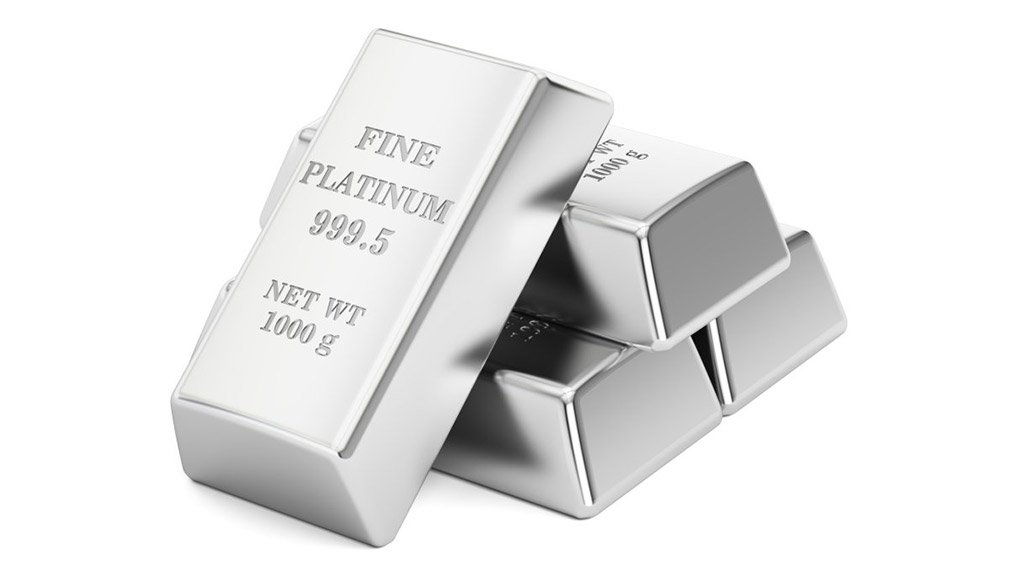


JOHANNESBURG (miningweekly.com) – Platinum and palladium are among four precious metals included in new futures contracts launched in London, World Platinum Investment Council (WPIC) reports, amid New York-listed Intercontinental Exchange's commencement of trading precious metals derivatives in London.
Intercontinental Exchange's contracts, which also cover gold and silver, are linked to London's established daily benchmark price auctions and offer market participants an additional way to manage price exposure and risk.
For platinum and palladium, the development could provide greater flexibility for investors and industrial users, although the impact on market liquidity will depend on trading activity and uptake, WPIC noted on LinkedIn.
Platinum and palladium were also given a major trading boost from September 28 when China gave international access to the trading of the two platinum group metals (PGMs) on the Guangzhou Futures Exchange (GFEX), where domestic exchange activity has been improving price discovery since the launch in November last year.
The GFEX’s investment scope now reaches out to foreign institutional investors and is giving them full access to platinum and palladium futures and options contracts.
On the GFEX, the form of the platinum and palladium being traded also goes beyond bar and includes sponge. This is tailor-made for China where most industrial and automotive end-users of platinum and palladium much prefer it in the form of ready-to-use sponge.
Expected to result from international participation in platinum and palladium is price discovery and the emergence of increased arbitrage opportunity.
Interestingly, GFEX adheres to the technical specifications, quality standards and responsible platinum and palladium sourcing rules of the London Platinum and Palladium Market (LPPM) and entered the futures fray alongside the likes of Chicago Mercantile Exchange (CME), London’s LBMA, Japan’s Osaka Exchange as well as over-the-counter trading entities.
DEMAND OUTLOOK
Widening industrial uses for PGMs have been good for the demand outlook for the metals, which are hosted overwhelmingly in South Africa.
PGMs are needed, for example, for proton exchange membrane (PEM) electrolysers that generate hydrogen as well as in fuel cell electric vehicles (FCEVs) that convert the hydrogen back into electricity for mobility or stationary purposes.
Reiterated in a report earlier this month is that Algeria and Tunisia have joined Italy, Austria and Germany in strengthening cooperation on the 3 300 km SoutH2 Corridor pipeline project, which aims to transport renewable hydrogen from North Africa to European markets in the early 2030s. The five countries signed a political declaration to support project development, financing and commercial partnerships.
Also, US Society of Piping Engineers and Designers president Javier Rubio has reported that the 18 green hydrogen projects under construction or in operation across Europe, China, India, and Saudi Arabia represent about $26-billion in announced and reported project investment, excluding projects without confirmed figures.
Japanese vehicle manufacturer Toyota regards hydrogen as an important energy source, WPIC has noted, in realising a carbon-neutral society. It introduced its first FCEV, the Mirai, in 2014 and has sold it in more than 30 countries and regions.
Since 2019, Toyota has also begun supplying fuel cell systems that generate electricity from hydrogen, and has provided more than 3 500 fuel cell systems to over 100 customers worldwide for applications such as buses, rail, and stationary generators. In partnership with others, Toyota has also developed hydrogen cartridge and hydrogen sauna, promoting decarbonisation in areas of everyday life as well.
Fuel Cell Works reports that Toyota’s hydrogen headquarters in North America is advancing hydrogen refuelling capabilities for heavy-duty FCEV trucks through the installation of two mobile hydrogen refuelling units at its parts centre in California. The units will support heavy-duty FCEV trucks carrying freight from the Port of Los Angeles to Ontario, California and across the surrounding region.
The International Association for Hydrogen Safety reports that China could see annual sales of hydrogen FCEVs reach 933 000 units by 2040, with SNE Research also projecting China’s annual green hydrogen production at 17-million tonnes by 2040.
China is already home to a growing number of FCEV truck and commercial vehicle programmes.
If SNE Research’s forecast is realised, hydrogen mobility in China would move well beyond pilot fleets and targeted regional deployments into a much larger commercial market.
FuelCellChina’s Becky Chen reports that construction is progressing on the Chunhua Hydrogen Industrial Park in Xinma Industrial Park, Zhuzhou High-Tech Zone, Hunan province. The 5.7 ha project has a planned building area of about 81 000 m2 and a total investment of about $70-million.
The industrial park will include a hydrogen research institute, corporate headquarters, a trade and exhibition centre, an industrial cluster zone and an intelligent manufacturing facility.
The project has been included among Hunan province’s key construction projects and factory buildings are scheduled to be commissioned in 2028.
Chinese electrolyser maker Sungrow Hydrogen will supply a 21 MW PEM system to Polish plastics manufacturer Promet-Plast's government-subsidised green hydrogen project in Gaj Oławski. The deal represents Poland's largest PEM electrolyser order to date and marks another significant Chinese electrolyser deployment in Europe.
Sungrow will supply the system through its Polish distributor Dot Engineering for a project that has secured $33.9-million from the Polish government. Sungrow has been expanding globally, securing orders in Kenya, Oman, and South America.
Researchers at Nagoya University have developed a fuel-cell catalyst that wraps platinum nanoparticles in nitrogen-containing graphene and supports them on carbon nanotubes, with the aim of improving both durability and catalytic performance.
In testing, the catalyst reportedly retained 96.9% of its active platinum surface after 30 000 durability cycles. It also provided 96.3 m2 of active platinum surface per gram, compared with 60.6 m2 for a commercial catalyst.
The results point to a potential route for extending fuel-cell life while making more effective use of platinum, although the work remains at the research and testing stage.
FREIGHT ON SCOTTISH ROADS
Hydrogen FCEV trucks are moving into everyday freight operations on UK roads in that Scottish logistics company John G Russell has taken delivery of three prototype Scania Group FCEVs, which will now be tested in live customer operations.
The trucks form part of e government-supported project and will be used to gather data on performance, range and their suitability for day-to-day logistics.
Noted at the Hydrogen Technology World Expo in Hamburg was that UFI Hydrogen’s membrane electrode assemblies (MEA) for PEM electrolysers require less iridium, another PGM that is important for the energy transition.
In Romania, the country’s first hydrogen-powered passenger trains will use fuel cells supplied by Canada’s Ballard Power Systems, which has secured an order for 4.8 MW fuel-cell systems to power 12 hydrogen Siemens trains scheduled to enter service in 2029. The fuel-cell units are due for delivery next year, following Romanian Rail Authority Autoritatea Feroviara Romana's purchase of the trains earlier this year.
In Holland, Greenpoint has reportedly lowered the hydrogen price at its stations in Dordrecht, Nieuwegein and Oude-Tonge to €10.95 per kilogram including VAT, or €9.05 per kilogram excluding VAT, effective October 20. The lower price adds another factor to the hydrogen mobility discussion in the Netherlands, where attention has increasingly shifted from vehicle and station availability toward the economics of operating hydrogen fleets.
The development of hydrogen mobility is also extending from vehicles to drones, robots and intelligent systems, researcher Dr Wang Zhiqiang reports, while HFN adds that on September 13, the skies above Rotterdam The Hague Airport hosted a liquid-hydrogen drone demonstration as part of an innovative flight involving collaboration between the aerospace sector and the Tulips Green Airports programme.
In Germany, Bosch Hydrogen Energy has secured a 45 MW order for its Hybrion PEM electrolyser stacks from electrolysis company FEST, which has ordered 36 Bosch stacks, each rated at 1.25 MW, for deployment across several hydrogen projects in Europe.
DRIVERLESS HYDROGEN VEHICLES
First Hydrogen has acquired the rights to advance a driverless ground vehicle towards commercialisation, including the development of a viable commercial design and defined application for the technology within a two-year period.
The driverless ground vehicle chassis will have a modular cargo platform with multiple versatile applications that are easily interchangeable plus amphibious capabilities. The system is intended to function as a mobile robotic drone assistant capable in a wide range of logistics.
The platform is expected to support both autonomous and user-assisted operating modes, allowing the robot to follow a user, operate through remote control, or navigate predetermined routes. By combining robotic mobility with cargo transport capability, the system aims to reduce manual labour requirements and reduce power consumption.
Demand for these systems is accelerating as advances in AI, autonomous navigation, sensors and communications expand their capabilities and reduce the need to place personnel in dangerous environments.
First Hydrogen is a Vancouver, Montreal, Germany and London, UK-based company focused on zero emission vehicles, green hydrogen production and distribution. It has designed and built two hydrogen fuel-cell-powered light commercial vehicles with 6 000 km of testing completed on 630 km single refuelling runs.
In Australia, Jet Zero Australia has secured a further $30-million in funding for Project Ulysses, a commercial-scale sustainable aviation fuel (SAF) refinery planned for Townsville, Queensland.
Platinum has an important role to play in SAF production, particularly as a catalyst in fuel processing and refining. As investment in SAF infrastructure grows, the sector represents an emerging source of platinum demand.
Platinum demand from SAF production could reach 260 000 oz annually by 2050, WPIC forecasts.
In France, a €1.2-billion tender is out for industrial hydrogen to help new industrial projects reach final investment decisions, particularly in chemicals and fertilisers, amid France Hydrogene welcoming the inclusion of a double-sided auction mechanism to support the development of synthetic aviation fuels. Europe reportedly has a portfolio of 12 synthetic aviation fuels projects that could provide a capacity of 800 000 t of synthetic aviation fuels a year between 2030 and 2035.
In Finland, hydrogen fuel cell technology is being put to work in heavy-duty commercial transport with A Peltola Oy set to operate its fleet between Jyväskylä and Helsinki from around the turn of this year. A Scania group truck will carry 56 kg of hydrogen and combine a 300 kW fuel cell with a rechargeable battery, giving it a range of several hundred kilometres to carry out commercial logistics.
In Egypt, Noah Ajare reports that a global green fuels hub development is under way with Green Hydrogen Development Holding Limited — a subsidiary of Hong Kong-listed United Energy Group (UEG) — signing a memorandum of understanding (MoU) with Abu Qir Fertilizers and chemicals company Alexandria Fertilizers, and Orascom Construction. The partnership aims to develop a green hydrogen hub in Alexandria, integrating renewables-powered green hydrogen production into existing ammonia infrastructure. Under the MoU, UEG and Orascom will lead feasibility studies for 500 MW of renewable-energy generation — combining wind and solar — with green hydrogen production capacity equivalent to 480 t of green ammonia a day. Abu Qir and Alexfert will evaluate how green hydrogen can be integrated into their ammonia production processes, drawing on existing assets and local infrastructure.
Germany is offering up to €30-million per company for renewable hydrogen projects abroad that can help to build future import routes to Germany. Projects must be designed for completion before 2030.
Germany is looking ahead to the fuel supply needed by industry, aviation, shipping and heavy transport.
Lithuanian gas transmission system operator Amber Grid plans to invest around $1.34-billion in hydrogen infrastructure as part of its 2026-2035 gas transmission network development plan approved by the local national energy regulatory council.
For the first time, Amber Grid and electricity transmission operator Litgrid jointly prepared a scenario covering the development of electricity, gas and hydrogen networks, which forms the core of the ten-year plan.
The investment amount designated for hydrogen can potentially rise to $1.7-billion if an additional domestic pipeline connection is implemented. Amber expects a hydrogen network connecting six countries to be operational in the region by 2035. It is expected that Lithuania’s green hydrogen production could reach between 2.25 TWh and 10.68 TWh by that year.
According to a research report by MarketsandMarkets, the hydrogen generation market will be worth $226.37-billion by 2030, up from $157.81-billion in 2025, and registering a compound annual growth rate of 7.5% during the forecast period, driven by the increasing emphasis on reducing carbon emissions, transitioning to cleaner energy sources, and national hydrogen strategies. While green hydrogen is gaining momentum due to its potential for zero-emission production, grey hydrogen currently dominates the market, Mining Weekly can report.
Article Enquiry
Email Article
Save Article
Feedback
To advertise email advertising@creamermedia.co.za or click here
Research Reports

Projects
Latest Multimedia

Latest News

Showroom
Mitsubishi Chemical Advanced Materials South Africa (Pty) Ltd is a leading manufacturer of high-performance engineering plastics for the mining...
VISIT SHOWROOM
Iritron delivers advanced automation, control, and optimisation solutions to the Mining, Minerals & Metals, Consumer Package Goods and...
VISIT SHOWROOM
Announcements
What's On
Subscribe to improve your user experience...
Option 1 (equivalent of R125 a month):
Receive a weekly copy of Creamer Media's Engineering News & Mining Weekly magazine
(print copy for those in South Africa and e-magazine for those outside of South Africa)
Receive daily email newsletters
Access to full search results
Access archive of magazine back copies
Access to Projects in Progress
Access to ONE Research Report of your choice in PDF format
Option 2 (equivalent of R375 a month):
All benefits from Option 1
PLUS
Access to Creamer Media's Research Channel Africa for ALL Research Reports, in PDF format, on various industrial and mining sectors
including Electricity; Water; Energy Transition; Hydrogen; Roads, Rail and Ports; Coal; Gold; Platinum; Battery Metals; etc.
Already a subscriber?
Forgotten your password?
Receive weekly copy of Creamer Media's Engineering News & Mining Weekly magazine (print copy for those in South Africa and e-magazine for those outside of South Africa)
➕
Recieve daily email newsletters
➕
Access to full search results
➕
Access archive of magazine back copies
➕
Access to Projects in Progress
➕
Access to ONE Research Report of your choice in PDF format
RESEARCH CHANNEL AFRICA
R4500 (equivalent of R375 a month)
SUBSCRIBEAll benefits from Option 1
➕
Access to Creamer Media's Research Channel Africa for ALL Research Reports on various industrial and mining sectors, in PDF format, including on:
Electricity
➕
Water
➕
Energy Transition
➕
Hydrogen
➕
Roads, Rail and Ports
➕
Coal
➕
Gold
➕
Platinum
➕
Battery Metals
➕
etc.
Receive all benefits from Option 1 or Option 2 delivered to numerous people at your company
➕
Multiple User names and Passwords for simultaneous log-ins
➕
Intranet integration access to all in your organisation