Unifying (drops of) building information into a sea of insight





This article has been supplied.
By: Anoop Hariparsad - Offer Marketing Manager, Microgrids, MEA at Schneider Electric
The well-known adage, “the sum of its parts...” rings at it truest when it comes to technology. Seldom would one find that a technology that operates in isolation is as effective as when it forms part of an ecosystem.
It is the above benefit that sees property owners and facility managers realise that in order to gain the most from building automation, they can longer deploy and operate technologies in isolation.
However, in many buildings, systems remain siloed - HVAC is managed separately from lighting, access control, energy metering, water management, and property management platforms which result in limited integration and efficiency
And granted, each system may perform its function well in isolation, but without integration, valuable insights are lost, inefficiencies persist, and operating costs quietly escalate.
Moving Beyond Fragmented Building Systems
Taking it one step further, apart from systems physically residing in buildings, how do managers and operator gain insight into geographically distributed structures as well as multiple vendors?
The dilemma is data often fragmented, spread across different platforms, service providers, and legacy systems. This makes it difficult to answer even basic operational questions: where is energy being wasted , which buildings are underperforming and are systems running when spaces are unoccupied?
Modern, integrated building management solutions address this challenge by bringing data from multiple sources and dispersed locations like HVAC, lighting, access control, lifts, generators, field devices, energy and water meters into a single “pane of glass” such as a Building Management System (BMS).
This unified view provides operators and managers with actionable insight as the raw data has been transformed into digestible and practical information that can be used for proactive decision making.
Importantly, and a point that needs major awareness in the building industry, is that it doesn’t require a complete overhaul of technologies, today’s unified platforms are designed to integrate with installed assets, both extending its life and value while adding a new layer of intelligence.
Modern building management platforms are modular and expandable. And importantly, organisations can start small, automating critical systems first, and then expanding over time as budgets allow.
Even where older equipment lacks native intelligence, supplementary technologies such as sensors can bridge the gap, adding smart capabilities without wholesale replacement. Over time, as assets reach end of life, they can be upgraded strategically rather than reactively.
When buildings respond to people
The value of unified data becomes clearer when BMS’ are integrated with software systems such as Property Management Systems (PMS).
For example, by linking PMS data with building controls, buildings gain awareness of which spaces are occupied, unoccupied, rented, or temporarily vacant. This allows energy usage to align precisely with real-world behaviour.
Using a hotel room as an example; when a guest checks in, room conditions can be automatically adjusted to preferred settings. When the guest leaves the room, occupancy sensors signal the system to switch off lighting and reduce air-conditioning output. The moment the guest returns, comfort is restored, quietly and automatically.
In one real-world example, two identical hotel rooms were monitored side-by-side. Both rooms were occupied, but only one was automated with occupancy-based controls. The result was impressive with energy cost savings significantly higher in the automated room, this without impacting the guest experience.
Energy and water Management
Integrated building platforms also provide critical insight into energy and water consumption, an important feature as most property groups today have sustainability targets to meet.
Facility managers can validate utility billing, track usage trends, and identify anomalies, provided the correct, compliant metering infrastructure is in place.
Indeed, with accurate data, buildings can monitor incoming utility supplies, compare consumption against billing, and confidently engage utilities or municipalities when discrepancies arise.
This level of transparency strengthens governance, improves cost control, and supports long-term sustainability goals
There is no doubt the skie is the limit when it comes to unifying technologies and resultant data to gain the most from buildings. The trick is to be systematic and ensure the unifying software provides true operational insight for improved decision making.
Article Enquiry
Email Article
Save Article
Feedback
To advertise email advertising@creamermedia.co.za or click here
Research Reports

Projects

Latest Multimedia

Latest News

Showroom
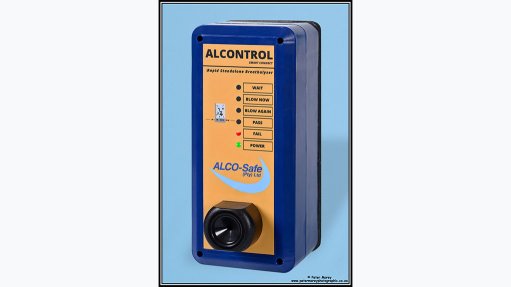
Developed to exceed the latest EN 15964 standards for police breathalysers proving that it will remain accurate and reliable for many years to come.
VISIT SHOWROOM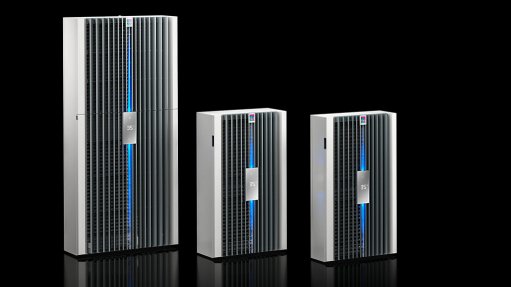
Rittal is a world leading provider of top-quality integrated systems for enclosures, power distribution, climate control, IT infrastructure and...
VISIT SHOWROOM

Press Office
Announcements
What's On
Subscribe to improve your user experience...
Option 1 (equivalent of R125 a month):
Receive a weekly copy of Creamer Media's Engineering News & Mining Weekly magazine
(print copy for those in South Africa and e-magazine for those outside of South Africa)
Receive daily email newsletters
Access to full search results
Access archive of magazine back copies
Access to Projects in Progress
Access to ONE Research Report of your choice in PDF format
Option 2 (equivalent of R375 a month):
All benefits from Option 1
PLUS
Access to Creamer Media's Research Channel Africa for ALL Research Reports, in PDF format, on various industrial and mining sectors
including Electricity; Water; Energy Transition; Hydrogen; Roads, Rail and Ports; Coal; Gold; Platinum; Battery Metals; etc.
Already a subscriber?
Forgotten your password?
Receive weekly copy of Creamer Media's Engineering News & Mining Weekly magazine (print copy for those in South Africa and e-magazine for those outside of South Africa)
➕
Recieve daily email newsletters
➕
Access to full search results
➕
Access archive of magazine back copies
➕
Access to Projects in Progress
➕
Access to ONE Research Report of your choice in PDF format
RESEARCH CHANNEL AFRICA
R4500 (equivalent of R375 a month)
SUBSCRIBEAll benefits from Option 1
➕
Access to Creamer Media's Research Channel Africa for ALL Research Reports on various industrial and mining sectors, in PDF format, including on:
Electricity
➕
Water
➕
Energy Transition
➕
Hydrogen
➕
Roads, Rail and Ports
➕
Coal
➕
Gold
➕
Platinum
➕
Battery Metals
➕
etc.
Receive all benefits from Option 1 or Option 2 delivered to numerous people at your company
➕
Multiple User names and Passwords for simultaneous log-ins
➕
Intranet integration access to all in your organisation