Transnet Port Terminals weighs further private partnerships to accelerate volume growth

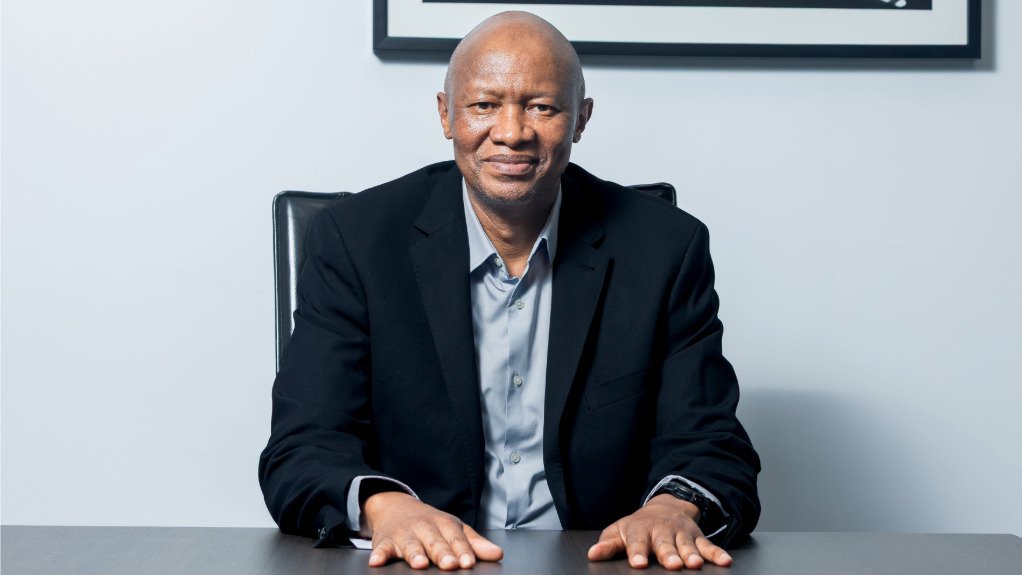


Transnet Port Terminals (TPT), which was central to the broader Transnet Group’s first and largest private sector participation (PSP) transaction to date, is actively pursuing two more partnership prospects and laying the groundwork for several others as part of moves to accelerate investment and improve efficiency.
CEO Jabu Mdaki tells Engineering News & Mining Weekly that TPT has fully integrated the PSP model into its ongoing turnaround programme, launched in 2023 amid a sharp deterioration in performance, epitomised by the historically high vessel backlogs at Durban in October 2023 and the fire at the Richards Bay Bulk Terminal that damaged part of a conveyor belt servicing the woodchip export industry.
Internally, that turnaround has involved a significant recapitalisation of key equipment such as ship-to-shore cranes, rubber-tyred gantries and mobile harbour cranes.
It has also been facilitated by a change in the procurement model, which has involved TPT entering into ten-year partnership contracts with original-equipment manufacturers such as Liebherr and Metso to standardise equipment across its operations in an effort to improve availability, as well as gain access to the latest technology, spares and servicing.
The division is currently investing about R4-billion a year in new equipment, which has already helped to deliver significant improvements across a number of its 15 sea-cargo terminals.
During the 2026 financial year, TPT reported a rise in container, automotive and bulk volumes and increased its revenue by 6%, contributing some R20.6-billion to overall group revenue of R88.6-billion.
It also made a positive contribution of R12.9-billion to the bigger Transnet Group’s return to a R4.6-billion profit in 2026, following a loss of R1.9-billion in the previous financial year; a recovery that was bolstered by proceeds from a R11.5-billion PSP transaction involving the Durban Container Terminal Pier 2.
The transaction saw International Container Terminal Services Incorporated (ICTSI), of the Philippines, assume operational control at what is now known as the Durban Gateway Terminal (DGT), in which TPT still has a majority stake of 50% plus one share.
Mdaki, who sits on the DGT board, acknowledges recent operational disruptions at what is the country’s largest container terminal, resulting in vessel delays and logistics backlogs.
The problems have been linked largely to the launch of the Navis N4 terminal operating system, with TPT seeking to alleviate the disruptions by rerouting traffic to some of the container terminals it still operates, including the Durban Container Terminal Pier 1.
However, Mdaki tells Engineering News & Mining Weekly that he remains optimistic that the problems will be addressed and that DGT’s efficiency will begin to improve in line with the expectations outlined ahead of the 25-year partnership with ICTSI.
“DGT is operating in a new environment, and it has been less than 12 months. There’s a lot of adjustments, a lot of understanding of the landscape involved and, like anything new, there are bound to be teething problems. Our biggest breakthroughs as TPT have certainly come from engagements and, perhaps, it may be an avenue for DGT to consider going forward,” Mdaki adds.
DGT Lessons
He adds that valuable lessons have emerged from the DGT transaction, which was delayed for years by a legal challenge, and says TPT intends to apply these to future partnership transactions.
These could take on various forms, including deals in which TPT retains operational control, and will be pursued to support either a step-change in terminal volumes, or efforts to return underperforming terminals to profitability.
Mdaki tells Engineering News & Mining Weekly that TPT has classified seven of its terminals as being in a strong position and the focus currently is on sustaining growth and investing in equipment availability and reliability.
These terminals include the Durban Container Terminal Pier 1, Durban Car Terminal, East London Car Terminal, Port Elizabeth Car Terminal, Port Elizabeth Bulk Terminal, Saldanha Iron Ore Terminal, and the Saldanha Multipurpose Terminal.
Another six have been classified as having significant growth potential if they are able to maximise their capacity, including the Richards Bay Bulk Terminal, Richards Bay Multipurpose Terminal, Durban Multipurpose Terminal, Cape Town Container Terminal, Port Elizabeth Container Terminal, and the Ngqura Container Terminal (NCT).
Meanwhile, Mdaki reports that TPT is actively pursuing turnaround strategies at the remaining two loss-makers, namely the Cape Town Multipurpose Terminal, and the Durban Agri/Maydon Wharf Terminal.
Partnership Options
Mdaki reports that TPT believes a partnership is still required to unlock the vision for converting the NCT into a trans-shipment hub so as to take fuller advantage of its status as the country’s deepest deep-water container terminal, able to handle the largest container vessels operating internationally.
A previous attempt to secure a partner for NCT failed and TPT is therefore weighing alternative PSP options before approaching the market again.
The focus in the meantime is on two other large PSP transactions, namely:
- The Ngqura Manganese Export Corridor (NMEC) transaction, being undertaken together with Transnet Freight Rail, Transnet National Ports Authority and the Transnet Rail Infrastructure Manager; and
- The Richards Bay Dry Bulk Terminal (RBDBT), in KwaZulu-Natal.
In both cases, moves are under way to pre-qualify entities that will be eligible to participate in a competitive bidding process to partner with TPT at the two terminals.
The RBDBT is currently operating below its nameplate capacity of 18.5-million tons, and TPT is aiming to use a PSP model to potentially expand the terminal’s capacity to 26.9-million tons and position it as a leading regional export hub.
The NMEC initiative involves not only an expansion of rail capacity but also the relocation of the existing manganese export terminal in Port Elizabeth to an expanded facility at the Port of Ngqura. The corridor, which links mines in the Northern Cape to the port in the Eastern Cape, is expected to increase exports by 20%.
Mdaki says that, besides a possible PSP in relation to the NCT trans-shipment hub, preliminary work is also under way on the design of a PSP model for the Port of Cape Town’s MPT.
Volumes in Focus
In the meantime, TPT’s focus is on continuing to grow volumes amid headwinds arising from rising fuel costs and ongoing trade and geopolitical tensions.
TPT recently announced a R91 contractual fuel neutrality fee on containers in response to recent fuel-price hikes, stating that the fee represented a discounted rate relative to the R104 indicated for a coastal diesel price of between R30.50/ℓ and R34/ℓ. The rate will apply to all containers handled on vessels berthing from November 1.
Mdaki also confirms that difficulties at DGT, coupled with disruptions to shipping in the Strait of Hormuz, which has affected trade with some countries in the Middle East, have combined to adversely affect citrus exports, which are unlikely to match the record volumes of the 2025 season.
However, he says the terminals in Cape Town and Port Elizabeth have performed strongly during the season and remains optimistic about an overall rise in bulk and automotive volumes in the current financial year.
The group is officially targeting the handling of 820 705 cars this year, as well as 18.3-million tons of manganese, 55-million tons of iron-ore, 5.7-million tons of magnetite, 6.6-million tons of chrome, and 8.2-million tons of coal.
Article Enquiry
Email Article
Save Article
Feedback
To advertise email advertising@creamermedia.co.za or click here
Research Reports
Projects

Latest Multimedia

Latest News

Showroom
The Steel Tube Export Association of South Africa was established to develop sustainable, internationally competitive carbon steel tube and pipe...
VISIT SHOWROOM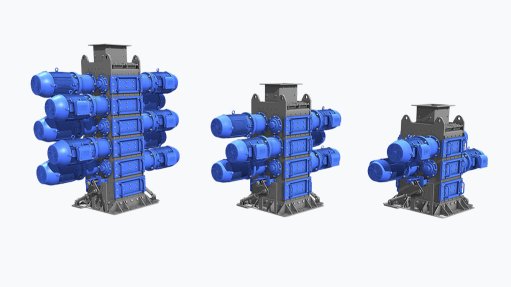
Energy and Densification Systems (EDS) has developed equipment for crushing, milling, blending and densifying products. Based on its globally...
VISIT SHOWROOM


Press Office
Announcements
What's On
Subscribe to improve your user experience...
Option 1 (equivalent of R125 a month):
Receive a weekly copy of Creamer Media's Engineering News & Mining Weekly magazine
(print copy for those in South Africa and e-magazine for those outside of South Africa)
Receive daily email newsletters
Access to full search results
Access archive of magazine back copies
Access to Projects in Progress
Access to ONE Research Report of your choice in PDF format
Option 2 (equivalent of R375 a month):
All benefits from Option 1
PLUS
Access to Creamer Media's Research Channel Africa for ALL Research Reports, in PDF format, on various industrial and mining sectors
including Electricity; Water; Energy Transition; Hydrogen; Roads, Rail and Ports; Coal; Gold; Platinum; Battery Metals; etc.
Already a subscriber?
Forgotten your password?
Receive weekly copy of Creamer Media's Engineering News & Mining Weekly magazine (print copy for those in South Africa and e-magazine for those outside of South Africa)
➕
Recieve daily email newsletters
➕
Access to full search results
➕
Access archive of magazine back copies
➕
Access to Projects in Progress
➕
Access to ONE Research Report of your choice in PDF format
RESEARCH CHANNEL AFRICA
R4500 (equivalent of R375 a month)
SUBSCRIBEAll benefits from Option 1
➕
Access to Creamer Media's Research Channel Africa for ALL Research Reports on various industrial and mining sectors, in PDF format, including on:
Electricity
➕
Water
➕
Energy Transition
➕
Hydrogen
➕
Roads, Rail and Ports
➕
Coal
➕
Gold
➕
Platinum
➕
Battery Metals
➕
etc.
Receive all benefits from Option 1 or Option 2 delivered to numerous people at your company
➕
Multiple User names and Passwords for simultaneous log-ins
➕
Intranet integration access to all in your organisation