Technology reshapes network needs

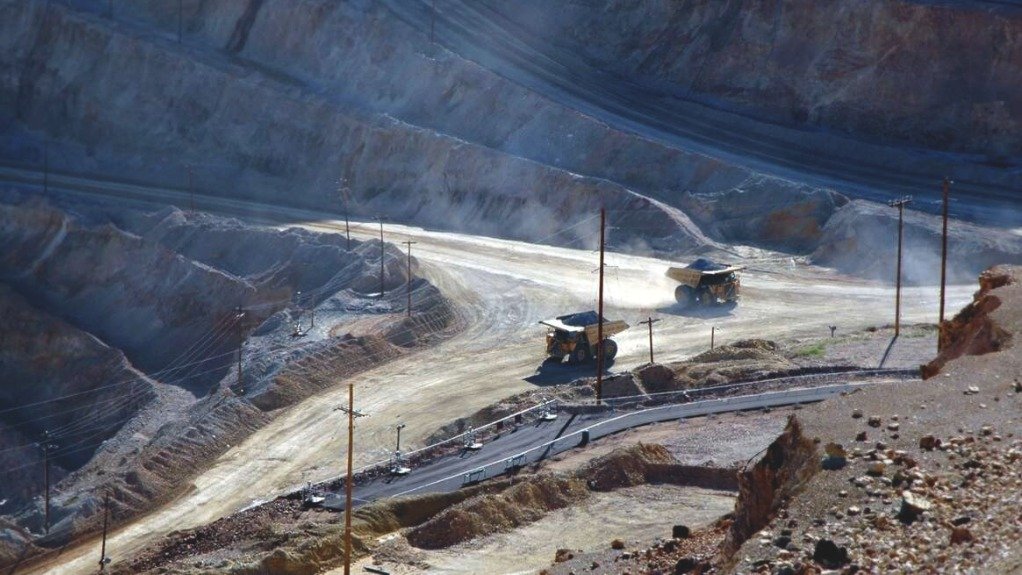
RELIABLE CONNECTION Ericsson's Private 5G supports connected workers, real-time communication and situational awareness as well as enabling operators to control equipment remotely from outside hazardous zones



As mining operations integrate autonomous equipment, remote operations and other emerging technologies, network connect-ivity needs to be customised to meet more demanding app-lications, such as low-latency and uplink-intensive applications, says multinational networking and telecommunications company Ericsson South Africa head Siseko Ngxola.
Consequently, Ericsson’s Private 5G network solution is increasingly becoming a key enabler of mining transformation as companies aim to scale automation, and improve safety and operational efficiency, he adds.
The wireless networking solution provides high-speed, 5G telecommunications network connectivity.
In South Africa, Ericsson’s reseller agreement with fixed wireless access provider Comsol pairs Ericsson Private 5G technology with Comsol’s local mining integration and last-mile expertise to provide customised connectivity for mining operations.
Private 5G offers broad coverage, high capacity, low latency, on-site data protection and performance supported by service-level commitments.
This, adds Ngxola, is particularly important when people, vehicles and machines move through big, obstructed or constantly changing environments.
The network supports connected workers, real-time communication and situational awareness, in addition to enabling operators to control equipment remotely from outside hazardous zones.
However, Ngxola explains that private 5G should be assessed against each mine’s specific requirements. It can replace all or part of existing WiFi, mesh or leaky-feeder infrastructure, where it delivers the required coverage, capacity, mobility, reliability and safety performance. Elsewhere, it can operate alongside those systems.
He notes that underground deployments still require site- specific radio planning, redundancy and integration with existing safety systems.
“Private 5G is particularly valuable for applications that require predictable coverage, high uplink capacity, mobility and secure performance. This gives mines the flexibility to use it as the primary network for selected operations or alongside existing systems as part of a broader connectivity architecture.”
The network solution also supports improved asset visibility and control, telemetry, tracking and proactive maintenance. The resulting capacity, mobility and predictable latency supports semi-autonomous fleets, fully autonomous fleets and machine control applications, adds Ngxola.
Far-Reaching Connection
Private 5G provides the connectivity foundation for industrial Internet-of-Things by linking sensors, vehicles, cameras and worker devices, in addition to delivering the predictable performance required for near- real-time analytics and machine control, explains Ngxola.
On-site data options enable mines to keep sensitive operational data local while connecting approved workloads to cloud or enterprise platforms.
This, in turn, supports AI applications, such as equipment condition monitoring, anomaly detection, worker and vehicle situational awareness, as well as production optimisation, he states.
Live operational data can also feed equipment digital twins, process monitoring or the monitoring of specific sections of a mine.
In terms of deployment, Ngxola highlights that Private 5G is deployed at diversified miner Newmont’s Cadai underground gold/copper operation, in Australia. Here, the technology allows for remote dozing, away from a high-risk tailings wall.
Compared with the operation’s previous WiFi network, he says Private 5G delivered an immediate 50% increase in dozing capacity, with up to 25% more material pushed during shifts.
Uplink speeds in the Newmont application also exceeded 370 Mb/s at a distance of more than 500 m, while overall coverage extends from about 100 m to about 3 000 m, while maintaining uplink speeds above 100 Mb/s.
Uptake Barriers
Despite the advantages of Private 5G, Ngxola says various barriers are affecting its uptake.
Mines need suitable spectrum partnerships and regulatory models, a credible total-cost case, reliable power and backhaul, local installation and support skills, as well as confidence that the network will integrate with existing operational-technology and safety systems.
“Many enterprises also operate with fragmented legacy networks and tools, while the digital-skills gap can make it difficult to move from a successful pilot to a production deployment,” he elaborates.
He stresses that each case should rest on a site-specific, use-case-led assessment of coverage, equipment mobility, safety, production, integration and total cost of ownership, starting with one or more priority use cases and expanding over time.
“New mines can design connectivity into the operation from the outset, but existing mines can also benefit where legacy networks constrain mobility, coverage or reliability. Private 5G can be the convergence technology to consolidate the fragmented services.”
Therefore, he recommends that mines identify two or three safety or production challenges, such as remote dozing or asset visibility, and set measurable baselines and key performance indicators.
Operations should then map their coverage, mobility, uplink, latency, resilience and power requirements, instrument assets and workflows to support analytics and digital twins, as well as finalise spectrum, cybersecurity, data-governance and integration requirements, early.
Article Enquiry
Email Article
Save Article
Feedback
To advertise email advertising@creamermedia.co.za or click here
Research Reports

Projects

Latest Multimedia

Latest News
Showroom

The Steel Tube Export Association of South Africa was established to develop sustainable, internationally competitive carbon steel tube and pipe...
VISIT SHOWROOM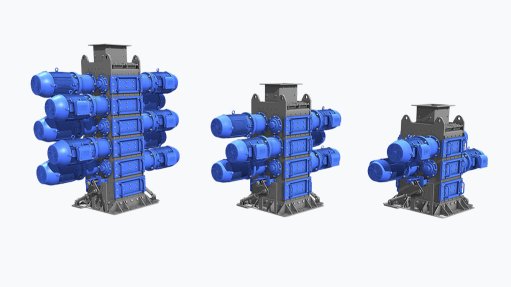
Energy and Densification Systems (EDS) has developed equipment for crushing, milling, blending and densifying products. Based on its globally...
VISIT SHOWROOM


Press Office
Announcements
What's On
Subscribe to improve your user experience...
Option 1 (equivalent of R125 a month):
Receive a weekly copy of Creamer Media's Engineering News & Mining Weekly magazine
(print copy for those in South Africa and e-magazine for those outside of South Africa)
Receive daily email newsletters
Access to full search results
Access archive of magazine back copies
Access to Projects in Progress
Access to ONE Research Report of your choice in PDF format
Option 2 (equivalent of R375 a month):
All benefits from Option 1
PLUS
Access to Creamer Media's Research Channel Africa for ALL Research Reports, in PDF format, on various industrial and mining sectors
including Electricity; Water; Energy Transition; Hydrogen; Roads, Rail and Ports; Coal; Gold; Platinum; Battery Metals; etc.
Already a subscriber?
Forgotten your password?
Receive weekly copy of Creamer Media's Engineering News & Mining Weekly magazine (print copy for those in South Africa and e-magazine for those outside of South Africa)
➕
Recieve daily email newsletters
➕
Access to full search results
➕
Access archive of magazine back copies
➕
Access to Projects in Progress
➕
Access to ONE Research Report of your choice in PDF format
RESEARCH CHANNEL AFRICA
R4500 (equivalent of R375 a month)
SUBSCRIBEAll benefits from Option 1
➕
Access to Creamer Media's Research Channel Africa for ALL Research Reports on various industrial and mining sectors, in PDF format, including on:
Electricity
➕
Water
➕
Energy Transition
➕
Hydrogen
➕
Roads, Rail and Ports
➕
Coal
➕
Gold
➕
Platinum
➕
Battery Metals
➕
etc.
Receive all benefits from Option 1 or Option 2 delivered to numerous people at your company
➕
Multiple User names and Passwords for simultaneous log-ins
➕
Intranet integration access to all in your organisation