Stronger enforcement and collaboration signal shift in South Africa's civil engineering sector

Strengthening collaboration and firmer enforcement are helping to restore confidence in South Africa’s civil engineering sector
Increased accountability across the construction value chain is creating a more stable and competitive environment for civil engineering contractors
Fair labour practices and strict compliance remain essential to protecting both workers and law-abiding contractors in the civil engineering industry
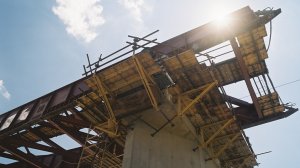
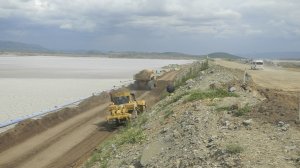




This article has been supplied.
Encouragingly, collaboration between public and private sector stakeholders in South Africa’s civil engineering industry is strengthening - underpinned by a firmer stance on accountability across the construction value chain. According to Lindie Fourie, Operations Manager at the Bargaining Council for the Civil Engineering Industry (BCCEI), recent remarks by the Department of Public Works and Infrastructure that a number of contractors have already been blacklisted in 2026 for non-compliance and unethical practices send a clear signal that enforcement is gaining traction.
“The increased visibility of enforcement actions is an important step in restoring confidence in the sector,” Fourie says. “It demonstrates a commitment to accountability and helps to protect those contractors who are operating responsibly and within the framework of the law.”
Against this backdrop, South Africa’s civil engineering sector is showing early signs of recovery, although ongoing economic pressures continue to constrain the pace and sustainability of growth. While anticipated increases in infrastructure investment and improving project pipelines are providing some optimism, contractors are still navigating tight margins, rising input costs and persistent uncertainty.
Activity in the sector has been supported by renewed focus on infrastructure development, particularly in roads, energy and water projects. However, the benefits are not yet evenly distributed across the industry. Many contractors, especially small and medium-sized players, remain under strain due to delayed project rollouts, payment bottlenecks and limited access to consistent work.
Cost pressures continue to weigh heavily on operations. Escalating fuel prices, material cost volatility and labour-related expenses are eroding margins, leaving little room for inefficiencies. In this environment, disciplined project management, accurate pricing and stringent cost control have become critical for business sustainability.
Amid these challenges, the BCCEI continues to play a central role in promoting stability, fairness and compliance across the sector. Fourie emphasises that a structured regulatory environment is essential to building a sustainable and competitive industry.
“Labour compliance is not just a regulatory requirement - it is a cornerstone of a stable and competitive civil engineering sector,” she says. “When all contractors operate on a level playing field and meet their obligations in terms of wages and conditions of employment, it creates an environment where businesses can compete fairly and projects can be delivered more effectively.”
She adds that the industry must also condemn the abominable practice of some contractors that attempt to exploit the most vulnerable purely to secure a tender and undercut their law-abiding fellow contractors who tender on BCCEI rates.
She notes that economic pressure often places strain on both large contractors and smaller subcontractors, making compliance more challenging but even more critical. “In difficult economic conditions, there can be a temptation to cut corners. However, non-compliance undermines the entire industry and ultimately impacts project delivery, worker welfare and investor confidence.”
Fourie adds that enforcement alone is not sufficient to achieve long-term stability. “Alongside enforcement, there must be active support for contractors to understand and meet their obligations,” she says.
To this end, the BCCEI continues to support contractor development and compliance awareness, working closely with both established firms and emerging contractors. This includes providing guidance on collective agreements, labour obligations and administrative processes, helping especially smaller businesses to build sustainable, legally compliant operations while remaining competitive in a challenging economic environment.
Despite these positive indicators, challenges remain. The sector continues to face skills shortages, administrative complexity and the lingering effects of historical underinvestment. For meaningful, long-term growth, consistent infrastructure spend, streamlined approvals and reliable payment practices will be essential.
While the sector remains under pressure, there is growing confidence that stronger enforcement and improved collaboration are laying the groundwork for a more stable and sustainable industry.
Fourie emphasises that consistency will be key. “Sustained infrastructure investment, combined with firm but fair enforcement of compliance, will be critical to unlocking the sector’s full potential. When the right structures are in place and consistently applied, the civil engineering industry can deliver meaningful economic growth, support job creation and contribute significantly to South Africa’s development,” she concludes.
Article Enquiry
Email Article
Save Article
Feedback
To advertise email advertising@creamermedia.co.za or click here
Research Reports

Projects

Latest Multimedia

Latest News
Showroom

For over 15 years, Lilak Aluminium, a trusted leader in architectural extrusion supply, has delivered excellence to businesses like yours.
VISIT SHOWROOM
ISO-certified Condra manufactures overhead cranes, portal cranes, cantilever cranes and crane components: hoists, drives, end-carriages, brakes and...
VISIT SHOWROOM

Press Office
Announcements
What's On
Subscribe to improve your user experience...
Option 1 (equivalent of R125 a month):
Receive a weekly copy of Creamer Media's Engineering News & Mining Weekly magazine
(print copy for those in South Africa and e-magazine for those outside of South Africa)
Receive daily email newsletters
Access to full search results
Access archive of magazine back copies
Access to Projects in Progress
Access to ONE Research Report of your choice in PDF format
Option 2 (equivalent of R375 a month):
All benefits from Option 1
PLUS
Access to Creamer Media's Research Channel Africa for ALL Research Reports, in PDF format, on various industrial and mining sectors
including Electricity; Water; Energy Transition; Hydrogen; Roads, Rail and Ports; Coal; Gold; Platinum; Battery Metals; etc.
Already a subscriber?
Forgotten your password?
Receive weekly copy of Creamer Media's Engineering News & Mining Weekly magazine (print copy for those in South Africa and e-magazine for those outside of South Africa)
➕
Recieve daily email newsletters
➕
Access to full search results
➕
Access archive of magazine back copies
➕
Access to Projects in Progress
➕
Access to ONE Research Report of your choice in PDF format
RESEARCH CHANNEL AFRICA
R4500 (equivalent of R375 a month)
SUBSCRIBEAll benefits from Option 1
➕
Access to Creamer Media's Research Channel Africa for ALL Research Reports on various industrial and mining sectors, in PDF format, including on:
Electricity
➕
Water
➕
Energy Transition
➕
Hydrogen
➕
Roads, Rail and Ports
➕
Coal
➕
Gold
➕
Platinum
➕
Battery Metals
➕
etc.
Receive all benefits from Option 1 or Option 2 delivered to numerous people at your company
➕
Multiple User names and Passwords for simultaneous log-ins
➕
Intranet integration access to all in your organisation