Strategic partnerships are powering Africa’s energy future


BOIPELO MOLOABI There remains opportunity for further liberalisation of energy markets



Beyond traditional infrastructure and financing structures, a new generation of partnerships is beginning to shape how energy projects interact with the communities around them.
As Africa accelerates efforts to close its infrastructure gap and expand energy access, one reality is increasingly clear, that cross-border growth cannot be delivered in isolation. Across energy, mining and large-scale infrastructure, sustainable expansion depends on carefully structured, value-aligned partnerships.
For renewable-energy company Pele Energy Group chief strategist and partnerships director Boipelo Moloabi, collaboration is not a supporting function of growth, it is its foundation.
“Strategic partnerships are the backbone of building industries across borders and across value chains. If the mission is to electrify the continent sustainably, then partners must align around delivering that outcome at the lowest possible cost, while ensuring long-term social and economic impact,” he says.
The scale of the challenge underscores his point. According to the International Energy Agency, nearly 600-million people in Africa still lack access to electricity. Simultaneously, the African Development Bank estimates that the continent faces an annual infrastructure financing gap exceeding $100-billion.
“No single balance sheet can close that gap. Cross-border growth requires combining the strengths of governments, independent power producers (IPP), development finance institutions, commercial banks and communities,” notes Moloabi.
While progress has been made in power- sector reform across parts of Southern and East Africa, regulatory fragmentation and policy uncertainty continue to constrain seamless expansion.
“There remains opportunity for further liberalisation of energy markets,” Moloabi says, highlighting that this is particularly important in enabling IPPs to structure projects that attract long-term capital.
Countries with sound financial institutions, transparent procurement frameworks and stable regulatory regimes are more likely to attract durable partnerships. Regional initiatives such as the Southern African Development Community and trade integration under the African Union are gradually harmonising markets but policy alignment alone is insufficient.
“You must understand how each country intends to develop its infrastructure and how to create shared value and benefit for all stakeholders, in particular, the communities that host energy assets. Sustainable partnerships require strategic alignment, resource pooling, cultural complementarity and organisational collaboration. Those principles form the bedrock of our partnership ethos,” he explains.
Alignment with national development objectives, whether job creation, industrialisation, energy security, or the sustainable development of under-served regions improves investor confidence. When this alignment is clear, commercial lenders are more willing to participate at competitive rates.
From a project delivery perspective, cross-border developments introduce operational complexity. Skills shortages, differing technical standards and regulatory frameworks can slow implementation.
“Technical capability is stretched across the continent,” Moloabi observes, adding that the same engineering skills are often competing across multiple infrastructure builds.
Partnering with in-country firms that understand regulatory systems reduces friction and enhances compliance. Equally important is investing in long-term skills development through collaboration with universities and technical institutions.
Beyond traditional infrastructure and finance partnerships, new models of collaboration are emerging that connect energy development with broader social ecosystems. Increasingly, African companies are exploring partnerships that extend beyond the expected industry stakeholders to include organisations in sport, education and community development. These collaborations create platforms within local communities that attract both local and international investment while generating employment, nurturing talent and providing positive social infrastructure.
By linking energy projects with institutions that already have deep community reach and influence, developers can create hubs of opportunity that encourage youth participation in healthy, productive pathways while strengthening local economies. In this way, creative partnerships complement conventional project structures and help ensure that infrastructure development translates into lasting community upliftment.
Moloabi points to Pele’s partnership journey with financial services group Nedbank as an example of strategic alignment enabling scale.
“They partnered with us early, with the view to grow with us. As we aligned around shared objectives, particularly around sustainability and community development, we were able to scale when the market was ready.”
The relationship extended beyond transactional financing into broader collaboration around sustainable finance and community ownership. For Moloabi, the lesson is clear: partnerships must be rooted in shared values and continuously evaluated to ensure alignment.
While financial returns remain essential, he argues that cross-border projects should measure impact more holistically.
“Increasing household income levels and enabling small industries within communities are indicators of meaningful development,” he says, emphasising that energy access is not the end goal, it is the enabler.
Looking forward, Moloabi believes successful cross-border partnerships will be defined by expanded energy access, active youth participation and uncompromising transparency.
“Young people must not only access electricity, they must use it to build the lives they desire. Power must be the conduit that enables the realisation of Africa’s youth dividend,” he says.
For African companies seeking to become preferred regional partners, credibility will be decisive. Transparent governance, clear articulation of value and alignment with global best practice are essential to attract long-term collaborators.
Ultimately, beyond policy frameworks and financing structures, one ingredient determines whether cross-border infrastructure becomes a reality, and that is courage. “These projects require courage, to align across sectors, to invest for the long term, and to believe that partnerships can transform not just balance sheets, but communities and economies across Africa,” Moloabi concludes.
Article Enquiry
Email Article
Save Article
Feedback
To advertise email advertising@creamermedia.co.za or click here
Research Reports

Projects

Latest Multimedia


Latest News

Showroom
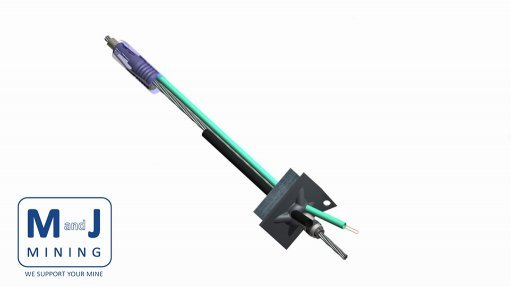
M and J Mining are leading suppliers of physical support systems as used by the underground mining industry. Our selection of products are not...
VISIT SHOWROOM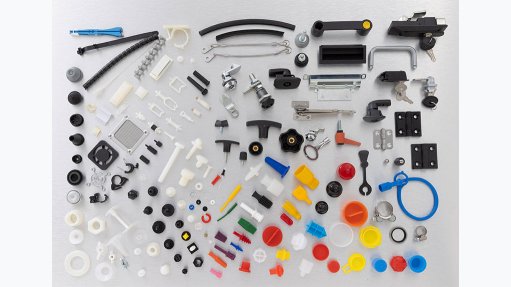
We are responsible manufacturers of essential components. Manufacturing 80 million parts a week, we have over 1 billion parts in stock.
VISIT SHOWROOM
Press Office
Announcements
What's On
Subscribe to improve your user experience...
Option 1 (equivalent of R125 a month):
Receive a weekly copy of Creamer Media's Engineering News & Mining Weekly magazine
(print copy for those in South Africa and e-magazine for those outside of South Africa)
Receive daily email newsletters
Access to full search results
Access archive of magazine back copies
Access to Projects in Progress
Access to ONE Research Report of your choice in PDF format
Option 2 (equivalent of R375 a month):
All benefits from Option 1
PLUS
Access to Creamer Media's Research Channel Africa for ALL Research Reports, in PDF format, on various industrial and mining sectors
including Electricity; Water; Energy Transition; Hydrogen; Roads, Rail and Ports; Coal; Gold; Platinum; Battery Metals; etc.
Already a subscriber?
Forgotten your password?
Receive weekly copy of Creamer Media's Engineering News & Mining Weekly magazine (print copy for those in South Africa and e-magazine for those outside of South Africa)
➕
Recieve daily email newsletters
➕
Access to full search results
➕
Access archive of magazine back copies
➕
Access to Projects in Progress
➕
Access to ONE Research Report of your choice in PDF format
RESEARCH CHANNEL AFRICA
R4500 (equivalent of R375 a month)
SUBSCRIBEAll benefits from Option 1
➕
Access to Creamer Media's Research Channel Africa for ALL Research Reports on various industrial and mining sectors, in PDF format, including on:
Electricity
➕
Water
➕
Energy Transition
➕
Hydrogen
➕
Roads, Rail and Ports
➕
Coal
➕
Gold
➕
Platinum
➕
Battery Metals
➕
etc.
Receive all benefits from Option 1 or Option 2 delivered to numerous people at your company
➕
Multiple User names and Passwords for simultaneous log-ins
➕
Intranet integration access to all in your organisation