SAPPMA webinar highlights role of EPS geofoam in reducing loads on plastic pipes



The Southern African Plastic Pipe Manufacturers Association (SAPPMA) recently hosted a highly informative webinar as part of its ongoing commitment to sharing objective, non-profit industry knowledge with the plastics pipe sector. A series of technical webinars have been scheduled for 2026, featuring internationally respected speakers who presented at the Pipes XXII Conference in Poland last year, aimed at building on the high-level discussions, sharing cutting-edge research to a South African audience and bringing global expertise directly to our local industry.
Dr. Jan Vaslestad (Norway) was the first of the international line-up of presenters, delivering his paper on Design method for calculating load reduction when using plastic instead of concrete pipes—a technically focused session exploring modern design approaches and the structural advantages of plastic piping systems. A consulting engineer based in Oslo and owner of GeoAnleg, Vaslestad brings decades of geotechnical experience, including work with the Norwegian Public Roads Administration and academia.
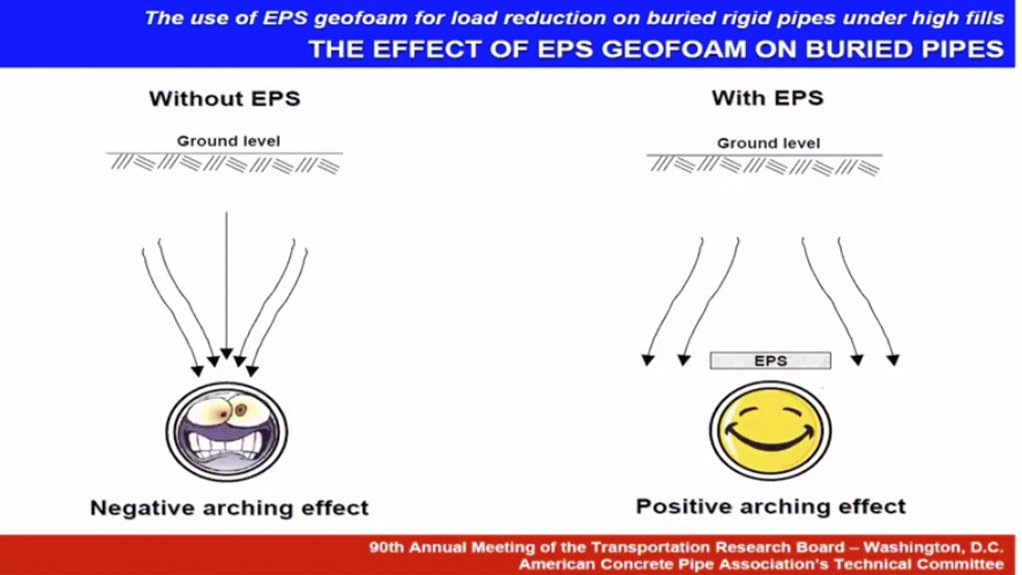
At the heart of the discussion was the concept of soil–pipe interaction, specifically the phenomenon of “arching.” Flexible plastic pipes benefit from positive arching, where the surrounding soil structure redistributes loads away from the pipe, resulting in lower vertical pressures than the full overburden weight. In contrast, rigid concrete pipes often experience negative arching, which can increase loads to between 1.5 and 2 times the overburden in certain conditions.
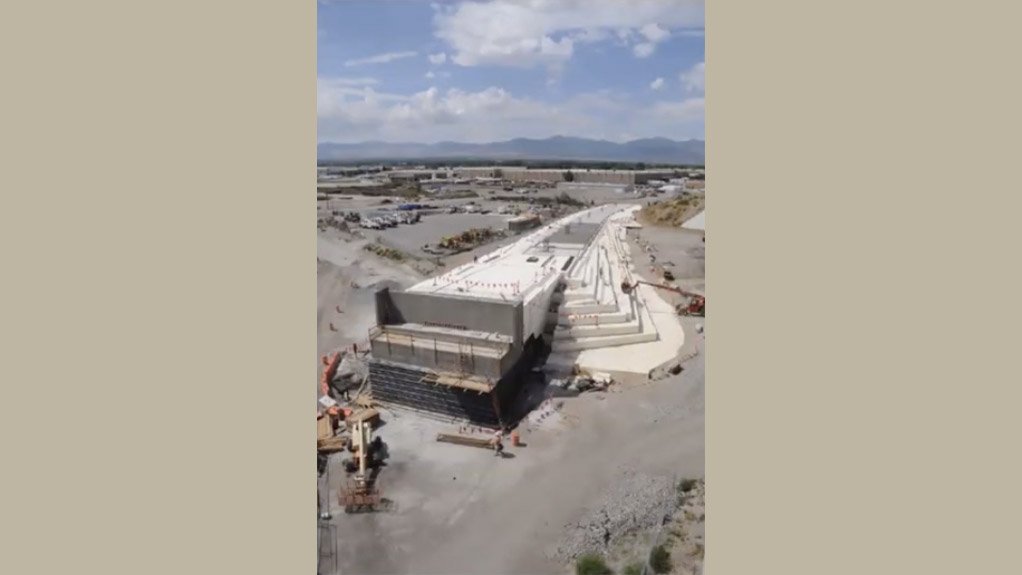
Vaslestad introduced the “imperfect ditch method” as a practical solution to enhance load reduction. This approach involves placing a compressible inclusion, such as EPS geofoam, above the pipe to reverse shear forces and promote positive arching. While early versions of this method used organic materials like hay or leaves, these proved unsuitable for long-term applications. EPS geofoam, by comparison, offers durability, consistency and predictable performance.
“EPS geofoam’s physical properties make it particularly suitable for this application. With a density of approximately 20 kg/m³—significantly lower than typical soil at around 2000 kg/m³—and a compressive strength of about 100 kPa, it provides a controlled compressible layer that enables effective load redistribution when installed correctly,” Dr Vaslestad said.
The presentation drew on decades of empirical data from full-scale field installations and long-term monitoring programmes in Norway. One notable example from the E18 highway project in southern Norway demonstrated the effectiveness of the method. A 1600 mm internal diameter concrete pipe installed under 14 metres of fill, with an EPS layer above it, recorded earth pressures at the pipe crown of approximately 70 kPa—just 25–35% of the calculated overburden pressure of 280 kPa. Monitoring over a 20-year period confirmed stable long-term performance, with manageable settlement levels.
“Similar results were observed in other Norwegian installations with fill heights of up to 22 metres, consistently demonstrating significant load reductions. These findings underpin the design methodologies now incorporated into the Norwegian Public Roads Administration’s geotechnical guidelines,” he added.
Importantly, the webinar also explored the application of these principles to plastic pipes. Dr Vaslestad highlighted that, with appropriate design and installation practices (including high-quality backfill materials and proper compaction) plastic pipes can perform effectively under much higher fill heights than traditionally specified in many design codes. In some cases, installations exceeding 30 metres of cover may be feasible.
Additional research referenced during the session, including laboratory and numerical studies, supports these findings, indicating load reductions of over 70% and substantial decreases in pipe deflection when EPS is used.
Jan Venter, SAPPMA CEO, emphasised the importance of knowledge-sharing initiatives such as this webinar. “Providing access to credible, technically sound information is central to SAPPMA’s role in supporting the industry. Webinars like these not only challenge conventional design limitations, but also highlight practical solutions that can improve performance, reduce costs, and contribute to more sustainable infrastructure development.”
The session concluded with a robust question-and-answer discussion, addressing concerns around long-term settlement, compaction requirements and design methodologies. A consistent message throughout was the critical importance of proper installation practices, particularly the use of high-quality, well-compacted backfill materials around plastic pipes.
The next SAPPMA webinar is scheduled to take place on 16 April 2026 and will feature Dermot Lindsay (Australia), who will present on Revolutionising plastic pipe handling: a reusable system for safer, efficient logistics—an innovative look at improving safety, efficiency, and sustainability in plastic pipe transport and handling. Attendance is free of charge, but early registration is required.
Article Enquiry
Email Article
Save Article
Feedback
To advertise email advertising@creamermedia.co.za or click here
Research Reports

Projects

Latest Multimedia

Latest News
Showroom
CSIR International Convention Centre (CSIR ICC) - the leading conference and events venue in Pretoria/Tshwane.
VISIT SHOWROOM
EIMS is an independent specialised environmental consulting firm offering the full spectrum of environmental management services across all sectors...
VISIT SHOWROOM

Press Office
Announcements
What's On
Subscribe to improve your user experience...
Option 1 (equivalent of R125 a month):
Receive a weekly copy of Creamer Media's Engineering News & Mining Weekly magazine
(print copy for those in South Africa and e-magazine for those outside of South Africa)
Receive daily email newsletters
Access to full search results
Access archive of magazine back copies
Access to Projects in Progress
Access to ONE Research Report of your choice in PDF format
Option 2 (equivalent of R375 a month):
All benefits from Option 1
PLUS
Access to Creamer Media's Research Channel Africa for ALL Research Reports, in PDF format, on various industrial and mining sectors
including Electricity; Water; Energy Transition; Hydrogen; Roads, Rail and Ports; Coal; Gold; Platinum; Battery Metals; etc.
Already a subscriber?
Forgotten your password?
Receive weekly copy of Creamer Media's Engineering News & Mining Weekly magazine (print copy for those in South Africa and e-magazine for those outside of South Africa)
➕
Recieve daily email newsletters
➕
Access to full search results
➕
Access archive of magazine back copies
➕
Access to Projects in Progress
➕
Access to ONE Research Report of your choice in PDF format
RESEARCH CHANNEL AFRICA
R4500 (equivalent of R375 a month)
SUBSCRIBEAll benefits from Option 1
➕
Access to Creamer Media's Research Channel Africa for ALL Research Reports on various industrial and mining sectors, in PDF format, including on:
Electricity
➕
Water
➕
Energy Transition
➕
Hydrogen
➕
Roads, Rail and Ports
➕
Coal
➕
Gold
➕
Platinum
➕
Battery Metals
➕
etc.
Receive all benefits from Option 1 or Option 2 delivered to numerous people at your company
➕
Multiple User names and Passwords for simultaneous log-ins
➕
Intranet integration access to all in your organisation