SABS vs. EU Approval – Are South African Products Meeting Global Safety Standards?


Global trade is becoming more enforcement-driven as regulatory regimes tighten across major markets. In the European Union, market surveillance authorities continue to remove unsafe or non-compliant products through the Safety Gate system, which recorded thousands of alerts and coordinated enforcement actions in 2025, underscoring the scale of active regulatory oversight across member states (European Commission Safety Gate).
This enforcement-heavy environment highlights a key reality for exporters: EU compliance is continuous, closely monitored, and strictly enforced across the single market.
Within this context, South African businesses face a growing structural challenge, with the South African Bureau of Standards (SABS) and South African National Standards (SANS) compliance not automatically translating into alignment with international frameworks such as those in the European Union.
The EU single market, comprising 27 member states and extended through the European Economic Area (EEA), operates under harmonised legislation designed to ensure the free movement of goods, services, capital, and people. Product compliance is demonstrated through EU regulatory requirements supported by standards developed by the European Committee for Standardization (CEN, CENELEC) and European Telecommunications Standards Institute (ETSI).
A key mechanism for EU market access is CE marking. The European Commission states it is required for many product categories and demonstrates compliance with EU health, safety, and environmental requirements (Your Europe). CE marking is not issued by a central body. Manufacturers are legally responsible for declaring conformity, supported by technical documentation and, where required, assessment by notified bodies. EU authorities can withdraw non-compliant products at any stage.
By contrast, the SABS Mark Scheme is a voluntary certification confirming compliance with South African National Standards (SANS). While many SANS align with ISO or IEC standards, others reflect local conditions, meaning SABS approval does not guarantee EU acceptance.
"The SABS mark confirms compliance with South African standards, but it does not equate to conformity with EU regulatory requirements," says Muhammad Ali, Managing Director of South African ISO specialist World Wide Industrial & Engineering Systems (WWISE). "Exporters often underestimate the gap between domestic certification and the compliance architecture required in global markets."
Ali says the issue is not quality, but regulatory alignment. "South African products are often high quality. The challenge is that they are assessed against different legal and technical frameworks abroad."
Globally, regulatory divergence creates trade friction. The WTO notes that differing technical regulations, standards, and conformity procedures can significantly increase administrative burden and complexity for exporters when systems are not aligned internationally (WTO).
For South African exporters, misalignment has direct commercial impact. Products that fail EU requirements may be rejected at the border, leading to delays, re-export costs, destruction of goods, and reputational damage.
"In the EU market, CE marking is the baseline expectation, not a differentiator," Ali explains. "Without it, even high-quality products are immediately non-competitive, regardless of SABS certification."
He adds that the implications extend beyond compliance mechanics. "In global supply chains, alignment signals reliability. Misalignment introduces uncertainty, which affects procurement decisions and long-term commercial trust."
The International Organization for Standardization (ISO) reinforces the importance of globally recognised frameworks in enabling trade. ISO 9001, the world's most widely adopted quality management system standard, is used by over one million organisations globally and is frequently a prerequisite in international procurement processes (ISO).
Ali says ISO standards act as a critical bridge between domestic systems and global market expectations. "ISO 9001 provides a universally recognised framework for consistency and process control. For exporters, it is often the minimum language of trust in international trade."
However, certification alone is not enough where regulatory systems diverge. SANS reflects local industrial and infrastructure realities, while EU standards are continuously updated within a tightly harmonised system to ensure uniform application across member states.
This divergence means exporters often face additional testing, documentation, and conformity assessments before accessing EU markets, even where products already comply with SABS requirements.
"South African businesses cannot rely solely on domestic certification to compete globally," Ali says. "International markets operate on shared frameworks. Without alignment, market access is constrained."
As global trade tightens, the gap between local certification and international compliance is becoming a key driver of export competitiveness. For South African manufacturers, SABS is a foundation, not a passport to global markets.
Article Enquiry
Email Article
Save Article
Feedback
To advertise email advertising@creamermedia.co.za or click here
Research Reports

Projects
Latest Multimedia
Latest News
Showroom
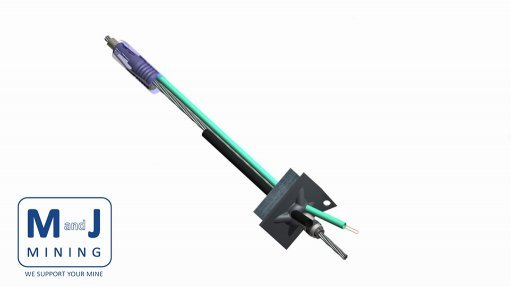
M and J Mining are leading suppliers of physical support systems as used by the underground mining industry. Our selection of products are not...
VISIT SHOWROOM
Iritron delivers advanced automation, control, and optimisation solutions to the Mining, Minerals & Metals, Consumer Package Goods and...
VISIT SHOWROOM

Announcements
What's On
Subscribe to improve your user experience...
Option 1 (equivalent of R125 a month):
Receive a weekly copy of Creamer Media's Engineering News & Mining Weekly magazine
(print copy for those in South Africa and e-magazine for those outside of South Africa)
Receive daily email newsletters
Access to full search results
Access archive of magazine back copies
Access to Projects in Progress
Access to ONE Research Report of your choice in PDF format
Option 2 (equivalent of R375 a month):
All benefits from Option 1
PLUS
Access to Creamer Media's Research Channel Africa for ALL Research Reports, in PDF format, on various industrial and mining sectors
including Electricity; Water; Energy Transition; Hydrogen; Roads, Rail and Ports; Coal; Gold; Platinum; Battery Metals; etc.
Already a subscriber?
Forgotten your password?
Receive weekly copy of Creamer Media's Engineering News & Mining Weekly magazine (print copy for those in South Africa and e-magazine for those outside of South Africa)
➕
Recieve daily email newsletters
➕
Access to full search results
➕
Access archive of magazine back copies
➕
Access to Projects in Progress
➕
Access to ONE Research Report of your choice in PDF format
RESEARCH CHANNEL AFRICA
R4500 (equivalent of R375 a month)
SUBSCRIBEAll benefits from Option 1
➕
Access to Creamer Media's Research Channel Africa for ALL Research Reports on various industrial and mining sectors, in PDF format, including on:
Electricity
➕
Water
➕
Energy Transition
➕
Hydrogen
➕
Roads, Rail and Ports
➕
Coal
➕
Gold
➕
Platinum
➕
Battery Metals
➕
etc.
Receive all benefits from Option 1 or Option 2 delivered to numerous people at your company
➕
Multiple User names and Passwords for simultaneous log-ins
➕
Intranet integration access to all in your organisation