
Rare Earths Americas unpacks nuances of growing but fragile rare earths market

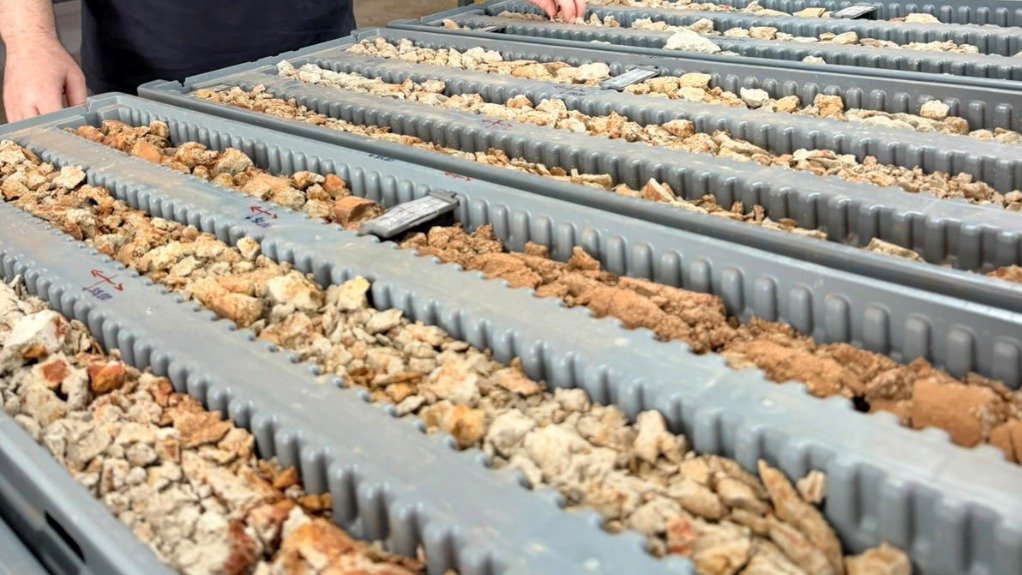



The Western rare earths sector is entering a phase in which the focus is shifting from identifying alternative resources to establishing a dependable, commercially viable supply chain, says NYSE-listed Rare Earths Americas, which is positioning its Brazilian and US exploration portfolio to address a growing supply chain gap, particularly for heavy rare earths.
CEO Don Swartz tells Mining Weekly that this transition will require more than new discoveries; it will depend on the interaction of geology, metallurgy, permitting, financing, processing capacity and market development of rare earths.
“The broader challenge for the industry is to ensure that upstream development keeps pace with investment in separation and manufacturing. Without a dependable supply of suitable feedstock, the expansion of downstream capacity alone will not deliver meaningful supply chain resilience,” he explains.
Ultimately, the success of Western rare earth diversification will depend on connecting viable mineral resources with the specialised processors, manufacturers and customers needed to turn them into usable products.
“Brazil could be an important part of that equation, but converting geological potential into reliable commercial supply will remain the decisive test,” Swartz stresses.
Swartz believes Brazil’s growing prominence reflects the strategic importance of these considerations. “Its geological endowment, particularly its ionic adsorption clay systems, offers potential opportunities to diversify heavy rare earth supply, while recent investment and policy developments point towards a greater role in downstream value creation,” Swartz states.
COST-EFFECTIVE PATHWAY
Brazil is undoubtedly emerging as one of the most strategically important rare earths jurisdictions globally outside of China as investment in Western processing and magnet manufacturing accelerates.
Brazil’s ionic clay deposits share characteristics with the deposits that have historically supplied a material portion of the heavy rare earths from southern China and Myanmar.
“In recognising the strategic importance of these resources, Brazil has enacted a new national critical minerals policy that establishes mechanisms to encourage domestic processing, financing and higher-value industrial activity.
“Through implementation and permitting will still matter, the direction is clear: Brazil wants to move further downstream and build a more integrated and competitive rare earths industry,” Swartz states.
For Rare Earths Americas, the opportunity lies not only in discovery of new massive resources but in identifying deposits that can be processed cost-effectively with lower impurities and high metallurgical performance.
Swartz says equally important is the recoverable rare earths basket, citing dysprosium, terbium, neodymium and praseodymium as elements that can drive a very different economic and strategic profile from a deposit dominated by lower-value elements.
The company emphasises an important factor in rare earths development being the availability of proven processing technology to convert resources into products that downstream customers can readily consume.
To this end, monazite-bearing and ionic adsorption clay deposits have established processing precedents, which provide a well-understood starting point for exploration and development.
“The West does not need every miner to integrate all the way through to magnet production. Rather, it needs a functioning supply chain where miners provide reliable feedstock to specialised separators, metal producers and magnet manufacturers,” Swartz notes.
FEEDSTOCK ISSUE
Swartz confirms there has been major progress in processing, separation and magnet manufacturing outside China, supported by both government policy and private capital. A critical challenge, however, is securing enough upstream feedstock, particularly for heavy rare earths such as dysprosium and terbium, while continuing to build separation and refining capacity.
“In our view, the emerging Western mine-to-magnet supply chain faces a structural heavy rare earth feedstock shortfall. Meeting projected demand will require substantial investment in new mines and processing capacity.
“New mines can realistically take five to ten years or longer to develop depending on the project, permitting and financing. Downstream facilities can be developed on different timelines, creating a potential mismatch: a magnet plant needs dependable feedstock when it starts operating, not years afterward,” Swartz points out.
He adds that the real objective is not necessarily complete self-sufficiency, but building a diversified, reliable supply chain across the US and allied markets.
Brazil will be central to solving that challenge given its substantial rare earth resources, heavy rare earth-bearing ionic clay systems and growing international investment interest.
PRICE STRUCTURE
The rare earths market has largely lacked a formal market structure in the form of pricing indices and trading platforms, but Swartz is seeing a fundamental change in how rare earths are being priced globally, albeit not yet with the pricing transparency seen in more mature commodity markets.
Historically China has dominated rare earths production and processing, exerting substantial influence over price formation as a result. As Western supply chains emerge, “we are seeing price bifurcation, particularly in the heavy magnet rare earths dysprosium and terbium”.
Swartz explains pricing agencies are building out more ex-China benchmarks, which matters for developers, financiers and customers. Rare earths are nonetheless inherently more complex than copper, for example, owing to every deposit having a different basket of resources, recovery profile and payability.
He adds that export controls, defence sourcing requirements and supply chain traceability are also contributing to distinct regional markets.
Swartz expects higher transaction volumes and more regional benchmarks in North America and Europe to create a more mature rare earths market over time, especially since better price discovery will be essential to financing ex-China mine-to-magnet supply chains. “Western supply chains need price signals that reflect the cost and value of secure, independently-sourced material.”
Article Enquiry
Email Article
Save Article
Feedback
To advertise email advertising@creamermedia.co.za or click here
Research Reports


Projects


Latest Multimedia

Latest News
Showroom

We at Hawk High Pressure Pumps specialise in industrial pumps and pumping systems. Our high pressure washing equipment is locally manufactured and...
VISIT SHOWROOM
The Beneficiation Academy is a certified training institution that follows all compliance legislation and is accredited with various Sector...
VISIT SHOWROOM

Press Office
Announcements
What's On
Subscribe to improve your user experience...
Option 1 (equivalent of R125 a month):
Receive a weekly copy of Creamer Media's Engineering News & Mining Weekly magazine
(print copy for those in South Africa and e-magazine for those outside of South Africa)
Receive daily email newsletters
Access to full search results
Access archive of magazine back copies
Access to Projects in Progress
Access to ONE Research Report of your choice in PDF format
Option 2 (equivalent of R375 a month):
All benefits from Option 1
PLUS
Access to Creamer Media's Research Channel Africa for ALL Research Reports, in PDF format, on various industrial and mining sectors
including Electricity; Water; Energy Transition; Hydrogen; Roads, Rail and Ports; Coal; Gold; Platinum; Battery Metals; etc.
Already a subscriber?
Forgotten your password?
Receive weekly copy of Creamer Media's Engineering News & Mining Weekly magazine (print copy for those in South Africa and e-magazine for those outside of South Africa)
➕
Recieve daily email newsletters
➕
Access to full search results
➕
Access archive of magazine back copies
➕
Access to Projects in Progress
➕
Access to ONE Research Report of your choice in PDF format
RESEARCH CHANNEL AFRICA
R4500 (equivalent of R375 a month)
SUBSCRIBEAll benefits from Option 1
➕
Access to Creamer Media's Research Channel Africa for ALL Research Reports on various industrial and mining sectors, in PDF format, including on:
Electricity
➕
Water
➕
Energy Transition
➕
Hydrogen
➕
Roads, Rail and Ports
➕
Coal
➕
Gold
➕
Platinum
➕
Battery Metals
➕
etc.
Receive all benefits from Option 1 or Option 2 delivered to numerous people at your company
➕
Multiple User names and Passwords for simultaneous log-ins
➕
Intranet integration access to all in your organisation