Positive signs of upcoming mining law reform, PGMs Industry Day hears



JOHANNESBURG (miningweekly.com) – Minerals Council South Africa is seeing positive signals from government as it awaits the second draft of South Africa’s proposed Mineral Resources Development Bill.
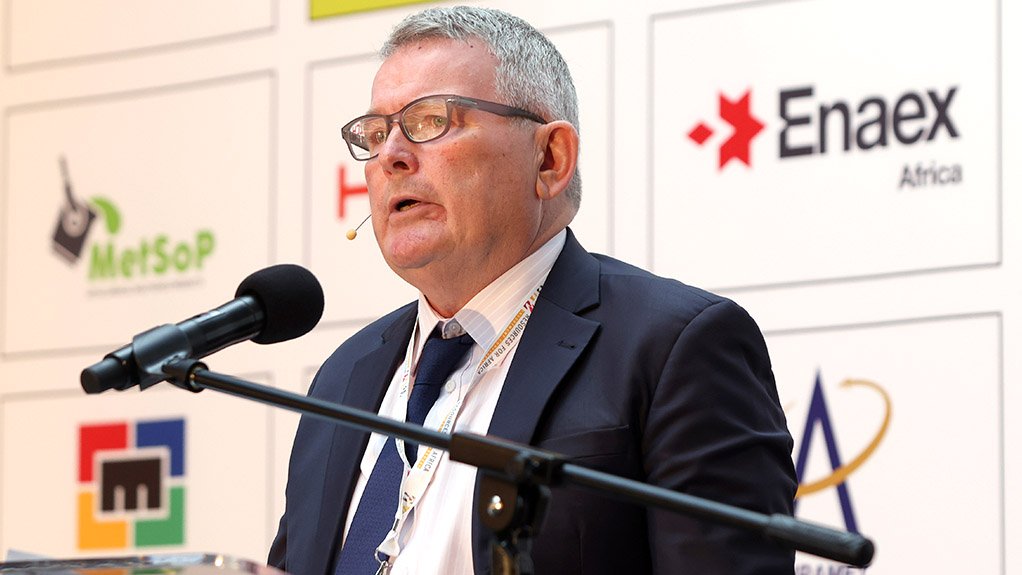
“It’s our expectation that our concerns will be addressed and – for now – we’re satisfied that we’re being heard,” Minerals Council South Africa president Paul Dunne said in his opening address to the PGMs Industry Day, which is chaired by mining luminary Bernard Swanepoel.
Dunne emphasised the criticality of mining companies and investors having a pragmatic, stable regulatory environment that attracted investment rather than discouraged it by onerous, globally uncompetitive policy.
“It’s our considered view that the proposed Mineral Resources Development Bill in its original form does not encourage or sustain the growth and investment that the mining industry needs to realise its full potential to create employment, to stimulate the economy and to fulfil its social mandate,” Dunne said at the March 19 event covered by Mining Weekly.
South Africa’s platinum group metals (PGM) industry, he said, had made significant contributions towards addressing historical injustices, even in the throes of difficult operating and regulatory environments, and some incredibly demanding market conditions.
“Minister Gwede Mantashe has often said on public platforms that the mining industry is the most transformed sector in our economy, and we agree,” said Dunne.
South Africa’s mining sector spends R3-billion-plus a year on statutory social and labour plan projects and commitments, building houses, schools, roads, bridges, clinics, and water and sanitation infrastructure.
Pointing out that Minerals Council member companies accounted for 80% of the world’s mined PGMs, Dunne expressed the belief that PGM mining industry growth and national economic growth were inextricably interlinked.
“We can’t have one without the other and we need a stable, predictable regulatory environment that promotes both.
“A PGM industry that attracts local and international capital for exploration, the development of new mines and the expansion of existing operations will create more employment, attract new entrants, and multiply all the benefits that the mining industry delivers for the country.”
South Africa’s PGM industry employs 170 000 of the mining sector’s 470 000-strong workforce in “relatively well-paid jobs”, which come with “a very high economic multiplier effect”.
“If we consider extended family dependency together with our direct supplier base, collectively the mining sector supports around 3.5-million people. Clearly this is a very important sector of society and needs to be understood in the context of a developing nation.
“In many cases, mining operations take place in remote parts of the country and are the only source of jobs and income. Often, mining companies step in to provide services and infrastructure that failing or dysfunctional municipal governments are not delivering.
“Mining matters to our economy. It accounts for 6.2% of GDP and R816-billion worth of exported mineral products, representing 45% of total exports.
“Corporate tax payments amounted to R31-billion, contributing 10% of total corporate tax collection. Mining companies make up 35% of the JSE Top 40 by market capitalisation.
“It costs at least R20-billion and ten years to build a decent-sized mine. Very few mining companies have that type of money lying around on the balance sheet. Mining companies need to operate in an environment that allows them to attract capital in the form of debt or equity to fund projects.
“However, providers of capital will not put their money into risky jurisdictions where returns are threatened by regulatory uncertainty, crime and corruption and failing infrastructure. At the very least, the cost of capital increases significantly, rendering projects unviable that otherwise would proceed.
“This is the fundamental starting point of all our discussions with Minister Mantashe and his colleagues, as well as other government departments. The mining industry has been severely constrained during the past three decades by regulatory uncertainty, weak administrative processes, unnecessary delays in licensing authorisations, as well as the severe repercussions that State capture has had on electricity supply and costs as well as logistics.
“The mining industry has enormous untapped potential in the minerals we already mine and the minerals of the future, provided we can unlock exploration and attract investment. The Minerals Council will not relent in lobbying and advocating for the best possible regulatory and operating environment to realise this potential for the benefit of our shareholders, employees, communities and the broader economy.
“We are fully engaged with government on the legislative issues at hand, including the proposed Bill, the chrome export tax and quota threats, and the rollout of the cadastre across the country with urgency.
“It’s extremely important for both investment and job creation that rational outcomes prevail, and not inappropriate policy responses to misdiagnosed problems.
“The cost of energy continues to rise double-digit compounded, and we support the independence of the transmission system and the removal of the fox and henhouse effect. Energy availability and its cost are the foundation of a country’s competitiveness. Poor strategy and bad behaviour really let South Africa down, and we have seen the resultant deindustrialisation as a consequence. We now need to open up the grid to competition together with a level playing field.
“Hard commodities in general and PGMs in particular have a very bright future ahead and in order for South Africa to benefit fully, obstacles need to be removed and not created. The mining sector is prepared to work with government to achieve pragmatic and practical outcomes. Policy needs to be coherent not disjointed, and the narrative needs to be clear. Mining is a very people-centric industry and we are deeply connected to the fabric of society at ground level. It is important that we succeed,” Dunne emphasised.
Article Enquiry
Email Article
Save Article
Feedback
To advertise email advertising@creamermedia.co.za or click here
Research Reports

Projects
Latest Multimedia
Showroom

Rooted in the hearts of South Africans, combining technology and a quest for perfection to bring you a battery of peerless standing. Willard...
VISIT SHOWROOM
Immersive Technologies is the world's largest, proven and tested supplier of simulator training solutions to the global resources industry.
VISIT SHOWROOM
Announcements
What's On
Subscribe to improve your user experience...
Option 1 (equivalent of R125 a month):
Receive a weekly copy of Creamer Media's Engineering News & Mining Weekly magazine
(print copy for those in South Africa and e-magazine for those outside of South Africa)
Receive daily email newsletters
Access to full search results
Access archive of magazine back copies
Access to Projects in Progress
Access to ONE Research Report of your choice in PDF format
Option 2 (equivalent of R375 a month):
All benefits from Option 1
PLUS
Access to Creamer Media's Research Channel Africa for ALL Research Reports, in PDF format, on various industrial and mining sectors
including Electricity; Water; Energy Transition; Hydrogen; Roads, Rail and Ports; Coal; Gold; Platinum; Battery Metals; etc.
Already a subscriber?
Forgotten your password?
Receive weekly copy of Creamer Media's Engineering News & Mining Weekly magazine (print copy for those in South Africa and e-magazine for those outside of South Africa)
➕
Recieve daily email newsletters
➕
Access to full search results
➕
Access archive of magazine back copies
➕
Access to Projects in Progress
➕
Access to ONE Research Report of your choice in PDF format
RESEARCH CHANNEL AFRICA
R4500 (equivalent of R375 a month)
SUBSCRIBEAll benefits from Option 1
➕
Access to Creamer Media's Research Channel Africa for ALL Research Reports on various industrial and mining sectors, in PDF format, including on:
Electricity
➕
Water
➕
Energy Transition
➕
Hydrogen
➕
Roads, Rail and Ports
➕
Coal
➕
Gold
➕
Platinum
➕
Battery Metals
➕
etc.
Receive all benefits from Option 1 or Option 2 delivered to numerous people at your company
➕
Multiple User names and Passwords for simultaneous log-ins
➕
Intranet integration access to all in your organisation