Platinum fuel cell technology supporting humanity’s space flights



JOHANNESBURG (miningweekly.com) – Platinum, with which South Africa is more endowed than any other country on earth, is supporting humanity’s space leaps, the World Platinum Investment Council (WPIC) notes in its latest 60 Seconds feature.
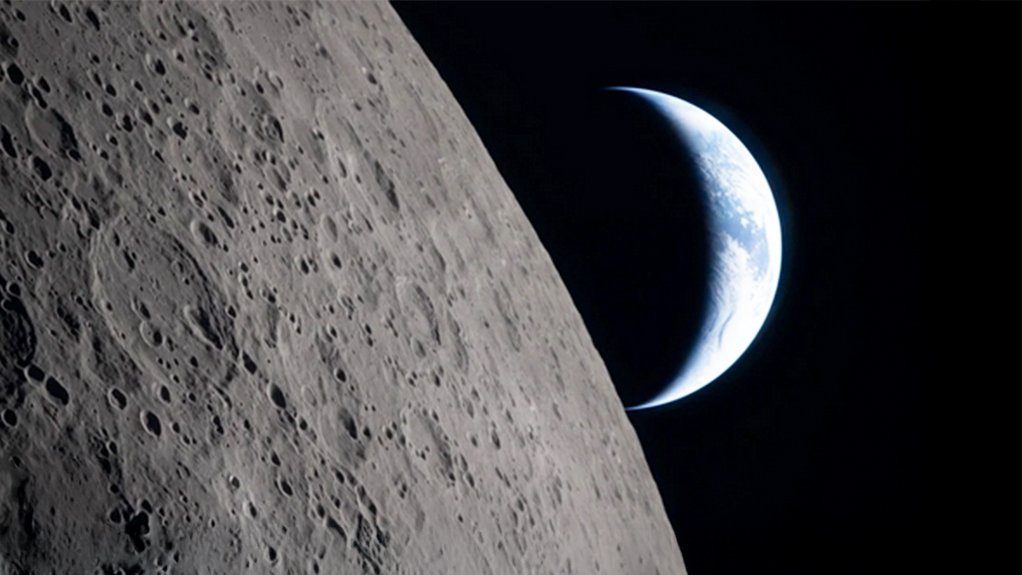
The journey around the moon by the Artemis II astronauts has set the stage for a new era of lunar exploration, which will include establishing a human presence on the moon.
Future Artemis missions aim to explore the moon’s south pole, establishing a sustainable human presence there and laying the technological foundations for future missions to Mars. The first Artemis lunar landing is targeted for early 2028.
Hydrogen fuel cells have a long association with space exploration, with NASA funding development of the first fuel cells because they were necessary to cut weight from the Apollo spacecraft for moon missions.
Three fuel cells in the Apollo service module provided electricity for the capsule containing the astronauts. While spacecraft power technologies have evolved, fuel cells remain deeply relevant to the future of the space programme.
Regenerative fuel cells (RFC) offer particular promise, WPIC reports in its release to Mining Weekly.
RFC are electrochemical energy storage devices that operate like a rechargeable battery, with the potential to store significantly more energy with lower mass for long-term energy storage needs.
An RFC consists of a fuel cell, an electrolyser, fluid processing system and a reactant storage system. Both the fuel cell and the electrolyser use platinum-based proton exchange membrane (PEM) technology.
During lunar daylight, solar energy can be used to split water into hydrogen and oxygen through electrolysis. When the moon enters its two-week- long night, these gases can be recombined in a fuel cell to produce electricity and water, creating a closed-loop, low-emissions power system. Platinum-based catalysts are widely used in PEM technology owing to their exceptional efficiency, durability and resilience under harsh operating conditions. In space, where systems must perform flawlessly without maintenance, these attributes are indispensable.
EFFICIENCY, DURABILITY AND RESILIENCE
Human settlement and exploration of the lunar south pole will expose astronauts to long periods of darkness, extreme cold and limited solar availability. Battery energy storage technologies, such as lithium-ion batteries, are insufficient for lunar exploration missions owing to both their weight and the length of the lunar night and the resultant energy needed to operate through it. This has renewed interest in fuel cell systems as an energy source, WPIC points out.
HYDROGEN COUNCIL
Meanwhile, the global Hydrogen Council has reported out of Brussels that it has been joined by seven new members, each having moved from ambition to active delivery of hydrogen projects across Europe and Asia.
Andritz, Enagás, HD Korea Shipbuilding & Offshore Engineering, Intelligent Energy, ITM Power, Keppel Infrastructure, and Lotte Chemical bring capabilities spanning infrastructure, production technologies, and end-use applications. Ranging from the world’s first commercial renewable ammonia shipment and one of Europe’s first large-scale renewable hydrogen plants for steel, to new electrolyser capacity and hydrogen infrastructure, these members reinforce collaboration across the full hydrogen value chain.
“As the global energy landscape shifts, bringing a renewed focus on energy security, resilience and industrial competitiveness, hydrogen’s role and the need for collective action have never been clearer,” Hydrogen Council CEO Ivana Jemelkova stated in a release to Mining Weekly.
Article Enquiry
Email Article
Save Article
Feedback
To advertise email advertising@creamermedia.co.za or click here
Research Reports

Projects
Latest Multimedia

Showroom
M and J Mining are leading suppliers of physical support systems as used by the underground mining industry. Our selection of products are not...
VISIT SHOWROOM
Smart energy storage solutions for efficient, safe, and profitable power.
VISIT SHOWROOM
Press Office
Announcements
What's On
Subscribe to improve your user experience...
Option 1 (equivalent of R125 a month):
Receive a weekly copy of Creamer Media's Engineering News & Mining Weekly magazine
(print copy for those in South Africa and e-magazine for those outside of South Africa)
Receive daily email newsletters
Access to full search results
Access archive of magazine back copies
Access to Projects in Progress
Access to ONE Research Report of your choice in PDF format
Option 2 (equivalent of R375 a month):
All benefits from Option 1
PLUS
Access to Creamer Media's Research Channel Africa for ALL Research Reports, in PDF format, on various industrial and mining sectors
including Electricity; Water; Energy Transition; Hydrogen; Roads, Rail and Ports; Coal; Gold; Platinum; Battery Metals; etc.
Already a subscriber?
Forgotten your password?
Receive weekly copy of Creamer Media's Engineering News & Mining Weekly magazine (print copy for those in South Africa and e-magazine for those outside of South Africa)
➕
Recieve daily email newsletters
➕
Access to full search results
➕
Access archive of magazine back copies
➕
Access to Projects in Progress
➕
Access to ONE Research Report of your choice in PDF format
RESEARCH CHANNEL AFRICA
R4500 (equivalent of R375 a month)
SUBSCRIBEAll benefits from Option 1
➕
Access to Creamer Media's Research Channel Africa for ALL Research Reports on various industrial and mining sectors, in PDF format, including on:
Electricity
➕
Water
➕
Energy Transition
➕
Hydrogen
➕
Roads, Rail and Ports
➕
Coal
➕
Gold
➕
Platinum
➕
Battery Metals
➕
etc.
Receive all benefits from Option 1 or Option 2 delivered to numerous people at your company
➕
Multiple User names and Passwords for simultaneous log-ins
➕
Intranet integration access to all in your organisation