Organisation urges early sustainability integration



GEORGE ASAMANI Shared standards and consistent measurement frameworks help organisations turn sustainability from an aspiration into a repeatable execution capability
HAIKAL EL ABED Mining companies need to build local expertise to ensure critical skills and knowledge are retained beyond project handover




Most mining companies have made credible sustainability commitments but far fewer have built the ability to deliver on them, according to global project management authority Project Management Institute’s (PMI’s) ‘Executing Sustainability Strategy’ report, published in June 2026.
For African mining projects, the biggest gap between sustainability delivery and execution lies in translating corporate commitments into clear requirements for project teams, says PMI sub-Saharan Africa MD George Asamani.
Drawn from nearly 1 600 project professionals across 35 countries, the Executing Sustainability Strategy’ report finds that 85% of sustainability executives are confident their organisation can achieve its goals, compared with 43% of project management office (PMO) leaders. Only 20% of project professionals describe themselves as “extremely confident”.
Project leaders may see commitments and resources that project delivery teams cannot see, thereby leading to practical constraints that never reach leadership, leading to derailed schedules and budgets, ineffective communication and misaligned practices.
Although 79% of the report’s respondents say sustainability positions their organisation for long-term success, only 41% say it is fully integrated across projects and functions. Commitments, he adds, can therefore appear in strategy documents without being reflected in project charters, funding criteria or everyday decisions.
To close that gap, Asamani points to the PMI’s Green Project Management (GPM) P5 framework for sustainability in project management, owing to its encouraging project management teams to assess impacts across people, planet, prosperity, process and product, as early as is practical and during key decision-making stages of a project.
The PMI’s GPM P5 framework encourages sustainability to be considered from the start of a project because, when cost and schedule pressures build, project management teams need clear requirements to guide their decisions, says Asamani.
In terms of procurement, the GPM P5 recommends prioritising qualified local suppliers where environmental and operational benefits can be demonstrated, taking into account transport, logistics risks and whole-life performance, as proximity alone does not guarantee a lower environmental impact, he says.
At the feasibility stage, Asamani says that means considering environmental and social impacts alongside financial costs, risks and long-term liabilities; comparing alternatives including the option of taking no action and establishing baselines against which results can be measured.
Project management teams should also assess regulatory requirements, local workforce and supplier capabilities, and the entity responsible for asset operations and maintenance after handover, as those choices affect value long after construction ends, he explains.
Further, effective translation of corporate sustainability objectives means making project deliverables clear, assigning and tasking responsible parties for delivery and defining methods with which to measure progress.
At 24%, clearer project-level goals were the most frequently cited improvement area in the research.
“[Project teams should] use the [GPM] P5 impact analysis to identify and prioritise the impacts, then turn them into actions within project plans, controls and supplier requirements,” notes Asamani.
Following this, he points out that a sustainability management plan then brings these predetermined decisions together by recording responsibilities, objectives, baselines, performance measures and the points at which an issue must be escalated.
Collectively, Asamani says, clear project-level requirements and progress need to remain visible throughout project delivery.
Meanwhile, the ‘Executing Sustainability Strategy’ report also identifies trade-offs, governance and daily pressures between strategy and delivery as some of the six recurring tensions for project sustainability as it found that 58% of the report’s respondents associate having to develop and implement sustainability measures with higher project costs, 48% with greater complexity and 36% with a compliance burden.
When projects face pressure to cut capital expenditure or recover delays, he says organisations tend to prioritise what they already monitor closely. Leaders must therefore make clear how such decisions affect sustainability, social commitments and long-term value.
Where other organisations included ESG performance in executive measures, the report reveals that leaders become accountable for results and expectations flowed to vendor compliance and operational decisions, thereby resulting in higher performance across the organisation. Shared standards and consistent measurement frameworks further help organisations “turn sustainability from an aspiration into a repeatable execution capability”, says Asamani.
Governance, Supply Chains
Because host communities, traditional authorities, governments, regulators, employees and local businesses all have a stake in any current African mining project, Asamani says engagement should not be treated as a parallel ESG or communications activity, instead it needs to be part of how the project is planned, managed and reviewed.
In terms of better facilitating social engagement, the GPM P5 standard recommends that mining project teams establish two-way communication with affected communities, explain potential impacts clearly and promptly, and document and respond to any concerns raised by communities.
An important criterion when determining whether the appropriate approach to communities has been taken is whether communities were told about potential impacts before project decisions were finalised, he notes.
As for the skills capability needed to successfully deliver a mining project, PMI Middle East, North Africa and sub-Saharan Africa sustainability ambassador lead Haikal El Abed says mining companies need to build local expertise in project controls, contracts, interface management, commissioning and maintenance to ensure critical skills and knowledge are retained beyond project handover.
In developing organisational capability, tools and project management competencies, the GPM P5’s framework calls for clear competency requirements for each role, skills-gap assessments and training or supervision.
El Abed argues that skills need a mandatory place on the project schedule, with owners making capability transfer a contract deliverable with named counterparts and milestones.
Article Enquiry
Email Article
Save Article
Feedback
To advertise email advertising@creamermedia.co.za or click here
Research Reports
Projects

Latest Multimedia

Latest News


Showroom

Established in 1933, EKATO is the world leader in agitation technology, supplying agitators for processes and applications such as chemicals and...
VISIT SHOWROOM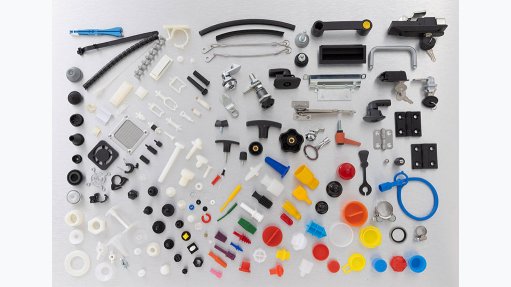
We are responsible manufacturers of essential components. Manufacturing 80 million parts a week, we have over 1 billion parts in stock.
VISIT SHOWROOM



Press Office
Announcements
What's On
Subscribe to improve your user experience...
Option 1 (equivalent of R125 a month):
Receive a weekly copy of Creamer Media's Engineering News & Mining Weekly magazine
(print copy for those in South Africa and e-magazine for those outside of South Africa)
Receive daily email newsletters
Access to full search results
Access archive of magazine back copies
Access to Projects in Progress
Access to ONE Research Report of your choice in PDF format
Option 2 (equivalent of R375 a month):
All benefits from Option 1
PLUS
Access to Creamer Media's Research Channel Africa for ALL Research Reports, in PDF format, on various industrial and mining sectors
including Electricity; Water; Energy Transition; Hydrogen; Roads, Rail and Ports; Coal; Gold; Platinum; Battery Metals; etc.
Already a subscriber?
Forgotten your password?
Receive weekly copy of Creamer Media's Engineering News & Mining Weekly magazine (print copy for those in South Africa and e-magazine for those outside of South Africa)
➕
Recieve daily email newsletters
➕
Access to full search results
➕
Access archive of magazine back copies
➕
Access to Projects in Progress
➕
Access to ONE Research Report of your choice in PDF format
RESEARCH CHANNEL AFRICA
R4500 (equivalent of R375 a month)
SUBSCRIBEAll benefits from Option 1
➕
Access to Creamer Media's Research Channel Africa for ALL Research Reports on various industrial and mining sectors, in PDF format, including on:
Electricity
➕
Water
➕
Energy Transition
➕
Hydrogen
➕
Roads, Rail and Ports
➕
Coal
➕
Gold
➕
Platinum
➕
Battery Metals
➕
etc.
Receive all benefits from Option 1 or Option 2 delivered to numerous people at your company
➕
Multiple User names and Passwords for simultaneous log-ins
➕
Intranet integration access to all in your organisation