Manufacturing faces demand constraints despite improving outlook

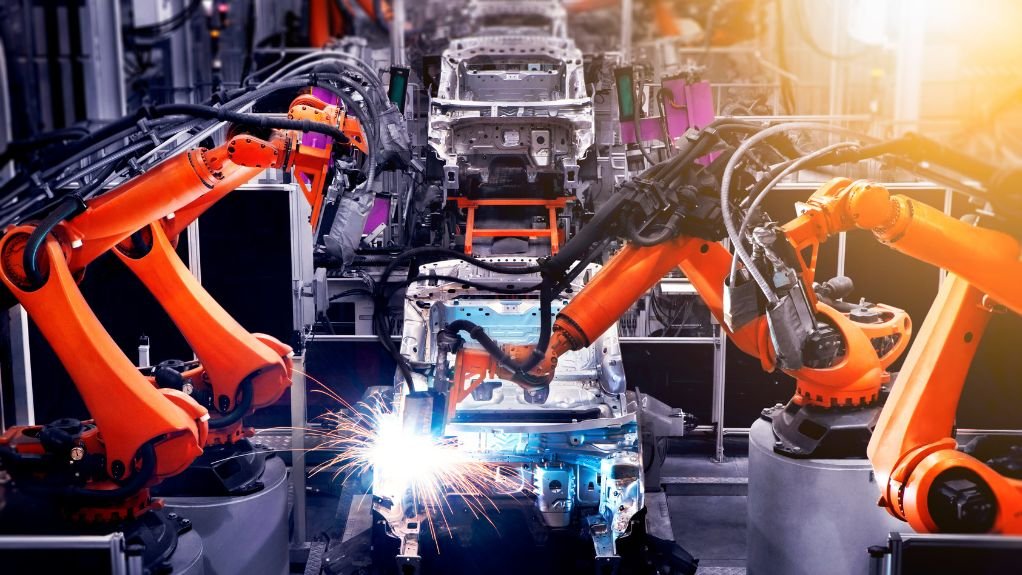
UNDER PRESSURE Manufacturing remains under pressure, largely owing to weak export volumes and global trade disruptions


Manufacturing in South Africa is showing early signs of recovery; however, weak demand, rising costs and global trade uncertainty continue to constrain growth, speakers said at a strategic outlook discussion hosted by financial institution Nedbank, in Sandton, Johannesburg.
Speaking at the event held on February 24, Nedbank group economist Nicky Weimar said that the global economic environment remains highly uncertain, largely owing to shifting trade policies in the US under the Trump administration.
She noted that the rules-based global trade system is fracturing, with tariffs and policy changes creating volatility.
“We live in very uncertain times, where there is a lot of geopolitical risk out there, and there is a tremendous amount of economic policy uncertainty, especially around trade,” Weimar said.
Despite this, she highlighted that the global economy has remained resilient, with growth expected to remain steady at about 3.2% to 3.3% over the next two years.
However, she pointed out that the lack of retaliation to US tariffs has intensified competition in non-US markets, placing pressure on export-driven sectors such as manufacturing.
Weimar explained that South Africa’s economy remains in a low-growth cycle, although some improvement is evident.
GDP growth reached about 1.2% for the first three quarters of 2025, up from 0.5% the previous year, with more sectors returning to positive growth as the year progressed.
However, manufacturing and mining remain under pressure, largely owing to weak export volumes and global trade disruptions.
“All of the pressure is still coming through the trade channel,” she said.
She added that domestic constraints, including infrastructure inefficiencies and high costs, continue to weigh on industrial activity, although some progress has been made in electricity supply, logistics and port performance.
Weimar emphasised that further infrastructure investment is critical to unlocking higher growth.
“We need electricity capacity, we need more rail, we need better roads, we need more port capacity and, we need more water capacity,” she said.
Turning to the domestic outlook, she noted that easing inflation and interest rate cuts are supporting a consumer-led recovery, which could provide a near-term boost to manufacturing demand.
Demand, Not Capacity
Meanwhile, Nedbank senior manufacturing manager Takatso Sello said the sector’s primary challenge is not capacity, but demand.
“We don’t have a capacity issue. We do, however, have a demand issue.”
Sello highlighted that increasing imports across multiple industries, including automotive, steel and textiles, are intensifying competition for local manufacturers.
He noted that global market conditions have shifted, requiring companies to adapt to new trade dynamics and regulatory requirements in key markets such as Europe and the US.
“Whatever used to define the industry has changed,” he said.
While export activity showed some improvement in the fourth quarter, Sello said manufacturers remain under pressure from rising input costs, particularly electricity, which has more than doubled over the past decade.
He also pointed to working capital constraints as a major challenge, with companies balancing debt obligations, equipment maintenance and operational costs.
“The biggest pressure is working capital,” he said.
However, Sello noted improved collaboration between government, the private sector and financial institutions, particularly following recent policy interventions aimed at addressing infrastructure constraints.
He said logistics performance has improved, with delays decreasing significantly, and added that ongoing reforms could support further gains.
“We are at a pivotal moment in the industry whereby private sector, government and financial institutions are singing from the same hymn book,” he said.
Despite this, he stressed the need for skills development and investment to support long-term growth, warning that skills shortages continue to limit expansion.
Structural Challenges
Global trade expert Shane Naidoo said South Africa’s manufacturing sector remains an important contributor to the economy, accounting for about 12.5% of GDP.
However, he noted that structural challenges, including declining investment and multinational companies scaling down local operations, are affecting job creation and competitiveness.
Naidoo highlighted that export patterns remain concentrated in commodities and intermediate goods, with value-added manufacturing still limited.
He also pointed to concentration risk in key markets, warning that trade uncertainty has already dampened business appetite for cross-border activity.
Naidoo stressed the importance of diversification, including expanding into African markets through agreements and mechanisms such as the African Continental Free Trade Area.
He added that businesses must improve financial strategies, particularly in managing working capital, currency exposure and trade financing.
“If you can’t grow on the top end, you start reducing overheads,” he said.
Naidoo added that inefficiencies in trade finance, logistics and advisory services can significantly increase costs, reducing margins for manufacturers.
He said businesses should focus on optimising cash flow, including delaying duties, improving inventory management and using appropriate financing structures.
The speakers agreed that while challenges remain, there is cautious optimism within the manufacturing sector.
Weimar said a combination of consumer recovery, infrastructure investment and continued reforms could gradually lift growth, although it is likely to remain below 2% in the near term.
Sello added that improved coordination across stakeholders and targeted investment could help unlock opportunities, while Naidoo emphasised the need for strategic positioning in global and regional markets.
Article Enquiry
Email Article
Save Article
Feedback
To advertise email advertising@creamermedia.co.za or click here

Projects



Latest News


Showroom

Developed to exceed the latest EN 15964 standards for police breathalysers proving that it will remain accurate and reliable for many years to come.
VISIT SHOWROOM
Design, Construction and Maintenance of Site Erected, Welded Bulk Storage Tanks for the Petrochemical, LNG, Ammonia and Sustainable fuel Sectors.
VISIT SHOWROOM

Announcements
What's On
Subscribe to improve your user experience...
Option 1 (equivalent of R125 a month):
Receive a weekly copy of Creamer Media's Engineering News & Mining Weekly magazine
(print copy for those in South Africa and e-magazine for those outside of South Africa)
Receive daily email newsletters
Access to full search results
Access archive of magazine back copies
Access to Projects in Progress
Access to ONE Research Report of your choice in PDF format
Option 2 (equivalent of R375 a month):
All benefits from Option 1
PLUS
Access to Creamer Media's Research Channel Africa for ALL Research Reports, in PDF format, on various industrial and mining sectors
including Electricity; Water; Energy Transition; Hydrogen; Roads, Rail and Ports; Coal; Gold; Platinum; Battery Metals; etc.
Already a subscriber?
Forgotten your password?
Receive weekly copy of Creamer Media's Engineering News & Mining Weekly magazine (print copy for those in South Africa and e-magazine for those outside of South Africa)
➕
Recieve daily email newsletters
➕
Access to full search results
➕
Access archive of magazine back copies
➕
Access to Projects in Progress
➕
Access to ONE Research Report of your choice in PDF format
RESEARCH CHANNEL AFRICA
R4500 (equivalent of R375 a month)
SUBSCRIBEAll benefits from Option 1
➕
Access to Creamer Media's Research Channel Africa for ALL Research Reports on various industrial and mining sectors, in PDF format, including on:
Electricity
➕
Water
➕
Energy Transition
➕
Hydrogen
➕
Roads, Rail and Ports
➕
Coal
➕
Gold
➕
Platinum
➕
Battery Metals
➕
etc.
Receive all benefits from Option 1 or Option 2 delivered to numerous people at your company
➕
Multiple User names and Passwords for simultaneous log-ins
➕
Intranet integration access to all in your organisation