Keeping critical operations connected in hard-to-reach places




On a mine, people often only think about connectivity once the signal starts dropping. The signal may be fine around offices and surface operations, then weaken or disappear underground or further out on site. Utilities have a different version of the problem. Their infrastructure spans such large areas that keeping a constant eye on it can be difficult.
The operation cannot simply lose visibility because the signal changes. Teams still need to stay in contact with people in the field, while equipment data and alerts must keep reaching those responsible for the response. This is why Sentiv approaches critical infrastructure and field operations as connected environments rather than collections of individual devices.
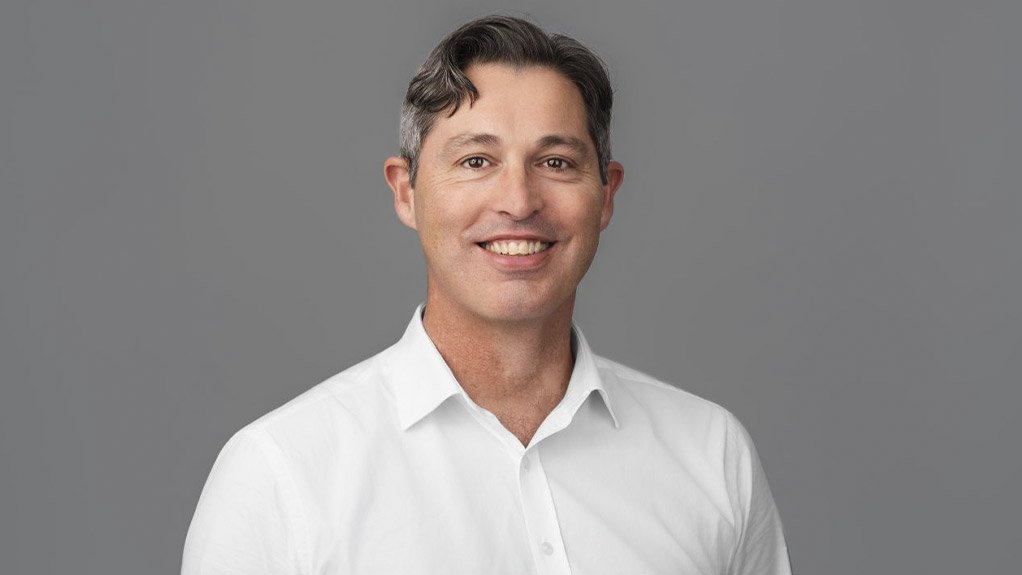
“Once an operation extends beyond the areas where conventional connectivity is reliable, you have to think differently about how people, assets, and information stay connected,” says Louis Du Toit, CEO at Sentiv. “The aim is to keep enough visibility across the operation for teams to know what is happening and act when something changes.”
Going beyond the edge
Mining and industrial sites make the challenge easy to see. Workers may move underground or into remote parts of a site where public cellular coverage becomes unreliable, while safety teams still need to stay in contact and understand what is happening around them.
Equipment creates a similar challenge. Monitoring loses much of its value if readings disappear whenever an asset sits outside conventional network coverage.
Sentiv uses different connectivity options according to the environment, including cellular, low-power networks, and satellite connectivity. These can support communications and connected devices across areas where relying on a single network would create gaps.
What works will vary from one site to another, so the design has to account for where coverage is likely to weaken and which parts of the operation still need to function when it does.
Remote assets still need attention
Utilities face a related problem at a much larger geographic scale. Water and energy infrastructure can extend across urban and rural areas, with pumps, meters, reservoirs, and other assets that people on site cannot monitor continuously. A small change in pressure or level may be the first indication of a developing fault, long before somebody sees the physical result.
Connected sensing gives operating teams another way to keep track of infrastructure between site visits. Information such as pressure, flow, level, or water quality can be sent back through available networks and fed into dashboards or existing control systems.
“Collecting a reading is useful, but the operation still needs to know what to do with it. The important part is getting the information into the systems and processes people already use, so that a change in the field can lead to a decision or response,” says Du Toit.
That is why Sentiv’s connected-operations approach integrates with existing platforms such as SCADA rather than assuming customers need to replace systems that already do useful work.
Work with the environment you have
Most critical infrastructure environments have evolved over years. Existing equipment may still be performing well, some sites are easier to connect than others, and wholesale replacement is often neither practical nor necessary.
For Sentiv, this can mean combining existing infrastructure with new sensing, connectivity options, alerting, and operational platforms, depending on the use case. In some environments, the immediate requirement may be worker safety and communication. Elsewhere, better visibility of remote infrastructure may be the priority.
Whatever the technology mix, information from the field still has to reach the people expected to act on it.
Critical infrastructure often extends into places where reliable connectivity is harder to maintain. The technology has to be designed around that reality so that people and assets do not disappear from view when conditions become harder.
Article Enquiry
Email Article
Save Article
Feedback
To advertise email advertising@creamermedia.co.za or click here

Latest Multimedia
Latest News

Showroom
Established in 1933, EKATO is the world leader in agitation technology, supplying agitators for processes and applications such as chemicals and...
VISIT SHOWROOM
CMTS is a leading, well-established EC&I contractor with 37+ years of mining and industrial experience. We execute full-scope EC&I projects with...
VISIT SHOWROOM

Announcements
What's On
Subscribe to improve your user experience...
Option 1 (equivalent of R125 a month):
Receive a weekly copy of Creamer Media's Engineering News & Mining Weekly magazine
(print copy for those in South Africa and e-magazine for those outside of South Africa)
Receive daily email newsletters
Access to full search results
Access archive of magazine back copies
Access to Projects in Progress
Access to ONE Research Report of your choice in PDF format
Option 2 (equivalent of R375 a month):
All benefits from Option 1
PLUS
Access to Creamer Media's Research Channel Africa for ALL Research Reports, in PDF format, on various industrial and mining sectors
including Electricity; Water; Energy Transition; Hydrogen; Roads, Rail and Ports; Coal; Gold; Platinum; Battery Metals; etc.
Already a subscriber?
Forgotten your password?
Receive weekly copy of Creamer Media's Engineering News & Mining Weekly magazine (print copy for those in South Africa and e-magazine for those outside of South Africa)
➕
Recieve daily email newsletters
➕
Access to full search results
➕
Access archive of magazine back copies
➕
Access to Projects in Progress
➕
Access to ONE Research Report of your choice in PDF format
RESEARCH CHANNEL AFRICA
R4500 (equivalent of R375 a month)
SUBSCRIBEAll benefits from Option 1
➕
Access to Creamer Media's Research Channel Africa for ALL Research Reports on various industrial and mining sectors, in PDF format, including on:
Electricity
➕
Water
➕
Energy Transition
➕
Hydrogen
➕
Roads, Rail and Ports
➕
Coal
➕
Gold
➕
Platinum
➕
Battery Metals
➕
etc.
Receive all benefits from Option 1 or Option 2 delivered to numerous people at your company
➕
Multiple User names and Passwords for simultaneous log-ins
➕
Intranet integration access to all in your organisation