Iran war allows Australia to revive green iron ambitions

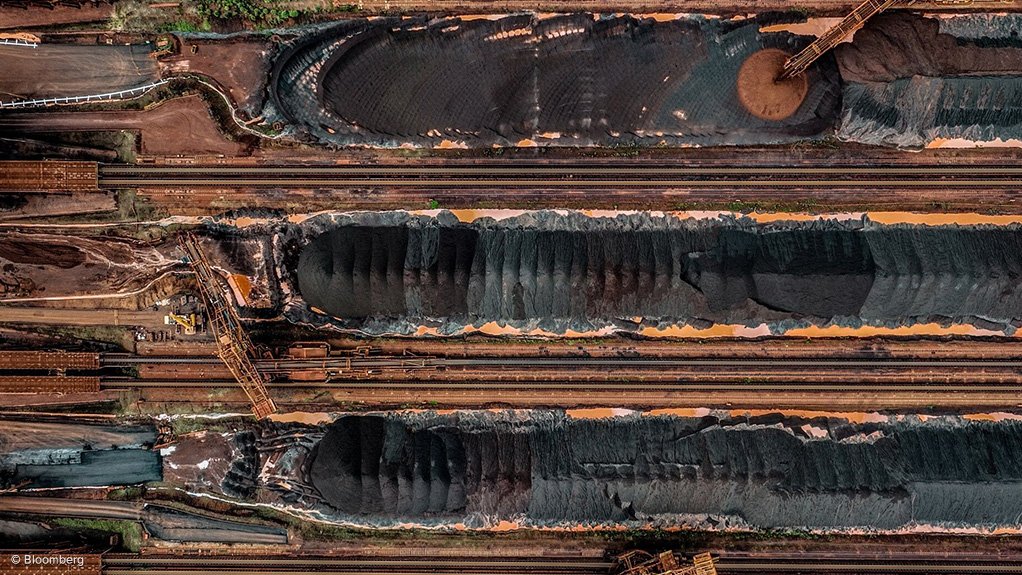


The conflict in the Middle East has cracked open the door for Australia to speed up the development of a handful of green iron projects as part of efforts to cut emissions from producing steel.
The immediate fallout from the US and Israeli attacks on Iran and the resultant retaliation has been surging crude oil and refined product prices amid the effective closure of the Strait of Hormuz and damage to the region's energy infrastructure.
However, among the second-round effects that are becoming more apparent is the possibility that ambitious plans to turn the Middle East into a major producer of green iron and steel may be delayed, or even curtailed.
The Middle East was shaping up as a major centre for the production of lower carbon iron, which is the process of using hydrogen or natural gas to make direct reduced iron (DRI) from iron ore.
DRI can then be used to make green steel in an electric arc furnace, or it can be converted into hot briquetted iron (HBI), which can be shipped to end users in another country for green steel production.
Brazilian iron-ore miner Vale is planning three major projects in the Middle East, which aim to use iron ore shipped from Brazil and a combination of natural gas and hydrogen to produce DRI for local steelmaking and HBI for export.
The most advanced of these projects is in Oman and a final investment decision was expected later this year.
Vale has two other projects planned in the Middle East, one in Saudi Arabia and the other in the United Arab Emirates.
While the Oman project sits outside the Strait of Hormuz, the planned Saudi and UAE plants are located west of the strait and would be dependent on vessels being able to transit the narrow waterway in order to both deliver iron ore and export HBI.
Vale hasn't made any public comments on the current Middle East conflict or whether this has had any impact on its investment plans in the region.
It is, however, reasonable to assume that the longer the war continues the more questions companies will be forced to ask about their investment plans, especially if the status of the Strait of Hormuz remains disputed.
"What is an uncomfortable situation for Vale may just be the opportunity Australia's green iron proponents have been looking for," Reuters reports.
GREEN IRON STRUGGLES
Australia is the world's largest exporter of iron ore, shipping about 75% of seaborne volumes.
Nonetheless, the country has struggled to launch a green iron industry, largely because the high cost of making hydrogen from renewable energy, coupled with expensive labour and extensive regulatory approvals, has largely rendered projects uneconomic.
There was considerable hype in recent years that if Australia invested billions of dollars in building a green iron value chain, it would reap an even larger dividend through higher prices for the lower carbon product.
The steel value chain accounts for 7% to 9% of global carbon emissions, the largest single industrial contributor and therefore a prime target for the net-zero-by-2050 goals of many countries and companies.
The problem is that about 80% of steel emissions come from a single step in the process, namely turning iron ore into pig, or crude, iron by removing oxygen and other impurities, a process that now involves using vast quantities of coal.
Using hydrogen made from renewables such as solar to replace coal brings the carbon intensity down to around 300 kg, or 661 pounds, per ton of steel, about one-seventh of the current 2.2 t of emissions.
REALITY REPLACES HYPE
The problem is always going to be doing this at a price that makes sense.
At last month's Global Iron Ore and Steel Conference in Perth it was clear that the green iron hype has been replaced by the reality that only a small number of projects have the right type of iron ore, access to sufficient and cheap renewable energy and infrastructure solutions to be viable.
The projects vary from building an integrated iron-ore-mine-to-steel-plant in South Australia to several in Western Australia that aim to produce an HBI product for export markets.
There is likely to be strong demand for green steel in coming years, especially from car makers that have made net-zero emissions commitments.
They are more likely to be willing to pay a premium for green steel of up to several hundred dollars a metric ton as the average car contains only about one ton of steel and thus using green steel doesn't add much to the cost of a vehicle.
It's still likely that the market for green steel in Asia will be small compared to the total steel market, but this may work in favour of Australia's smaller and more nimble projects.
An example is the two-million-tons-a-year HBI project being proposed by iron ore miners Fenix Resources, Athena Resources and energy provider Warradarge Energy, in Western Australia.
The project proponents have grasped that producing green iron really means producing renewable energy and tacking iron ore mining on as a steady buyer of the electricity and hydrogen being produced.
If smaller projects can get up and running, they are likely to open the door for bigger investments that can leverage economies of scale.
Australia's scaled-back green iron ambitions have been given a window of opportunity from the disruption likely to flow as a consequence of the Iran war. As always, seizing the moment will be key.
Article Enquiry
Email Article
Save Article
Feedback
To advertise email advertising@creamermedia.co.za or click here
Research Reports

Projects
Latest Multimedia
Latest News
Showroom
For over 15 years, Lilak Aluminium, a trusted leader in architectural extrusion supply, has delivered excellence to businesses like yours.
VISIT SHOWROOM
ISO-certified Condra manufactures overhead cranes, portal cranes, cantilever cranes and crane components: hoists, drives, end-carriages, brakes and...
VISIT SHOWROOM
Press Office
Announcements
What's On
Subscribe to improve your user experience...
Option 1 (equivalent of R125 a month):
Receive a weekly copy of Creamer Media's Engineering News & Mining Weekly magazine
(print copy for those in South Africa and e-magazine for those outside of South Africa)
Receive daily email newsletters
Access to full search results
Access archive of magazine back copies
Access to Projects in Progress
Access to ONE Research Report of your choice in PDF format
Option 2 (equivalent of R375 a month):
All benefits from Option 1
PLUS
Access to Creamer Media's Research Channel Africa for ALL Research Reports, in PDF format, on various industrial and mining sectors
including Electricity; Water; Energy Transition; Hydrogen; Roads, Rail and Ports; Coal; Gold; Platinum; Battery Metals; etc.
Already a subscriber?
Forgotten your password?
Receive weekly copy of Creamer Media's Engineering News & Mining Weekly magazine (print copy for those in South Africa and e-magazine for those outside of South Africa)
➕
Recieve daily email newsletters
➕
Access to full search results
➕
Access archive of magazine back copies
➕
Access to Projects in Progress
➕
Access to ONE Research Report of your choice in PDF format
RESEARCH CHANNEL AFRICA
R4500 (equivalent of R375 a month)
SUBSCRIBEAll benefits from Option 1
➕
Access to Creamer Media's Research Channel Africa for ALL Research Reports on various industrial and mining sectors, in PDF format, including on:
Electricity
➕
Water
➕
Energy Transition
➕
Hydrogen
➕
Roads, Rail and Ports
➕
Coal
➕
Gold
➕
Platinum
➕
Battery Metals
➕
etc.
Receive all benefits from Option 1 or Option 2 delivered to numerous people at your company
➕
Multiple User names and Passwords for simultaneous log-ins
➕
Intranet integration access to all in your organisation