Investment in training to improve infrastructure delivery

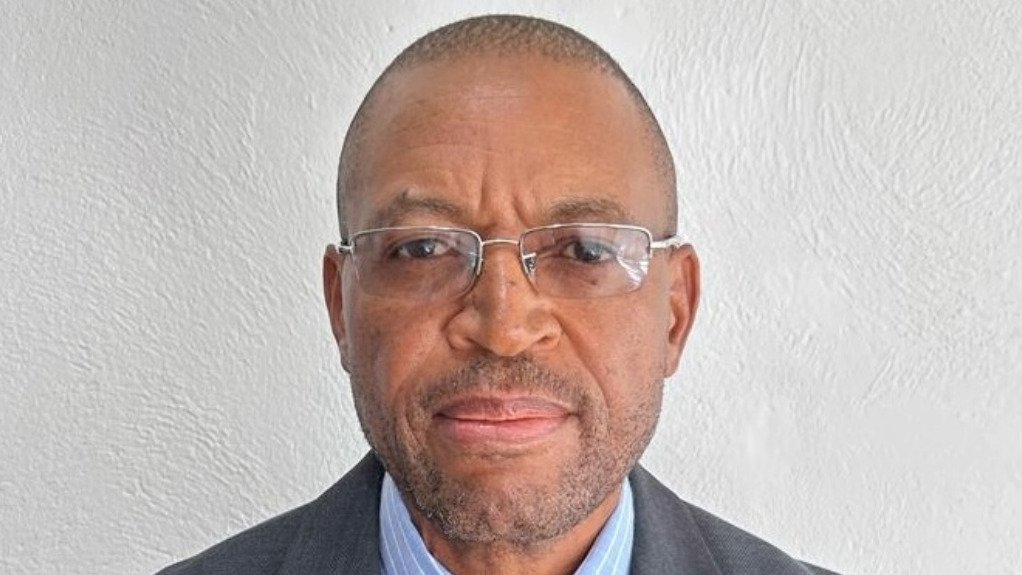

CHALMERS PAGIWA Skills development remains critical to the long-term sustainability of the consulting engineering profession
MEMORY SILAULE The transition to digital modelling has significantly improved the quality of engineering outputs




Engineering consultancy Lubisi Consulting Engineers is strengthening its digital engineering capabilities through targeted investments in three- dimensional (3D) modelling and building information modelling (BIM) training. The firm highlights this as being key to helping to improve design accuracy, coordination and project delivery across infrastructure projects.
The adoption of advanced engineering software reflects the growing complexity of modern infrastructure projects and the need for faster, more reliable design processes, says Lubisi Consulting Engineers MD Chalmers Pagiwa.
“Engineering has advanced significantly over the years and designs have become more complex. Modern software tools allow engineers to drastically reduce the time required to produce drawings and finalise designs for construction while . . . improving accuracy and reducing the risk of human error.”
Historically, engineers relied on manual drawing boards to develop designs – a time-consuming process that could take months and was prone to mistakes. Therefore, the increased use of digital modelling tools, such as Autodesk Civil 3D, is enabling engineers to produce detailed infrastructure designs more efficiently, while improving cost management for consulting firms and clients, says Lubisi civil engineer Memory Silaule.
The company has invested in specialised training for Silaule, who completed Civil 3D Fundamentals and Stormwater and Sewer courses through industry associations Consulting Engineers South Africa (CESA) and the Engineering Council of South Africa (ECSA) in January. The training forms part of Lubisi’s broader strategy to strengthen its design capabilities in areas such as dynamic grading, pipe network planning and corridor modelling.
Silaule, an ECSA candidate engineer and CESA Young Professionals Forum Mpumalanga branch chairperson, says using digital design tools has already improved the firm’s ability to collaborate with other project partners.
“I experienced this first-hand while working on a design project that required collaboration with two subconsultants. Using software, such as Civil 3D, made the process significantly smoother and allowed me to analyse existing elevations and accurately quantify cut-and-fill volumes, which directly influences project costs,” she explains.
Project Coordination
The integration of 3D modelling and BIM is also strengthening project coordination across disciplines, enabling engineers, planners and contractors to share digital models and identify potential design conflicts before construction begins.
Pagiwa notes that these digital tools enable engineers to model real-world site conditions more accurately, thereby improving design feasibility accuracy and reducing the likelihood of costly changes during construction.
The ability to simulate surfaces, stormwater flows and infrastructure corridors in a digital environment enables engineers to better understand how designs interact with ground conditions while identifying potential risks at an early stage.
Further, Silaule says the transition to digital modelling has significantly improved the quality of engineering outputs, with Pagiwa noting that the adoption of digital engineering tools is also helping Lubisi align with global best practices as digitalisation becomes increasingly important across Africa’s infrastructure sector.
By transitioning from manual processes to integrated digital workflows, Lubisi aims to support complex infrastructure projects in sectors such as transport, water and energy, while improving project timelines and reducing coordination costs.
Beyond software investment, Pagiwa emphasises that skills development remains critical to the long-term sustainability of the consulting engineering profession.
He adds that developing young professionals and building in-house talent pipelines are essential to strengthening the sector’s capacity to deliver resilient infrastructure while advancing transformation and representation in the profession.
Looking ahead, the firm believes that emerging technologies, such as BIM, digital twins and smart asset management systems, will play an increasingly important role in infrastructure development across Africa.
For local water projects – such as the Driekoppies Dam project in Mpumalanga – Lubisi is applying real-time monitoring, BIM and smart systems to integrate gravity-fed pipelines with Internet-of-Things sensors for leak detection and demand forecasting. This ensures that work complies with UN Sustainable Development Goal 6, which aims to ensure sustainable management of water and sanitation and universal access by 2030.
“These technologies will enable predictive maintenance, real-time monitoring and life-cycle optimisation across sectors, such as transport, water and energy, and by integrating digital modelling with smart infrastructure systems, engineers will be able to design more resilient assets and manage them more efficiently throughout their operational life,” Pagiwa concludes.
Article Enquiry
Email Article
Save Article
Feedback
To advertise email advertising@creamermedia.co.za or click here
Research Reports

Projects

Latest Multimedia

Latest News
Showroom

For over 15 years, Lilak Aluminium, a trusted leader in architectural extrusion supply, has delivered excellence to businesses like yours.
VISIT SHOWROOM
ISO-certified Condra manufactures overhead cranes, portal cranes, cantilever cranes and crane components: hoists, drives, end-carriages, brakes and...
VISIT SHOWROOM

Press Office
Announcements
What's On
Subscribe to improve your user experience...
Option 1 (equivalent of R125 a month):
Receive a weekly copy of Creamer Media's Engineering News & Mining Weekly magazine
(print copy for those in South Africa and e-magazine for those outside of South Africa)
Receive daily email newsletters
Access to full search results
Access archive of magazine back copies
Access to Projects in Progress
Access to ONE Research Report of your choice in PDF format
Option 2 (equivalent of R375 a month):
All benefits from Option 1
PLUS
Access to Creamer Media's Research Channel Africa for ALL Research Reports, in PDF format, on various industrial and mining sectors
including Electricity; Water; Energy Transition; Hydrogen; Roads, Rail and Ports; Coal; Gold; Platinum; Battery Metals; etc.
Already a subscriber?
Forgotten your password?
Receive weekly copy of Creamer Media's Engineering News & Mining Weekly magazine (print copy for those in South Africa and e-magazine for those outside of South Africa)
➕
Recieve daily email newsletters
➕
Access to full search results
➕
Access archive of magazine back copies
➕
Access to Projects in Progress
➕
Access to ONE Research Report of your choice in PDF format
RESEARCH CHANNEL AFRICA
R4500 (equivalent of R375 a month)
SUBSCRIBEAll benefits from Option 1
➕
Access to Creamer Media's Research Channel Africa for ALL Research Reports on various industrial and mining sectors, in PDF format, including on:
Electricity
➕
Water
➕
Energy Transition
➕
Hydrogen
➕
Roads, Rail and Ports
➕
Coal
➕
Gold
➕
Platinum
➕
Battery Metals
➕
etc.
Receive all benefits from Option 1 or Option 2 delivered to numerous people at your company
➕
Multiple User names and Passwords for simultaneous log-ins
➕
Intranet integration access to all in your organisation