Innovation, reform key to stabilising system

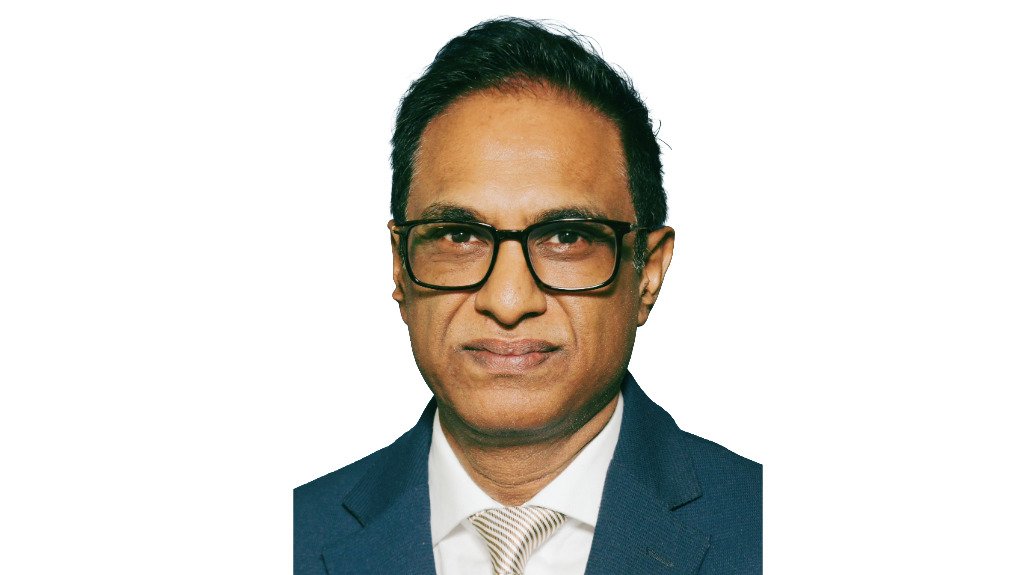
RAJ NAIDOO Restoring the financial and technical capacity of South Africa at Eskom Distribution and across municipalities will be critical over the next year


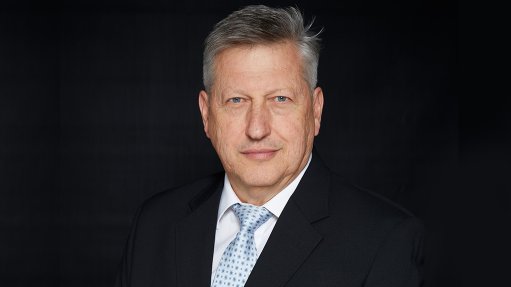
The adoption of smart grid technologies is crucial for the future of South Africa’s power grid and its efficiency. Intelligence is key and smart grids are an enabler of intelligence, highlights University of Pretoria Electrical, Electronic and Computer Engineering Department head Professor Raj Naidoo.
A significant portion of the country’s transmission and distribution losses arise from undetected faults, unmetered consumption, ageing assets operating beyond their design envelope and the absence of real-time situational awareness.
“Smart technologies can mitigate all these challenges, as analytics and AI-driven optimisation . . . [enable] grid operators to dynamically re-route power flows around constraints, defer costly loadshedding events and extend the operational life of transformers and switchgear by preventing thermally destructive overloads,” he adds.
Demand response programmes, enabled by smart technology, allow for large industrial and commercial users to voluntarily curtail load during peak stress events. Naidoo regards this as a dispatchable resource that costs a fraction of peaking generation.
Moreover, he says that, at scale, coordinated demand response across South Africa’s commercial and industrial sector could provide “several hundred” megawatts of effective capacity relief within months.
Virtual power plants, aggregating distributed solar PV systems, battery storage and flexible loads behind the meter, represent the most transformative near-term opportunity and smart aggregation platforms can transform this distributed resource into a controllable, dispatchable asset, he elaborates.
Key Challenge
Naidoo says the fundamental challenge is that renewable-energy sources of solar PV and wind are variable and non-dispatchable by nature, and traditional synchronous generators have historically provided the grid with inertia, frequency regulation and fault current capability.
Frequency regulation margins are already constrained, and the challenge will be to increase renewables while ensuring that the national grid avoids collapse.
“There are solutions to mitigate risks, such as utility-scale battery energy storage systems, which can provide synthetic inertia, fast frequency response and load-following capability,” Naidoo adds.
He also highlights that pumped storage hydropower can assist, especially where South Africa has some existing capacity in the Drakensberg, in KwaZulu-Natal, and Palmiet, in the Western Cape, as this represents a long-duration storage resource that should be expanded and used to its fullest extent.
Capital Investment, Private-Sector Participation
Naidoo says capital investment in transmission infrastructure will put pressure on electricity tariffs and that this is an economic reality.
“The question is not whether tariffs will be affected, but by how much, over what timeframe, and whether the increase can be rendered acceptable through countervailing efficiency gains and new revenue models.”
There are means of managing this increase, as smart grid efficiency savings directly reduce the cost base that tariffs must recover.
Naidoo adds that utilities can reduce non-technical losses, optimise asset use and defer infrastructure replacement through better maintenance to lower the denominator against which capital costs are spread.
Private-sector participation in transmission investment, if structured correctly, could reduce the burden on the public balance sheet and introduce competitive discipline. The independent power producer (IPP) model has demonstrated that generation can, with the appropriate regulatory design, be extended to selected transmission assets.
He adds that tariff harmonisation and restructuring across the multi-tiered South African electricity supply industry – where Eskom bulk tariffs, municipal retail tariffs and IPP wheeling charges coexist with substantial cross-subsidies and inefficiencies – can create significant value without requiring new capital.
Accelerate Grid Development
Restoring the financial and technical capacity of South Africa at Eskom Distribution and across municipalities will be critical over the next year, states Naidoo.
He also stresses that the grid network has to be urgently maintained in some parts of the country, while deferred maintenance, ageing infrastructure, skills deficits and financial distress in municipalities can create a distribution crisis in many areas.
Many municipalities lack the technical capacity, financial resources and management systems to maintain and modernise their electricity distribution infrastructure.
Naidoo, therefore, urges the Department of Electricity and Energy to implement a structured support programme combining technical assistance, ringfenced funding mechanisms and digital asset management tools to systematically address these challenges.
Although South Africa’s energy crisis has been severe, it has created an “explosion” of rooftop solar PV, home battery storage and community energy projects, thereby contributing to a more resilient and sustainable energy system. The country has the technical talent, natural renewable resources and the institutional frameworks, however imperfect, to navigate this transition successfully, he concludes.
Article Enquiry
Email Article
Save Article
Feedback
To advertise email advertising@creamermedia.co.za or click here
Research Reports

Projects

Latest Multimedia

Latest News
Showroom
Axiom Hydraulics is a trusted leader in South Africa’s hydraulic industry, delivering world-class components, systems, and engineering expertise...
VISIT SHOWROOM
Sulzer South Africa, established in 1922, partners with critical industries like power, oil & gas, water, mining, and chemicals to boost...
VISIT SHOWROOM
Announcements
What's On
Subscribe to improve your user experience...
Option 1 (equivalent of R125 a month):
Receive a weekly copy of Creamer Media's Engineering News & Mining Weekly magazine
(print copy for those in South Africa and e-magazine for those outside of South Africa)
Receive daily email newsletters
Access to full search results
Access archive of magazine back copies
Access to Projects in Progress
Access to ONE Research Report of your choice in PDF format
Option 2 (equivalent of R375 a month):
All benefits from Option 1
PLUS
Access to Creamer Media's Research Channel Africa for ALL Research Reports, in PDF format, on various industrial and mining sectors
including Electricity; Water; Energy Transition; Hydrogen; Roads, Rail and Ports; Coal; Gold; Platinum; Battery Metals; etc.
Already a subscriber?
Forgotten your password?
Receive weekly copy of Creamer Media's Engineering News & Mining Weekly magazine (print copy for those in South Africa and e-magazine for those outside of South Africa)
➕
Recieve daily email newsletters
➕
Access to full search results
➕
Access archive of magazine back copies
➕
Access to Projects in Progress
➕
Access to ONE Research Report of your choice in PDF format
RESEARCH CHANNEL AFRICA
R4500 (equivalent of R375 a month)
SUBSCRIBEAll benefits from Option 1
➕
Access to Creamer Media's Research Channel Africa for ALL Research Reports on various industrial and mining sectors, in PDF format, including on:
Electricity
➕
Water
➕
Energy Transition
➕
Hydrogen
➕
Roads, Rail and Ports
➕
Coal
➕
Gold
➕
Platinum
➕
Battery Metals
➕
etc.
Receive all benefits from Option 1 or Option 2 delivered to numerous people at your company
➕
Multiple User names and Passwords for simultaneous log-ins
➕
Intranet integration access to all in your organisation