Infrastructure Indaba underscores importance of rail and water systems

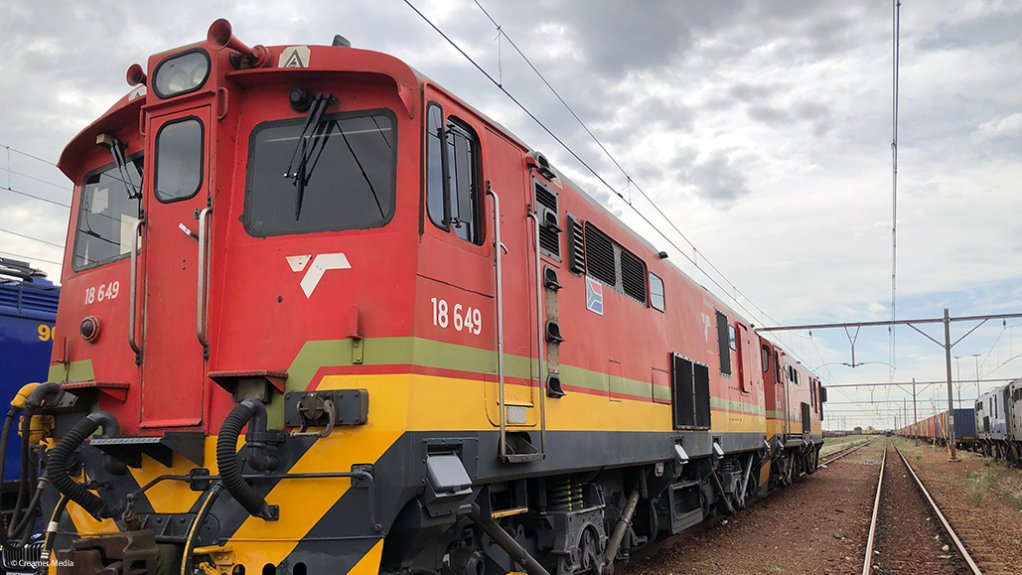


The importance of rail and water for South Africa’s economic growth was emphasised on the second day of industry organisation Consulting Engineers South Africa’s (Cesa’s) Infrastructure Indaba 2026, held at the Durban International Convention Centre last month.
“A central message at this year’s indaba was that South Africa’s infrastructure decisions must be integrated, forward-looking and grounded in local realities, ensuring that investment in infrastructure is matched by serious attention to the water systems that ultimately underpin economic activity and community wellbeing,” Cesa CEO Chris Campbell highlighted.
uMngeni local municipality Mayor Chris Pappas discussed issues around linking national infrastructure to local economic realities.
“While infrastructure is often aligned to national priorities, the critical link to local economic needs is frequently overlooked, limiting its true impact. Rural-to-urban migration is not a future challenge – it is a structural reality we must address now. When properly planned and managed, this shift presents significant opportunities for economic growth and infrastructure optimisation,” he stressed.
Rail
Speaking during a session titled ‘Building Tomorrow’s Infrastructure’, Transnet Rail Infrastructure Manager (TRIM) CE Moshe Motlohi said that opening up South Africa’s rail network to new operators would unlock much-needed capacity and take pressure off South Africa’s road network.
He further outlined how new train operating companies would be introduced on 41 routes across six corridors.
“Through our Open Access Process, these new entrants expect to move about 25- million tons of cargo from road back onto rail,” he stated.
Motlohi warned that “deteriorating levels of asset reliability and availability result in safety risks, train delays, cancelled train slots, volume loss and eventual permanent capacity loss”, adding that current affordable funding levels fell short of what is needed to maintain and renew the network over the next five years.
Delegates heard that public reform is beginning to crowd in private capital.
Private rail company TRAXTION in December announced a R3.4-billion rolling stock investment programme to support this reform agenda.
The programme, comprising R1.8-billion in locomotives and R1.6-billion in wagons, is said to be the largest private freight rail investment in South Africa’s history in terms of fleet size and value, targeting a minimum 60% local content and projecting the creation of 662 direct jobs during manufacturing, assembly and deployment.
The added TRAXTION capacity is expected to address about 5% of the national freight rail capacity shortfall.
TRIM also recently issued requests for proposals for leases at sidings such as Ngagane, near Newcastle, and Krugersdorp and Klaserie, near Hoedspruit.
Motlohi stressed that operational recovery would not be possible without addressing security risks that had plagued the network since the Covid-19 lockdown period, when the Railway Safety Regulator experienced record levels of theft and vandalism of key assets such as rail lines, signalling components and overhead traction equipment.
TRIM is intensifying a layered security strategy built around five core pillars: ‘deter, detect, delay, defend and deny’.
This includes a more visible security presence, enhanced surveillance to identify potential threats early, measures to physically slow intrusions and protect critical assets, and personnel and stricter controls denying unauthorised access to the network.
Water
Water specialists at the Infrastructure Indaba warned that economic aspirations would remain at risk if South Africa’s water systems continued to deteriorate.
“When we talk infrastructure that enables economic growth, we often think about energy or transport. But, in reality, water is the foundation,” uMngeni-uThukela Water process engineer Megan Schalkwyk said.
She cautioned that a significant portion of water infrastructure was failing or underperforming owing to inadequate maintenance, pointing to the 2022 Green Drop report, which showed that nearly 40% of wastewater treatment works were in a critical state and almost two-thirds were at high or critical risk.
As a water utility, uMngeni-uThukela Water is already experiencing the effects of declining raw water quality, which makes treatment more complex, costly and unreliable for households and industry.
Nonrevenue water has also become a critical issue, with losses from leaks, theft and operational inefficiencies undermining supply security and municipal finances.
Schalkwyk highlighted that water security was not just dependent on building more infrastructure, but about “planning better, maintaining what we have, diversifying our sources and working together more effectively”.
Makhaotse, Narasimulu and Associates MD Sagren Narasimulu highlighted that South Africa’s freshwater storage remained a structural vulnerability in the face of climate variability.
“Our challenges are not new, but their impact is becoming increasingly pronounced as urban growth and climate change become more prevalent,” he said.
Meanwhile, Construction Industry Development Board construction industry performance director Ishmail Cassiem outlined the organisation’s Building Information Modelling (BIM) roadmap, noting low adoption rates and plans for an annex and a National BIM Committee to boost implementation.
Article Enquiry
Email Article
Save Article
Feedback
To advertise email advertising@creamermedia.co.za or click here
Research Reports

Projects
Latest Multimedia
Showroom
M and J Mining are leading suppliers of physical support systems as used by the underground mining industry. Our selection of products are not...
VISIT SHOWROOM
Smart energy storage solutions for efficient, safe, and profitable power.
VISIT SHOWROOM
Press Office
Announcements
What's On
Subscribe to improve your user experience...
Option 1 (equivalent of R125 a month):
Receive a weekly copy of Creamer Media's Engineering News & Mining Weekly magazine
(print copy for those in South Africa and e-magazine for those outside of South Africa)
Receive daily email newsletters
Access to full search results
Access archive of magazine back copies
Access to Projects in Progress
Access to ONE Research Report of your choice in PDF format
Option 2 (equivalent of R375 a month):
All benefits from Option 1
PLUS
Access to Creamer Media's Research Channel Africa for ALL Research Reports, in PDF format, on various industrial and mining sectors
including Electricity; Water; Energy Transition; Hydrogen; Roads, Rail and Ports; Coal; Gold; Platinum; Battery Metals; etc.
Already a subscriber?
Forgotten your password?
Receive weekly copy of Creamer Media's Engineering News & Mining Weekly magazine (print copy for those in South Africa and e-magazine for those outside of South Africa)
➕
Recieve daily email newsletters
➕
Access to full search results
➕
Access archive of magazine back copies
➕
Access to Projects in Progress
➕
Access to ONE Research Report of your choice in PDF format
RESEARCH CHANNEL AFRICA
R4500 (equivalent of R375 a month)
SUBSCRIBEAll benefits from Option 1
➕
Access to Creamer Media's Research Channel Africa for ALL Research Reports on various industrial and mining sectors, in PDF format, including on:
Electricity
➕
Water
➕
Energy Transition
➕
Hydrogen
➕
Roads, Rail and Ports
➕
Coal
➕
Gold
➕
Platinum
➕
Battery Metals
➕
etc.
Receive all benefits from Option 1 or Option 2 delivered to numerous people at your company
➕
Multiple User names and Passwords for simultaneous log-ins
➕
Intranet integration access to all in your organisation