Growth drivers break old warehousing model – organisation


OBIORA MADU There is a shift from 'selling space to selling performance' as customers prioritise warehouses holding stock accurately, facilitating real time visibility and timeous delivery



While the old model for warehousing in West Africa was simple – commodities out through a few ports, imports in and goods held in “whatever space was available near the port”, four growth drivers have broken that model, says research organisation the African Centre for Supply Chain director-general Dr Obiora Madu.
These four drivers are rapid urbanisation, e-commerce growth, regional trade integration and demand for modern, efficient facilities.
The result, Madu explains, is a shift from “selling space to selling performance” because customers are no longer asking how many square metres are available, but whether a warehouse is able to hold their stock accurately, show it to them in real time and help to ensure it is delivered to their customers on time.
“The operators who are winning are answering that question with integrated services across port, warehouse, distribution and last mile,” he states.
However, while operators are investing in connectivity between ports, transport, warehouses, distribution centres and end markets, they are doing so against three persistent challenges.
The first, Madu highlights, is power.
In a report by industry body Lagos Chamber of Commerce and Industry, for its Cost of Doing Business Monitor in the third quarter of 2025, it was revealed that businesses spend about 70% of their operating costs on electricity – including alternative power options – rent and logistics. Whereas, for cold stores and automated sites that run ‘around the clock’, diesel generation, including diesel prices, is a key factor in determining a facility’s viability.
The second challenge is infrastructure gaps, with port-to-hinterland evacuation heavily reliant on road haulage, with limited rail and barge links.
Madu cites, for example, the Abidjan-Lagos corridor, which runs 1,028 km through five countries and eight border crossings and which, according to development finance institution the African Development Bank (AfDB), links 85% of the Economic Community of West African States’ trade volumes.
“Global body, the United Nations Conference on Trade and Development estimated that infrastructure gaps make African trade costs about 50% higher, while the AfDB puts Africa’s infrastructure financing gap at $68-billion to $108-billion a year,” he adds.
The third problem is focused on fragmented supply chains, as multiple hauliers, informal distributors and disconnected systems mean that “nobody sees the whole journey”. This results in stock being duplicated ‘just in case’ and cargo that waits days for a truck or a document at a terminal, Madu says.
Additionally, he points out that there is insufficient Grade-A space in the “right spots”, as modern, well-located warehousing and inland container depots near the main corridors remain scarce, with a lot of the stock still sitting in informal facilities.
Consequently, Madu believes that collaboration between logistics providers, infrastructure operators and government can help to manage corridors as one system, digitise the handovers, use public-private partnerships and blended finance to fund development, tackle power costs through captive solar, share energy at logistics parks, ensure supportive tariffs for cold storage and build certified skills so new facilities and systems “deliver what they promise”.
“West Africa does not lack cargo or demand. It lacks connected, modern, visible capacity. Operators that invest in the network – not just the building – will own the next decade of African trade,” Madu concludes.
Representatives from African Centre for Supply Chain will be a supporting association for the West Africa Warehousing & Logistics Expo, to be held in Lagos, Nigeria, from April 6 to 8, 2027.
Article Enquiry
Email Article
Save Article
Feedback
To advertise email advertising@creamermedia.co.za or click here
Research Reports


Projects


Latest Multimedia


Latest News


Showroom

The Steel Tube Export Association of South Africa was established to develop sustainable, internationally competitive carbon steel tube and pipe...
VISIT SHOWROOM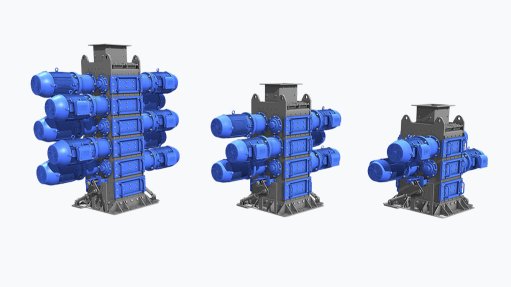
Energy and Densification Systems (EDS) has developed equipment for crushing, milling, blending and densifying products. Based on its globally...
VISIT SHOWROOM



Press Office
Announcements
What's On
Subscribe to improve your user experience...
Option 1 (equivalent of R125 a month):
Receive a weekly copy of Creamer Media's Engineering News & Mining Weekly magazine
(print copy for those in South Africa and e-magazine for those outside of South Africa)
Receive daily email newsletters
Access to full search results
Access archive of magazine back copies
Access to Projects in Progress
Access to ONE Research Report of your choice in PDF format
Option 2 (equivalent of R375 a month):
All benefits from Option 1
PLUS
Access to Creamer Media's Research Channel Africa for ALL Research Reports, in PDF format, on various industrial and mining sectors
including Electricity; Water; Energy Transition; Hydrogen; Roads, Rail and Ports; Coal; Gold; Platinum; Battery Metals; etc.
Already a subscriber?
Forgotten your password?
Receive weekly copy of Creamer Media's Engineering News & Mining Weekly magazine (print copy for those in South Africa and e-magazine for those outside of South Africa)
➕
Recieve daily email newsletters
➕
Access to full search results
➕
Access archive of magazine back copies
➕
Access to Projects in Progress
➕
Access to ONE Research Report of your choice in PDF format
RESEARCH CHANNEL AFRICA
R4500 (equivalent of R375 a month)
SUBSCRIBEAll benefits from Option 1
➕
Access to Creamer Media's Research Channel Africa for ALL Research Reports on various industrial and mining sectors, in PDF format, including on:
Electricity
➕
Water
➕
Energy Transition
➕
Hydrogen
➕
Roads, Rail and Ports
➕
Coal
➕
Gold
➕
Platinum
➕
Battery Metals
➕
etc.
Receive all benefits from Option 1 or Option 2 delivered to numerous people at your company
➕
Multiple User names and Passwords for simultaneous log-ins
➕
Intranet integration access to all in your organisation