East Africa leading in cross-border trade development



MTHOKOZISI DLAMINI As a region, East Africa is focused on customer outcomes not infrastructure projects which is why the region is more advanced in cross-border trade development
RICHARD SOUTHEY Solving the identity issue is paramount, closely followed by critical needs for regulatory enablement, open finance, digital-trade infrastructure, and network interoperability




While Africa’s relevance to the evolution of global finance continues to grow significantly, East African countries, such as Kenya, Rwanda, Uganda and Tanzania, lead the way in smoothing cross-border trade, says African financial services provider Absa Corporate and Investment Banking (CIB) Transactional Banking Sales managing executive Mthokozisi Dlamini.
He explains this upward trajectory can be attributed to shared regional standards, mobile money interoperability, electronic customs systems and strong regional cooperation.
“As a region, East Africa is focused on customer outcomes not infrastructure projects,” he notes, pointing out that Rwanda has been the “outstanding example” as it has redesigned the entire trade journey around ‘the trader’, thereby delivering the best outcomes for clients.
He adds that the region’s experience, particularly in cross-border payments, provides a glimpse into what tomorrow’s increasingly digital, data-driven global financial system could look like.
Further, as AI, automation and real-time data reshape how businesses make decisions, manage supply chains and deploy capital, the infrastructure that transfers money across borders must evolve too.
“The question is no longer simply how quickly a payment can move, but rather whether financial infrastructure can provide the intelligence, interoperability, liquidity and trust required to support an increasingly real-time global economy,” avers Dlamini.
Africa’s financial landscape spans more than 50 economies, multiple currencies, regulatory regimes, payment systems and levels of digital maturity, he notes.
Moreover, the world is “naturally” becoming more fragmented as geopolitics impacts all countries. As a result, the financial sector is seeing new trade alliances emerge, resulting, in turn, in additional complexities relating to differing payments systems and regulations.
Importantly, Dlamini notes that such complexity is “inherent in doing business in Africa”, which allows African innovators to develop solutions in areas in which they have familiarity and have a deep understanding.
African Advantage
Absa CIB Payments as a Service managing executive Richard Southey attributes Africa’s recent success to the fact that Africans are “solving for financial inclusion at scale, solving for areas with deficits in infrastructure and solving for practical access”.
“As a result, the solutions created expand the range of problems being solved for, which influences both how the rules should behave to ensure a broad spectrum of needs are being considered, while testing numerous infrastructures to ensure they cater for the community’s needs,” Southey notes.
The assumptions are generally a lot broader when African circumstances are considered, he adds.
While modern technological advancements promise to revolutionise global finance, Southey cautions that smarter systems alone will not solve the structural challenges plaguing small and medium-sized enterprises (SMEs).
The primary hurdle facing international trade remains the high cost and complexity of digital identity.
Expensive know-your-customer compliance, rampant financial crime, and cumbersome onboarding processes continue to lock out vulnerable sectors, particularly rural customers.
Southey argues that solving the identity issue is paramount, closely followed by critical needs for regulatory enablement, open finance, digital-trade infrastructure, and network interoperability.
Industry analysts also stress that the future of finance depends on stability and accessibility, rather than raw speed.
“For SMEs currently hampered by trade barriers, building a dependable framework requires a shift toward predictable and transparent operations, which remain far more crucial than rapid transaction times,” says Southey.
A stable global trade ecosystem for smaller businesses depends on the implementation of portable digital identity systems that allow entities to verify credentials once and use them universally.
As AI makes commerce more automated, data-driven and nearer to real-time, the financial infrastructure underneath it will need to become more intelligent without becoming less trusted.
Africa's experience gives it a distinctive perspective on how that future could work, says Southey. “The lesson is that the future of cross-border finance is not simply faster. It is more connected, more intelligent and more interoperable, with trust at its core.”
Southey says the next generation of African services will combine global technology, local expertise, trusted financial institutions, strong regulatory engagement and merchant-led design.
“This will require no dominant player but a shift towards combining international investment, capital and tools with local expertise and knowledge which solves real problems,” concludes Southey.
Article Enquiry
Email Article
Save Article
Feedback
To advertise email advertising@creamermedia.co.za or click here
Research Reports


Projects


Latest Multimedia


Latest News


Showroom

The Steel Tube Export Association of South Africa was established to develop sustainable, internationally competitive carbon steel tube and pipe...
VISIT SHOWROOM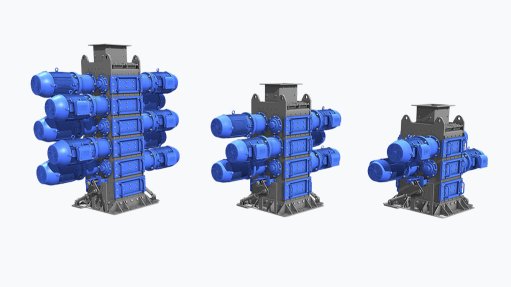
Energy and Densification Systems (EDS) has developed equipment for crushing, milling, blending and densifying products. Based on its globally...
VISIT SHOWROOM



Press Office
Announcements
What's On
Subscribe to improve your user experience...
Option 1 (equivalent of R125 a month):
Receive a weekly copy of Creamer Media's Engineering News & Mining Weekly magazine
(print copy for those in South Africa and e-magazine for those outside of South Africa)
Receive daily email newsletters
Access to full search results
Access archive of magazine back copies
Access to Projects in Progress
Access to ONE Research Report of your choice in PDF format
Option 2 (equivalent of R375 a month):
All benefits from Option 1
PLUS
Access to Creamer Media's Research Channel Africa for ALL Research Reports, in PDF format, on various industrial and mining sectors
including Electricity; Water; Energy Transition; Hydrogen; Roads, Rail and Ports; Coal; Gold; Platinum; Battery Metals; etc.
Already a subscriber?
Forgotten your password?
Receive weekly copy of Creamer Media's Engineering News & Mining Weekly magazine (print copy for those in South Africa and e-magazine for those outside of South Africa)
➕
Recieve daily email newsletters
➕
Access to full search results
➕
Access archive of magazine back copies
➕
Access to Projects in Progress
➕
Access to ONE Research Report of your choice in PDF format
RESEARCH CHANNEL AFRICA
R4500 (equivalent of R375 a month)
SUBSCRIBEAll benefits from Option 1
➕
Access to Creamer Media's Research Channel Africa for ALL Research Reports on various industrial and mining sectors, in PDF format, including on:
Electricity
➕
Water
➕
Energy Transition
➕
Hydrogen
➕
Roads, Rail and Ports
➕
Coal
➕
Gold
➕
Platinum
➕
Battery Metals
➕
etc.
Receive all benefits from Option 1 or Option 2 delivered to numerous people at your company
➕
Multiple User names and Passwords for simultaneous log-ins
➕
Intranet integration access to all in your organisation