ACTOM Protection Control enables full compliance through secondary plant integration








By Motshabi Mthembu
In South Africa, renewable energy projects frequently encounter delays because substation secondary systems and plant-level integration are managed by separate suppliers. This fragmented approach leads to technical inconsistencies and makes commissioning more challenging.
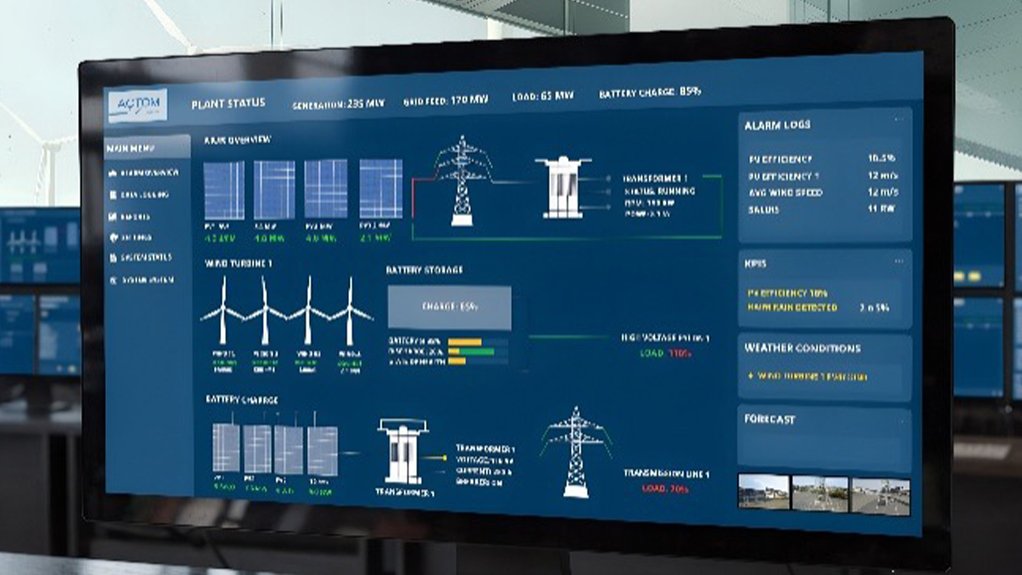
South African supplier and manufacturer of electrical protection, automation and metering systems ACTOM Protection and Control (P+C) addresses this challenge with its secondary plant integration (SPI) solution. By bringing together substation protection, plant data, communication interfaces, grid-code requirements, and site services under a single accountable partner, SPI streamlines compliance and system operation. This integrated approach supports efficient project delivery from initial design through to energisation.
SPI offers a single framework that brings together all secondary systems within a renewable facility. Rather than managing protection, supervisory control and data acquisition (SCADA), plant systems, and compliance separately, SPI ensures these components work together in a coordinated architecture that meets project-specific grid requirements.
The heart of SPI is the integration of protection relays, substation SCADA, plant data, communication channels, and secondary equipment into one structured system. This approach removes mismatches between plant and substation controls, which are a common cause of commissioning problems. With SPI, all signals, logic, protection schemes, and communication interfaces are aligned and tested as a complete system before reaching site.
Primary plant such as transformers, switchgear and reactors represents some of the most expensive and production‑critical assets on any renewable facility. These components are central to enabling the continuous flow of electricity—and any damage or outage can result in significant financial loss, extended downtime, and disrupted power delivery. This makes the role of a well‑integrated secondary system essential. By ensuring that protection relays, SCADA, automation logic, and communication pathways operate as a unified, coordinated architecture, SPI safeguards these high‑value assets through fast and accurate fault detection, isolation, and system response. With SPI, project owners protect their most costly equipment while maintaining stable, uninterrupted energy production.
SPI also covers site engineering services, including installation guidance, configuration, on-site testing, and energisation support. Having one project team ensures technical issues are resolved quickly and accountability is clear, which helps reduce delays and contractor disputes.
Unified Factory Acceptance Testing
By integrating Actom P+C solutions with Actom MV switchgear, projects benefit from a single, unified factory acceptance test (FAT) that verifies the entire secondary and primary interface in one coordinated session. This combined approach enables full validation of protection schemes, SCADA integration, signal mapping, communication protocols, interlocking, and complete system scenarios—exactly as they will operate on site.
A unified FAT significantly reduces commissioning risk by identifying and resolving issues early, shortening on‑site testing durations, and improving overall project predictability. With both divisions collaborating under one controlled factory environment, clients receive a fully proven system, streamlined documentation, and a smoother path to energisation.
Further, SPI integrates Eskom grid-code logic and communication into the system design from the start, covering protection, SCADA, automation and data. Addressing compliance early helps prevent audit failures and reduces delays during grid-connection testing. ACTOM P+C partners with Eskom-approved original-equipment manufacturers, ensuring SPI uses compliant equipment compatible across all components. This mitigates multi-vendor incompatibility and engineering errors.
SPI directly addresses several persistent challenges faced by engineering, procurement and construction (EPC) contractors, developers, and project owners in the renewable energy sector.
This includes the challenge of fragmented engineering and integration approaches.
In the past, plant automation, protection systems, SCADA development, and substation integration were managed by different suppliers. This led to unclear responsibilities, duplicated design work, conflicting system designs, and misaligned signal lists. SPI addresses these issues by providing a single, consolidated integration solution with one responsible team and a fully verified system.
A lack of unified pre‑commissioning testing meansdelays in renewable projects often occur because secondary systems are not fully tested before installation. When protection relays, SCADA systems, and plant data interfaces are tested separately, the first real integration test happens during energisation, when problems are most disruptive and expensive to fix. SPI addresses this by providing a complete secondary system FAT, helping to avoid unexpected issues on site.
Meanwhile, inconsistent grid‑code compliance implementation failures are a leading cause of energisation delays. These often result from unclear grid requirements or inconsistent communication between plant and substation systems. SPI addresses this by building compliance requirements into the technical framework from the outset, supporting predictable compliance and reducing the risk of rework.
The Future
While many suppliers and engineering firms offer parts of the solution, few can deliver a complete, future‑ready integration framework that spans protection, SCADA, plant data, digital substation architectures, site services, and full compliance. As utilities transition toward IEC 61850‑driven digital substations and data‑centric operations, the need for a single, locally capable integrator becomes even more critical. SPI addresses this gap by providing a fully integrated, locally delivered solution that reduces reliance on multiple vendors and international engineering teams—ensuring cohesive system performance, streamlined project delivery, and long‑term digital substation readiness
ACTOM Protection & Control’s SPI solution delivers what the South African renewable energy sector has long lacked: a single, accountable partner capable of unifying all secondary systems into one coordinated, compliant and future‑ready architecture. By eliminating fragmented engineering, resolving multi‑vendor inconsistencies, and ensuring grid‑code requirements are embedded from the outset, SPI transforms the way renewable projects are designed, tested and commissioned.
With SPI, ACTOM P+C provides developers, EPCs and utilities with a fully verified, compliant, and operationally streamlined secondary system—supporting faster energisation, lower integration risk, and long‑term readiness for the evolving digital grid.
Article Enquiry
Email Article
Save Article
Feedback
To advertise email advertising@creamermedia.co.za or click here
Research Reports

Projects

Latest Multimedia

Latest News


Showroom
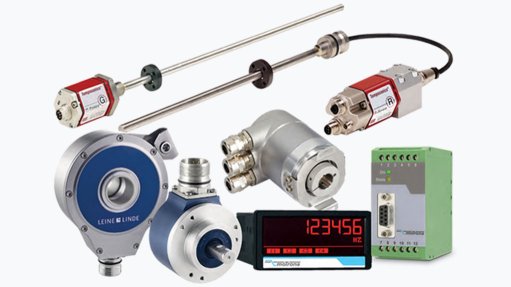
ATI systems comprises five divisions: electrical assemblies, drives and controls, feedback sensors, enclosures, and strip guiding.
VISIT SHOWROOM
ROSOND provides fast, efficient, safe, and cost-effective drilling and grouting services to mining and exploration industries throughout Africa.
VISIT SHOWROOM

Announcements
What's On
Subscribe to improve your user experience...
Option 1 (equivalent of R125 a month):
Receive a weekly copy of Creamer Media's Engineering News & Mining Weekly magazine
(print copy for those in South Africa and e-magazine for those outside of South Africa)
Receive daily email newsletters
Access to full search results
Access archive of magazine back copies
Access to Projects in Progress
Access to ONE Research Report of your choice in PDF format
Option 2 (equivalent of R375 a month):
All benefits from Option 1
PLUS
Access to Creamer Media's Research Channel Africa for ALL Research Reports, in PDF format, on various industrial and mining sectors
including Electricity; Water; Energy Transition; Hydrogen; Roads, Rail and Ports; Coal; Gold; Platinum; Battery Metals; etc.
Already a subscriber?
Forgotten your password?
Receive weekly copy of Creamer Media's Engineering News & Mining Weekly magazine (print copy for those in South Africa and e-magazine for those outside of South Africa)
➕
Recieve daily email newsletters
➕
Access to full search results
➕
Access archive of magazine back copies
➕
Access to Projects in Progress
➕
Access to ONE Research Report of your choice in PDF format
RESEARCH CHANNEL AFRICA
R4500 (equivalent of R375 a month)
SUBSCRIBEAll benefits from Option 1
➕
Access to Creamer Media's Research Channel Africa for ALL Research Reports on various industrial and mining sectors, in PDF format, including on:
Electricity
➕
Water
➕
Energy Transition
➕
Hydrogen
➕
Roads, Rail and Ports
➕
Coal
➕
Gold
➕
Platinum
➕
Battery Metals
➕
etc.
Receive all benefits from Option 1 or Option 2 delivered to numerous people at your company
➕
Multiple User names and Passwords for simultaneous log-ins
➕
Intranet integration access to all in your organisation