China's control over indium phosphide exports threatens AI data centre rollout




BEIJING - Barely a week after Nvidia-backed chipmaker Coherent warned of a shortage of indium phosphide in an earnings call in early May, its CEO Jim Anderson was on a plane with a US business delegation accompanying President Donald Trump on his trip to China.
Anderson's visit was partly to raise the issue of delays in China's export licenses involving the highly strategic material, essential in manufacturing high-speed optical chips for AI data centres, said three sources familiar with the matter.
The issue was also discussed during talks in Seoul between top trade negotiators of the two countries ahead of Trump's May 14 to 15 summit with China's President Xi Jinping, according to two US government officials and a person briefed on the talks.
The US urgency to resolve China's export controls on the compound highlights how indium phosphide (InP) has emerged as a powerful trade weapon for Beijing that experts and executives say could disrupt the global rollout of AI data centres.
"InP is one of several supply chain bottlenecks collectively gating AI data centre buildouts," said Konrad Wang, a research analyst at SemiAnalysis.
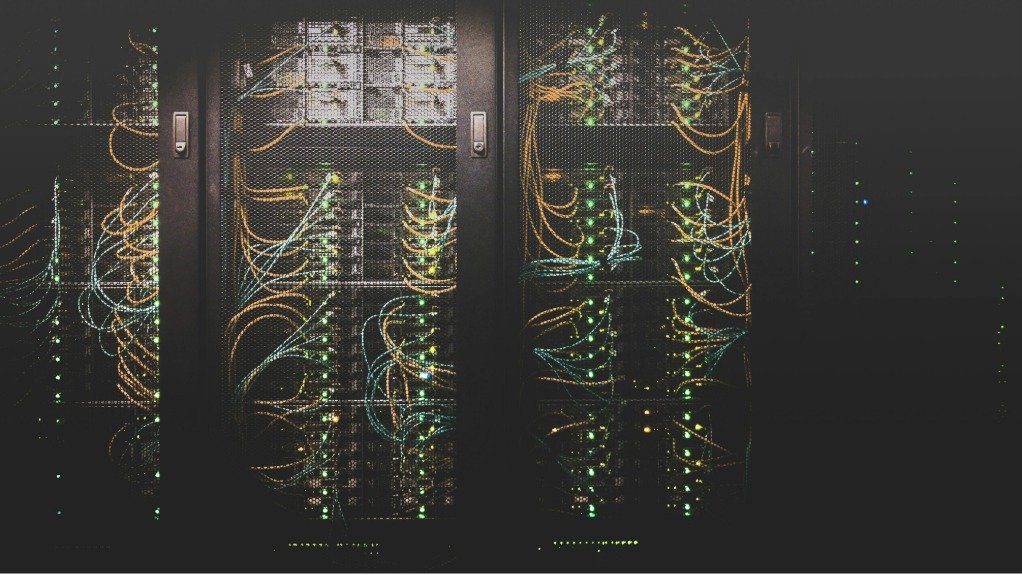
With AI workloads growing exponentially, InP is in high demand as it is a core material with no substitute in the new technology that data centre developers are turning to - using light through optical fibres, or photonics, instead of electrical signals through copper wire.
Nvidia announced $2-billion investments each into US photonic product makers Coherent and Lumentum in March, while custom-chip maker Marvell Technology announced the acquisition of semiconductor startup Celestial AI last year to tap into its work on photonics.
China's export restrictions on InP that began in February 2025, however, have become a major hurdle in their race to design the fastest, most energy-efficient components for AI data centres.
China's commerce ministry did not respond to a faxed request for comment, Reuters said.
Its control over InP highlights Beijing is prepared to expand on its well-proven export curbs on rare earths, which have disrupted global automotive, semiconductor and aviation supply chains since last year amid its tariff disputes with Washington.
"Beijing is developing a more granular 'materials chokepoint' toolkit," said Paul Triolo, a partner at consulting firm Albright Stonebridge Group.
"Rather than blocking finished photonics products outright, it can slow or condition the export of the upstream compounds, substrates, metals ... that determine whether the optical-module ecosystem can scale quickly enough to meet hyperscaler demand."
China is the world's top producer of indium, making up 70% of global output as of 2024, according to the US Geological Survey.
RIPPLE EFFECT
AXT, the world's second-largest InP substrate producer and a major supplier to Coherent, said in May that "InP export permits represent the most significant challenge we currently face."
The company, which manufactures most of its InP substrates in China, said its Chinese subsidiary only received its first
export permits last June and has a significant backlog of orders.
SemiAnalysis' Wang said "the restrictions ripple through the entire optical supply chain," beyond AXT and Coherent.
Lumentum is sold out through 2028 despite quadrupling output, while Taiwanese optical products makers VPEC and LandMark Optoelectronics faced InP substrate disruptions from AXT permit delays, he said.
Since China introduced export restrictions on InP, the average price for a 6-inch InP wafer has surged 250% to $5,000.
Faced with rising costs and prolonged disruptions, at least two major US photonics chipmakers have approached industry organisations for help with export licences, according to a source familiar with the matter.
US photonics firms are also trying to produce their own InP substrates and source from non-Chinese suppliers like Japan's Sumitomo Electric Industries. However, capacity additions are low and slow, as it usually takes two to three years for a new plant to come online, analysts said.
Coherent said in May it is doubling its own InP wafer capacity at its Texas plant this year and plans to more than double the capacity again by the end of 2027.
AXT, Coherent, Lumentum, VPEC and LandMark did not reply to Reuters' requests for comment. LandMark in April signed a long-term InP supply contract with Sumitomo.
Sumitomo told Reuters it had not seen any impact on production from China's InP export controls so far.
A person familiar with China's photonic chip industry said Sumitomo consumes much of its InP substrate output internally, meaning the broader global market remains undersupplied.
Market leaders AXT and Sumitomo together account for almost 80% of global InP substrate manufacturing, while JX Advanced Metals makes up around 10%.
CHINESE COMPETITORS
China's export restrictions have created an opening for local manufacturers of InP substrates, of which Yunnan Germanium, Guangdong Xiandao and Zhuhai Dingtai Xinyuan are the domestic leaders.
Many of these Chinese firms are rapidly scaling production capacity. In April, Yunnan Germanium announced a 189-million yuan ($28-million) investment to expand production capacity to 450 000 single InP wafers annually. Its 2025 annual report said shipments of InP wafers surged by 74%.
Guangdong Xiandao also launched a new investment project this year through its subsidiary Guangdong Xianrui with an expected annual output of 40 t of InP crystals, the raw material needed for substrates.
Both Yunnan Germanium and Guangdong Xiandao are in talks with Chinese officials to secure export approvals, but their shipments overseas, if approved, are likely to be limited, a source at a major Chinese InP manufacturer said.
The source said his company was focused on the domestic market for the near term, as there was no evidence the Chinese government would favour domestic players over companies such as AXT looking to export InP substrates from China.
On top of that, companies such as Coherent, mainly supplied by AXT, and Lumentum, mainly supplied by Sumitomo and JX Advanced Metals, are unlikely to switch suppliers easily, as moving to a new supplier requires lengthy qualification cycles, the person said.
Neither Yunnan Germanium nor Guangdong Xiandao replied to faxed requests for comment.
Article Enquiry
Email Article
Save Article
Feedback
To advertise email advertising@creamermedia.co.za or click here
Research Reports

Projects


Latest Multimedia
Latest News
Showroom
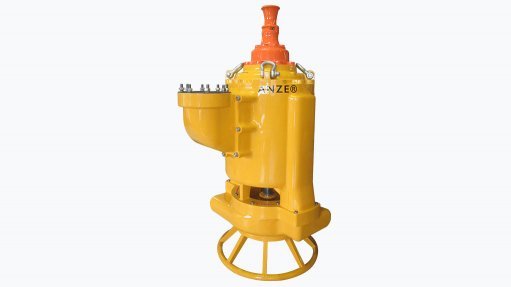
Goodwin Submersible Pumps Africa is sole distributors for Goodwin electrically driven, submersible, abrasion resistance slurry pumps.
VISIT SHOWROOM
Design, Construction and Maintenance of Site Erected, Welded Bulk Storage Tanks for the Petrochemical, LNG, Ammonia and Sustainable fuel Sectors.
VISIT SHOWROOM



Announcements
What's On
Subscribe to improve your user experience...
Option 1 (equivalent of R125 a month):
Receive a weekly copy of Creamer Media's Engineering News & Mining Weekly magazine
(print copy for those in South Africa and e-magazine for those outside of South Africa)
Receive daily email newsletters
Access to full search results
Access archive of magazine back copies
Access to Projects in Progress
Access to ONE Research Report of your choice in PDF format
Option 2 (equivalent of R375 a month):
All benefits from Option 1
PLUS
Access to Creamer Media's Research Channel Africa for ALL Research Reports, in PDF format, on various industrial and mining sectors
including Electricity; Water; Energy Transition; Hydrogen; Roads, Rail and Ports; Coal; Gold; Platinum; Battery Metals; etc.
Already a subscriber?
Forgotten your password?
Receive weekly copy of Creamer Media's Engineering News & Mining Weekly magazine (print copy for those in South Africa and e-magazine for those outside of South Africa)
➕
Recieve daily email newsletters
➕
Access to full search results
➕
Access archive of magazine back copies
➕
Access to Projects in Progress
➕
Access to ONE Research Report of your choice in PDF format
RESEARCH CHANNEL AFRICA
R4500 (equivalent of R375 a month)
SUBSCRIBEAll benefits from Option 1
➕
Access to Creamer Media's Research Channel Africa for ALL Research Reports on various industrial and mining sectors, in PDF format, including on:
Electricity
➕
Water
➕
Energy Transition
➕
Hydrogen
➕
Roads, Rail and Ports
➕
Coal
➕
Gold
➕
Platinum
➕
Battery Metals
➕
etc.
Receive all benefits from Option 1 or Option 2 delivered to numerous people at your company
➕
Multiple User names and Passwords for simultaneous log-ins
➕
Intranet integration access to all in your organisation