Can your business run without you? How to close the succession gap





Most owners I meet built their businesses by being indispensable. They won the first contracts, solved the problems nobody else could, and they still take the call when a client’s plant goes down at 2 am. That is the power of the founder. When the time comes to sell, it is also the curse.
A buyer is not paying for what your business has earned. They are paying for what it will earn after you leave. Every rand of profit that depends on you personally is a rand they have to discount, protect or structure around.
What Succession Means to a Buyer
A buyer asks a narrower and harder question than who takes over the corner office: if the owner walked out on the day the deal completes, what would stop working?
In engineering, construction and mining services businesses, the honest answer is often uncomfortable. The founder holds the key client relationships, signs off the technical work and prices the tenders. Often the financial director has been there almost as long and is heading for retirement in the same window. A buyer reads that as losing the relationships and the numbers at the same time.
Buyers price that risk. It shows up as a lower multiple, a larger share of the price deferred into an earn-out you have to stay on to collect, a long lock-in, or a buyer who quietly walks away.
The reassuring part is that very few owners have succession fully resolved, and buyers do not expect perfection. They want a credible plan in motion, and they can tell the difference between a general manager who has run operations for three years and one promoted for the information memorandum.
There are three ways to close the succession gap.
The first is to build your management team. Growing your own people protects the culture. They know the clients, the sites and how things are done. The risk is that the best person inside the business is not always the best person available, and developing them takes time and attention.
The second is to recruit experienced leaders. Hiring experienced managers is faster and brings skills the business has never had. The risk is fit: a strong hire who does not understand an owner-managed culture can unsettle the very team a buyer is counting on.
Both routes ask whether you will invest ahead of the result, because a second layer of management hits earnings before it pays for itself. In my experience, a buyer gives more credit for a capable team in place than it deducts for its cost.
The final way to close the succession gap is to sell to someone who can bridge the gap. This option is the one most owners overlook, and it is often the most powerful: the right acquirer can solve succession for you.
A private equity partner can buy into the business, work alongside the founder to find and bed down the right successor, and build the business over the following years. The founder keeps a stake, and when the private equity firm sells, both can exit together, often into a larger, more transferable business that commands a higher multiple than the founder would have achieved alone.
A trade buyer may already have the skills in-house. An established group with its own finance, engineering, commercial and operations leadership does not need a replica of the founder. It needs to know that each key function is covered once you step back. Seen through that buyer’s eyes, much of the succession risk simply falls away.
This is where the market approach matters. The same founder dependence that worries one buyer is irrelevant to another. Which buyers you approach, and how the business is positioned to them, can turn your biggest perceived weakness into a manageable transition. That is not luck. It is the work of identifying the acquirers for whom your succession gap is no gap at all.
The Month-Away Test
A simple exercise is a good place to start. Imagine stepping away from the business for a month, with no calls and no emails. Write down what would stall, which clients would start to worry and which decisions would wait for your return. That list is the starting point of your succession plan. It tells you where to develop your people, recruit new leadership, or find a buyer who already has the capabilities you need.
Every owner exits eventually, either by choice or because health, family or the market decides for them. Those who achieve the best outcome deal with succession long before they intend to leave and they choose an adviser who knows which buyers can carry the business forward without them.
At Deal Leaders Inter-national, we work with owners well before they go to market, to identify where value depends on them and to build a market approach that targets the acquirers best placed to manage the transition and build on what they have created.
By Andrew Bahlmann, founder and joint Chief Executive of Deal Leaders International, a specialist sell-side M&A advisory firm, and a board member of the Pandea Global M&A network. A chartered accountant and former CFO of WesBank, Bahlmann advises business owners on preparing for and achieving premium exits.
Article Enquiry
Email Article
Save Article
Feedback
To advertise email advertising@creamermedia.co.za or click here
Research Reports


Projects


Latest Multimedia


Latest News


Showroom

The Steel Tube Export Association of South Africa was established to develop sustainable, internationally competitive carbon steel tube and pipe...
VISIT SHOWROOM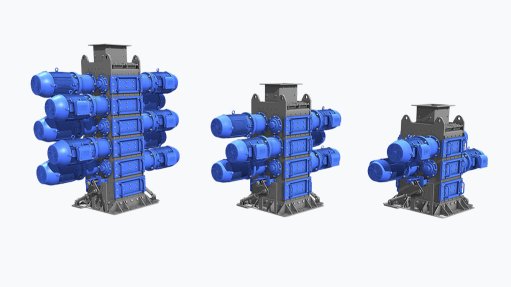
Energy and Densification Systems (EDS) has developed equipment for crushing, milling, blending and densifying products. Based on its globally...
VISIT SHOWROOM



Press Office
Announcements
What's On
Subscribe to improve your user experience...
Option 1 (equivalent of R125 a month):
Receive a weekly copy of Creamer Media's Engineering News & Mining Weekly magazine
(print copy for those in South Africa and e-magazine for those outside of South Africa)
Receive daily email newsletters
Access to full search results
Access archive of magazine back copies
Access to Projects in Progress
Access to ONE Research Report of your choice in PDF format
Option 2 (equivalent of R375 a month):
All benefits from Option 1
PLUS
Access to Creamer Media's Research Channel Africa for ALL Research Reports, in PDF format, on various industrial and mining sectors
including Electricity; Water; Energy Transition; Hydrogen; Roads, Rail and Ports; Coal; Gold; Platinum; Battery Metals; etc.
Already a subscriber?
Forgotten your password?
Receive weekly copy of Creamer Media's Engineering News & Mining Weekly magazine (print copy for those in South Africa and e-magazine for those outside of South Africa)
➕
Recieve daily email newsletters
➕
Access to full search results
➕
Access archive of magazine back copies
➕
Access to Projects in Progress
➕
Access to ONE Research Report of your choice in PDF format
RESEARCH CHANNEL AFRICA
R4500 (equivalent of R375 a month)
SUBSCRIBEAll benefits from Option 1
➕
Access to Creamer Media's Research Channel Africa for ALL Research Reports on various industrial and mining sectors, in PDF format, including on:
Electricity
➕
Water
➕
Energy Transition
➕
Hydrogen
➕
Roads, Rail and Ports
➕
Coal
➕
Gold
➕
Platinum
➕
Battery Metals
➕
etc.
Receive all benefits from Option 1 or Option 2 delivered to numerous people at your company
➕
Multiple User names and Passwords for simultaneous log-ins
➕
Intranet integration access to all in your organisation