Business entities outline risks Middle East conflict poses for South Africa

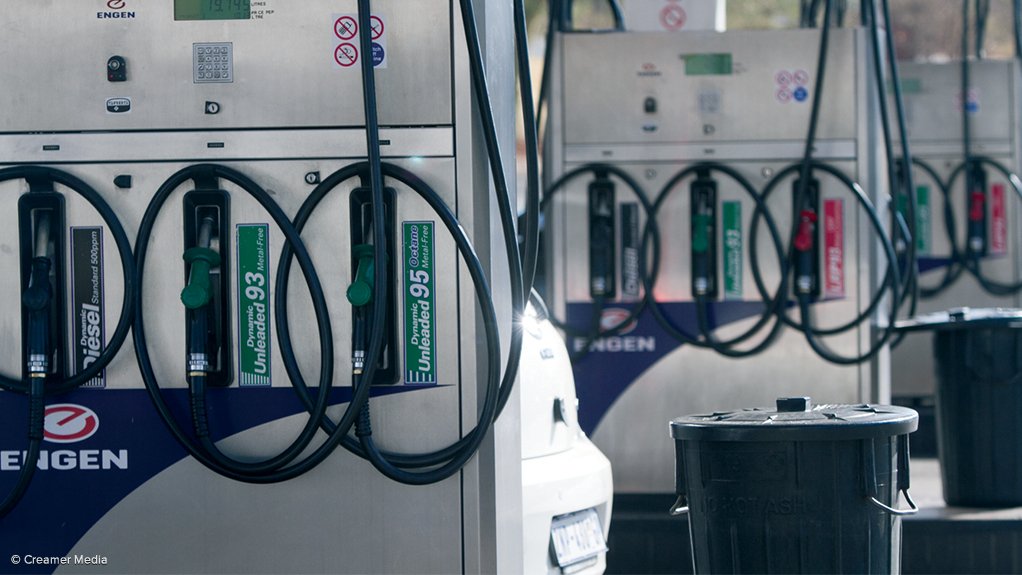


The war in the Middle East is likely to harm the global economy and South Africa’s government needs to support local businesses in the work to contain the impact, business organisation Business Leadership South Africa CEO Busi Mavuso emphasises in her latest weekly newsletter.
She highlights concerns about the impact on the fuel price, with the mining sector set to be affected considerably, with costs going up for diesel-dependent road and rail transport, as well as impacting on operating costs at the mines.
Consumers will also be directly affected, constraining spending and confidence, Mavuso warns.
Amid this fragile global environment, with growth risks rising and energy costs climbing, South Africa’s ferrochrome industry is also under severe pressure owing to rising electricity costs, with potential job losses at Glencore and Samancor Chrome underscoring risks to the country’s industrial base.
Nedbank Group Economic Unit’s calculations suggest inflation will breach the upper 4% tolerance band, albeit temporarily.
As a result, the unit believes the Monetary Policy Committee will leave interest rates unchanged at its meeting next week. Moreover, it says it is likely that rates will stay on hold for the rest of the year.
Business body the South African Chamber of Commerce (Sacci) and Industry says that developments in the Middle East have created instability in financial markets including disruptions to major supply routes and supply chains.
“This will have a significant impact on the global economy, with the resultant negative effects to the business cycle and a clear deterioration in inflation, interest rates, economic growth, exchange rates, commodity prices,” it warns.
Meanwhile, the Bureau for Economic Research (BER) says the recent escalation in the Middle East has pushed the global economy into a space where there is no single most likely outcome, only a range of possibilities depending on how events unfold.
It adds that, for South Africa, the immediate transmission is straightforward, that of a weaker rand, higher oil prices and rising fuel costs and inflationary pressures.
It warns that, if the disruption persists for an extended period of six months or longer, the global shock will become harder to absorb, with inflation rising more sharply, the rate-cutting cycle abandoned altogether, and domestic and global growth slowing meaningfully.
MITIGATION MEASURES
Mavuso identifies energy prices as the most obvious threat and calls on government to consider the levers at its disposal, including temporary variation of the fuel levy as was done at the start of the Ukraine war, to cushion the impact on South Africa’s economy.
She suggests that the fuel taxes announced in the February budget be delayed.
Mavuso points out that South Africa’s strategic oil reserves are unable to support any solutions, as these are only about two to three weeks’ worth against the global 90-day benchmark, while the country’s reduced refining capacity limits how much relief it can feasibly provide.
“The tax lever is, therefore, the most immediate lever to pursue, but it can only be temporary so as not to damage our fiscal position. Longer term, we must deliver supply diversification, better stock management and refinery logistics,” Mavuso emphasises.
She also advocates capitalising on the opportunities the crisis presents.
“The Cape sea route will see sharply increased traffic as shipping avoids both the Red Sea and the Strait of Hormuz. Our ports have shown meaningful improvement over the past year . . . That progress must accelerate now.”
South Africa can also position itself as a stable alternative in an unstable region, for business and tourism, Mavuso avers.
“Our diplomatic focus must be pragmatic: securing alternative oil supplies and the industrial chemicals our manufacturers depend on,” she highlights.
Mavuso calls for government to expedite the fuel levy relief and for businesses to accelerate contingency planning and supply diversification.
The BER emphasises that countries with stronger fundamentals, better infrastructure and more predictable policy are better placed to absorb external shocks.
It warns that South Africa’s real risk is that it is entering this difficult situation without having fixed the domestic issues it is aware of, and therefore calls for urgency on ensuring reliable ports, water and electricity.
Sacci calls on the South African government to “aggressively take action and move the diplomatic initiative to lobby and campaign with global partners to call a ceasefire and an end to hostilities”.
Article Enquiry
Email Article
Save Article
Feedback
To advertise email advertising@creamermedia.co.za or click here
Research Reports

Projects

Latest Multimedia
Latest News
Showroom

For over 15 years, Lilak Aluminium, a trusted leader in architectural extrusion supply, has delivered excellence to businesses like yours.
VISIT SHOWROOM
ISO-certified Condra manufactures overhead cranes, portal cranes, cantilever cranes and crane components: hoists, drives, end-carriages, brakes and...
VISIT SHOWROOM
Press Office
Announcements
What's On
Subscribe to improve your user experience...
Option 1 (equivalent of R125 a month):
Receive a weekly copy of Creamer Media's Engineering News & Mining Weekly magazine
(print copy for those in South Africa and e-magazine for those outside of South Africa)
Receive daily email newsletters
Access to full search results
Access archive of magazine back copies
Access to Projects in Progress
Access to ONE Research Report of your choice in PDF format
Option 2 (equivalent of R375 a month):
All benefits from Option 1
PLUS
Access to Creamer Media's Research Channel Africa for ALL Research Reports, in PDF format, on various industrial and mining sectors
including Electricity; Water; Energy Transition; Hydrogen; Roads, Rail and Ports; Coal; Gold; Platinum; Battery Metals; etc.
Already a subscriber?
Forgotten your password?
Receive weekly copy of Creamer Media's Engineering News & Mining Weekly magazine (print copy for those in South Africa and e-magazine for those outside of South Africa)
➕
Recieve daily email newsletters
➕
Access to full search results
➕
Access archive of magazine back copies
➕
Access to Projects in Progress
➕
Access to ONE Research Report of your choice in PDF format
RESEARCH CHANNEL AFRICA
R4500 (equivalent of R375 a month)
SUBSCRIBEAll benefits from Option 1
➕
Access to Creamer Media's Research Channel Africa for ALL Research Reports on various industrial and mining sectors, in PDF format, including on:
Electricity
➕
Water
➕
Energy Transition
➕
Hydrogen
➕
Roads, Rail and Ports
➕
Coal
➕
Gold
➕
Platinum
➕
Battery Metals
➕
etc.
Receive all benefits from Option 1 or Option 2 delivered to numerous people at your company
➕
Multiple User names and Passwords for simultaneous log-ins
➕
Intranet integration access to all in your organisation