Building the Next Generation of Municipal Engineers Is Key to Solving South Africa’s Infrastructure Crisis





As the country marks Youth Month, the conversation around infrastructure resilience must include the critical issue of who will design, manage and maintain the infrastructure that South Africa needs to grow, says the Institute of Municipal Engineering of Southern Africa (IMESA). For municipalities across the country, attracting and retaining engineering talent has become increasingly difficult and has never been more important. The challenge is not simply about filling vacancies. It is about building the technical capacity required to support economic growth, service delivery, climate resilience and sustainable development, IMESA stresses.
Industry bodies have for years warned of a critical shortage of engineers, engineering technologists and technicians. It is estimated that South Africa has a dire deficit of as many as 60 000 engineering professionals. At the same time, universities are producing fewer engineering graduates than the economy requires, particularly in scarce skills disciplines.
The competition for those graduates is fierce. Energy, information technology, manufacturing and consulting firms often offer attractive remuneration and clearly defined career pathways. Municipal engineering, despite its importance to society, frequently struggles to compete for attention.
Municipal engineering offers purpose
Yet municipal engineering may offer something many young professionals increasingly seek, which is purpose, IMESA asserts.
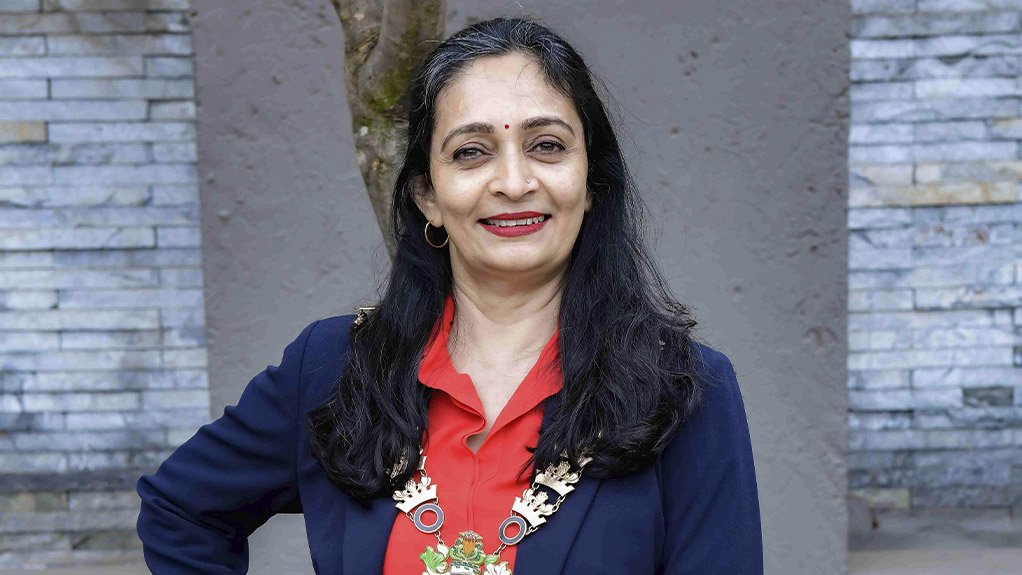
"Municipal engineering is one of the few sectors where engineers can see the direct impact of their work on people's daily lives," says Bhavna Soni, IMESA operations director for Young Professionals and Membership. With over 28 years of experience in eThekwini Municipality’s water and sanitation division, Soni understands the urgency of investing in skilled professionals capable of addressing real-world infrastructure challenges.
"Every road, water treatment works, pump station, stormwater system and sanitation project contributes directly to economic development and community wellbeing. If we want to improve service delivery and infrastructure performance, we need to inspire more young people to see municipal engineering as a career of choice," she states.
To this end, IMESA is accelerating its drive to develop young talent through its nationally expanding Young Professionals Portfolio, which has been dubbed YP². The programme, which was first launched in IMESA’s KwaZulu-Natal (KZN) branch is now being rolled out nationally and is going from strength to strength under Soni’s leadership and supported by dedicated young engineering professionals in YP² regional committees.
Developing young engineers is a growing imperative
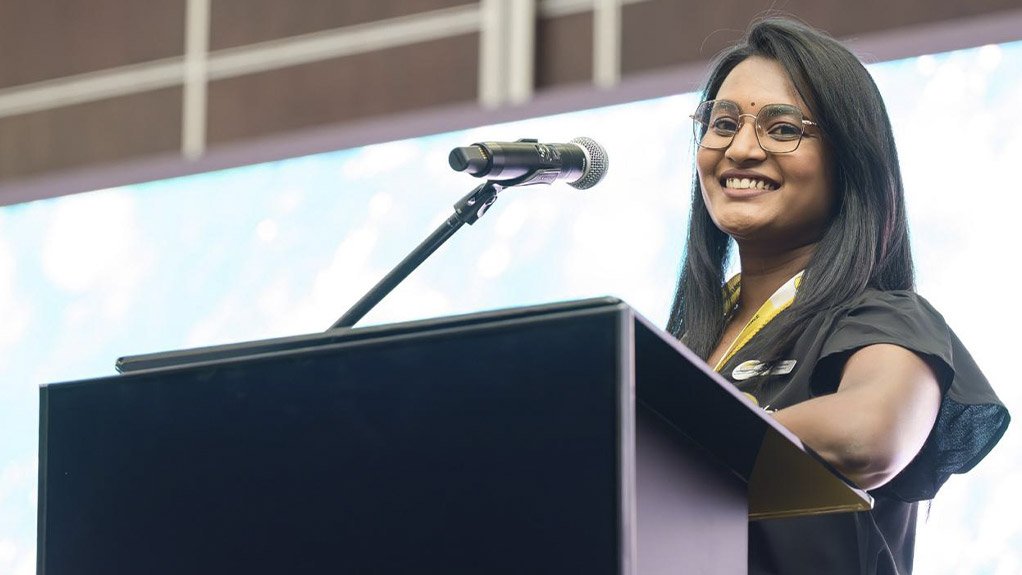
Dhiveshni Naidu is the chairperson of the KwaZulu-Natal YP² committee and a Senior Civil Engineer at eThekwini Water and Sanitation. She is seeing and experiencing the impact of the shortage of engineering capacity inside municipalities. "It often results in increased workloads and the need to manage multiple responsibilities simultaneously," she says. "Developing young engineers and investing in mentorship and training is a growing imperative to improve service delivery and ensure the long-term sustainability of our municipalities."
Lenesh Sukhlal, another member of IMESA's Young Professionals Portfolio committee, has experienced similar challenges that add pressure to workloads and underscore the need for greater investment in municipal engineering capacity. He is currently an area manager in the Wastewater Planning branch at eThekwini Municipality. "In many instances, I have had to take on responsibilities that would typically be managed by multiple engineers,” he says.
Despite these challenges, Naidu, Sukhlal and other young professionals working in the sector and supporting IMESA’s drive to develop a pipeline of talent describe municipal engineering as one of the most rewarding career paths available.
YP² committee member Dhiresh Dhewki, who works within the water sector, says he was drawn to municipal engineering because of the opportunity to improve people's lives through infrastructure.
"The ability to work on infrastructure projects that have a tangible and lasting impact on people was a key motivator," he explains. "Working in the water sector combines the technical aspects of engineering with the human element of delivering an essential service."
Improving people’s quality of life
For water design technologist Ntokozo Mjwara, the attraction lies in seeing the direct connection between engineering and community wellbeing. "Whether it is water, sanitation, roads or stormwater systems, these are services people rely on every single day," she says. "Seeing communities benefit from completed projects reminds you that engineering is not only about technical designs and calculations but about improving people's quality of life. Something as simple as people being able to open a tap and have access to clean running water brings such joy. Moments like that are inspiring and uplifting.”
In her work as a civil engineering technologist at eThekwini Municipality, Zlungile Memela has discovered that the diversity of work available in municipal engineering is often underestimated. "It is never just laying a pipe and supplying water," she says. "It is reservoirs, pump stations, planning, budgets and stakeholder engagement. Municipal engineering allows young graduates to tackle diverse, community-focused projects while gaining broad experience."
YP2 committee member Nkanyezi Mdlalose was attracted to the civil engineering profession when he saw all the infrastructure projects taking place ahead of the 2010 FIFA World Cup. He says that it was the upgrade of the John Ross highway in particular that drew his attention to the field of civil engineering. Today, it is his profession’s contribution to communities that inspires him daily. “I would advise graduates that municipal engineering is a rewarding path to choose as a civil engineer as you become a vital part of the communities you work in by providing engineering solutions that improve the livelihoods of the locals.”
A challenge in building municipal engineering capacity cited by members of IMESA’s YP² committee is that many learners never seriously consider this path because they are not exposed to the profession early enough. "There needs to be more proactive engagement with learners before they select their subjects in high school," says Naidu.
Stronger collaboration needed
IMESA’s young professionals also highlighted the need for stronger collaboration between municipalities, universities and industry. Dhewki advocates increased practical training, workplace exposure and structured graduate development programmes. Mdlalose believes graduates should receive experience across both municipal and private-sector environments. “I think that it is important for municipalities to build in-house capacity in terms of design engineering and project management capabilities and this can be achieved by working alongside industry. Graduate programmes where municipal graduates are seconded to private companies for experience should be established.”
Through its growing Young Professionals Portfolio, IMESA provides mentorship, leadership development, technical learning opportunities and professional networking for young engineering professionals. The programme is already producing tangible results.
Naidu credits IMESA with helping her develop the confidence required to achieve professional registration and grow into leadership roles. "Through mentorship programmes, workshops and leadership opportunities, I gradually developed confidence in engaging with others and presenting. Today I have had the opportunity to present at the IMESA Conference and this is something I would never have imagined when I started."
Beyond professional development, IMESA is strengthening engagement with universities. In 2025, IMESA KwaZulu-Natal sponsored the IMESA Floating Trophy and a cash prize for the Best Design Project Award at the University of KwaZulu-Natal Undergraduate Civil Engineering Symposium. The initiative recognises engineering excellence while promoting municipal engineering as a career path. The programme will now be expanded to additional tertiary institutions, with final-year awards being developed to encourage excellence and strengthen links between academia and industry.
"We are committed to building stronger relationships with universities and creating opportunities for students to engage with the profession before they graduate," says Soni.
The institution is also investing in community outreach programmes, including Youth Month university engagements and Mandela Day initiatives aimed at promoting leadership, ethics and social responsibility. Social media programmes have been developed to create awareness of municipal engineering among students and graduates and to recognise young professionals.
Municipal engineering offers a compelling career opportunity
South Africa's infrastructure future will depend heavily on its ability to attract, develop and retain engineering talent. For young people seeking careers that combine technical innovation with public impact, municipal engineering offers a compelling opportunity, IMESA says.
To pursue a career in municipal engineering, Sukhlal advises graduates: "Focus on gaining valuable experience and developing your technical skills. Once you have built a strong foundation, opportunities will follow."
Naidu notes that the journey can be challenging at times but says that perseverance is key. “Step outside your comfort zone, especially when it comes to communication, leadership and networking, as this is where meaningful growth happens. Working towards professional registration should always be a priority, but it is equally important to remember that learning does not end there. If anything, it increases as your responsibilities grow. Engineering will teach you patience whether you like it or not, especially when projects do not go exactly according to plan.”
"The young engineers entering the profession today will shape the future of South Africa's infrastructure for decades to come. That is an extraordinary responsibility, but also an extraordinary opportunity," Soni concludes.
Article Enquiry
Email Article
Save Article
Feedback
To advertise email advertising@creamermedia.co.za or click here
Research Reports

Projects


Latest Multimedia
Latest News


Showroom

Sulzer South Africa, established in 1922, partners with critical industries like power, oil & gas, water, mining, and chemicals to boost...
VISIT SHOWROOM
M and J Mining are leading suppliers of physical support systems as used by the underground mining industry. Our selection of products are not...
VISIT SHOWROOM

Press Office
Announcements
What's On
Subscribe to improve your user experience...
Option 1 (equivalent of R125 a month):
Receive a weekly copy of Creamer Media's Engineering News & Mining Weekly magazine
(print copy for those in South Africa and e-magazine for those outside of South Africa)
Receive daily email newsletters
Access to full search results
Access archive of magazine back copies
Access to Projects in Progress
Access to ONE Research Report of your choice in PDF format
Option 2 (equivalent of R375 a month):
All benefits from Option 1
PLUS
Access to Creamer Media's Research Channel Africa for ALL Research Reports, in PDF format, on various industrial and mining sectors
including Electricity; Water; Energy Transition; Hydrogen; Roads, Rail and Ports; Coal; Gold; Platinum; Battery Metals; etc.
Already a subscriber?
Forgotten your password?
Receive weekly copy of Creamer Media's Engineering News & Mining Weekly magazine (print copy for those in South Africa and e-magazine for those outside of South Africa)
➕
Recieve daily email newsletters
➕
Access to full search results
➕
Access archive of magazine back copies
➕
Access to Projects in Progress
➕
Access to ONE Research Report of your choice in PDF format
RESEARCH CHANNEL AFRICA
R4500 (equivalent of R375 a month)
SUBSCRIBEAll benefits from Option 1
➕
Access to Creamer Media's Research Channel Africa for ALL Research Reports on various industrial and mining sectors, in PDF format, including on:
Electricity
➕
Water
➕
Energy Transition
➕
Hydrogen
➕
Roads, Rail and Ports
➕
Coal
➕
Gold
➕
Platinum
➕
Battery Metals
➕
etc.
Receive all benefits from Option 1 or Option 2 delivered to numerous people at your company
➕
Multiple User names and Passwords for simultaneous log-ins
➕
Intranet integration access to all in your organisation