‘Breakout year’ expected as market matures

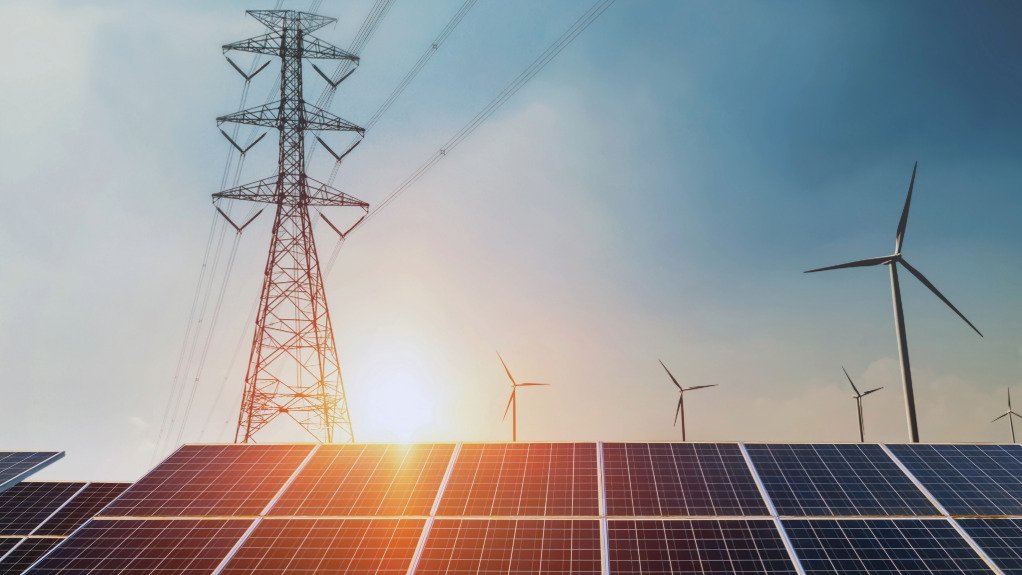
MARKET SHIFT South Africa's electricity sector is entering a more competitive phase, with 2026 expected to bring increased deal-making, portfolio consolidation and the practical rollout of market reforms



As South Africa’s electricity market shifts into competitive mode, 2026 may be a year of deal-making and portfolio realignment across the energy value chain, states law firm Webber Wentzel.
The firm expects to see increased activity in mergers, acquisitions and strategic joint ventures as international investors and regional platforms look for scalable entry points.
Webber Wentzel partners Mzukisi Kota, Mlungisi Mahlangu and Jason van der Poel, as well as associates Keira Bracher, Sabeeha Loonat and Junaid Nyker, together with senior business development manager Mandisa Nduli who provides additional market insights, are unanimous in their reflection that 2025’s key trends signalled a fundamental reset in South Africa’s electricity sector. Going forward, they expect 2026 to be the year in which many energy reforms will start to take practical effect.
With market rules nearing finalisation, infrastructure procurement advancing and new technologies gaining prominence, this year will test how well the sector can move from preparation to implementation.
“The centre of gravity is likely to be the impact of a trading market on renewable- energy prices, the advent of cross-border transactions, the consolidation of operating renewable portfolios, restructuring to accommodate competitive trading and market price exposure, while sophisticated empowerment and governance structures will likely remain integral to deal execution, reflecting South Africa’s transformation agenda,” the team adds.
They also note that, for market participants, success in the domestic market will likely depend on effective and proactive management of the generating portfolio and a constant close monitoring of customer load practices and trends.
In respect of cross-border transactions, success will depend on savvy navigation of multi-jurisdictional complexity, aligning regulatory risk with transaction structures and deploying capital efficiently in a rapidly liberalising electricity sector.
Importantly, the domestic and regional shifts are also occurring against a backdrop of evolving global market conditions, influenced by geopolitical events, which also shape project economics and transaction structures.
In particular, the team notes that developments in energy producing regions and shifts in global commodity markets continue to introduce price and supply volatility across oil, liquified natural gas (LNG) and certain key equipment value chains.
For the South African market, the implications primarily impact risk allocation in transactions, as volatility may affect timelines and cost assumptions for gas-to-power and LNG-linked projects. Currency and supply chain variability can also influence imported equipment costs and US dollar-linked financing, creating near-term capital expenditure and timing pressures.
Legislative Advances
The Electricity Regulation Amendment Act (ERAA) came into force on January 1, 2025, marking the formal start of South Africa’s shift from primary dependence on Eskom – a vertically integrated monopoly, to a competitive, multi-market electricity sector.
“The ERAA also expands [the] National Energy Regulator of South Africa’s (Nersa’s) regulatory mandate, introduces broader ministerial discretion on new capacity determinations, and opens a pathway for willing-buyer, willing-seller arrangements through competitive trading.
“However, some ambiguities around tariff approvals and the definition of ‘direct supply agreements’ continue to exist and create early interpretive challenges.”
The team adds that 2025 also showed critical institutional tensions regarding municipal roles, Nersa’s tariff oversight and ministerial discretion, with the South African Local Government Association’s concerns over protecting municipal reticulation leading to the delayed start of certain ERAA definitions, while litigation on these fronts is ongoing.
Additionally, the South African Wholesale Electricity Market (SAWEM) Market Code (Market Code) contains operational rules for the SAWEM to be administered by the Market Operator.
The Market Code defines the role of parties, balances responsible parties and market participants, and establishes the framework for day-ahead, intra-day, reserve and balancing markets.
The Webber Wentzel team notes that the five-year transition timeline targets a market launch in April, with full operation by 2031.
Nersa’s anticipated approval of the Market Code will enable potential market participants to start formal market registration and onboarding ahead of the launch.
Transmission Regulations
A major breakthrough in 2025 was the publication of the transmission regulations on October 31, providing long-awaited clarity on how new transmission capacity will be procured under ministerial determinations, the Webber Wentzel team says.
These regulations are intended to formalise a build, operate, transfer model, introduce “value-for-money” transmission service agreements and provide a clear methodology for how private transmission infrastructure developers will recover their costs
.
Article Enquiry
Email Article
Save Article
Feedback
To advertise email advertising@creamermedia.co.za or click here
Research Reports

Projects

Latest Multimedia

Latest News


Showroom
Rio Carb is an OEM (Original Equipment Manufacturer) of R-C700 Chromium Carbide (CrC) alloy clad wear plates and pipes used for heavy materials...
VISIT SHOWROOM
The Steel Tube Export Association of South Africa was established to develop sustainable, internationally competitive carbon steel tube and pipe...
VISIT SHOWROOM

Announcements
What's On
Subscribe to improve your user experience...
Option 1 (equivalent of R125 a month):
Receive a weekly copy of Creamer Media's Engineering News & Mining Weekly magazine
(print copy for those in South Africa and e-magazine for those outside of South Africa)
Receive daily email newsletters
Access to full search results
Access archive of magazine back copies
Access to Projects in Progress
Access to ONE Research Report of your choice in PDF format
Option 2 (equivalent of R375 a month):
All benefits from Option 1
PLUS
Access to Creamer Media's Research Channel Africa for ALL Research Reports, in PDF format, on various industrial and mining sectors
including Electricity; Water; Energy Transition; Hydrogen; Roads, Rail and Ports; Coal; Gold; Platinum; Battery Metals; etc.
Already a subscriber?
Forgotten your password?
Receive weekly copy of Creamer Media's Engineering News & Mining Weekly magazine (print copy for those in South Africa and e-magazine for those outside of South Africa)
➕
Recieve daily email newsletters
➕
Access to full search results
➕
Access archive of magazine back copies
➕
Access to Projects in Progress
➕
Access to ONE Research Report of your choice in PDF format
RESEARCH CHANNEL AFRICA
R4500 (equivalent of R375 a month)
SUBSCRIBEAll benefits from Option 1
➕
Access to Creamer Media's Research Channel Africa for ALL Research Reports on various industrial and mining sectors, in PDF format, including on:
Electricity
➕
Water
➕
Energy Transition
➕
Hydrogen
➕
Roads, Rail and Ports
➕
Coal
➕
Gold
➕
Platinum
➕
Battery Metals
➕
etc.
Receive all benefits from Option 1 or Option 2 delivered to numerous people at your company
➕
Multiple User names and Passwords for simultaneous log-ins
➕
Intranet integration access to all in your organisation