Africa’s peace-building faces reality check as leaders call for active prudence

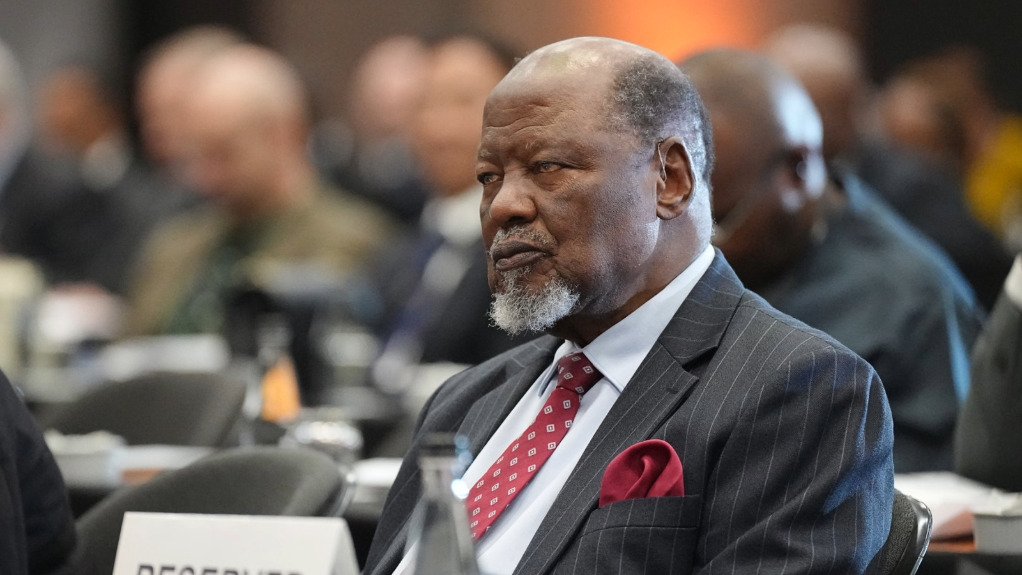


As day one of the Johannesburg Arbitration Week 2026 opened at the Sandton Convention Centre, hosted by dispute resolution authority the Arbitration Foundation of Southern Africa (AFSA), veteran African heads of State argued that existing security systems, ranging from standby forces to early warning mechanisms are being outpaced by complex, persistent conflicts.
The three-day forum brings together policymakers, legal experts and former heads of State to explore how dispute resolution systems can better support Africa’s development agenda.
The event’s first session brought together a rare coalition of former leaders, including former Mozambique President Joaquim Chissano, former Nigeria President Goodluck Jonathan, former Liberia President Ellen Johnson Sirleaf and former Kenya President Uhuru Kenyatta.
Together, these leaders have collectively navigated liberation struggles, civil wars, democratic transitions and post-crisis reconstruction, and their message was clear – technical solutions alone cannot resolve deeply rooted political and ideological conflicts.
“What is missing is not architecture, but wisdom. The kind of insight Africa needs comes from those who have sat across negotiating tables, signed peace agreements under threat and faced their people with difficult truths,” Chissano said.
He highlighted that, across the continent, disputes were no longer confined to traditional battle lines, but were shaped by historical grievances, ethnic divisions, external interference and governance challenges.
He added that many of today’s conflicts echoed patterns established during the Cold War and earlier colonial rivalries.
“Africa’s conflicts have always been influenced by external powers. From liberation movements to post-independence struggles, foreign interests have shaped divisions and outcomes,” Chissano said.
Drawing on Mozambique’s own history, he described how unity among fragmented movements was essential to achieving independence in 1975, yet stability remained elusive owing to regional and geopolitical pressures. His reflections underscored a recurring theme that peace agreements were only as durable as the political will and trust underpinning them.
Providing a West African perspective, Jonathan highlighted the operational challenges of mediation in volatile environments, referencing multiple interventions undertaken through the Economic Community of West African States and pointing to the fragile balance between military influence and democratic governance.
“Mediation is not a one-time event. It is a process that requires persistence and adaptability. Even when progress is made, setbacks can occur quickly if institutions are weak or political actors lose trust,” he said.
He also emphasised that regional bodies had achieved notable successes, including restoring democratic order in crisis-hit States, but warned that repeated coups and political instability signalled deeper systemic issues.
The discussion also turned to the role of inclusivity in peace processes and, within the context of Liberia’s civil war, Sirleaf stressed that sustainable peace could not be achieved without the broad participation of women.
“The women of Liberia stood firmly at the negotiating table and pushed for peace when others would not. Their presence changed the outcome. Therefore, inclusion is not optional, it is essential,” Sirleaf asserted.
She argued that modern conflicts were increasingly shaped by social dynamics, including generational tensions and demands for equity and warned that ignoring these factors risked undermining hard-won stability.
“In today’s global environment, we face new forms of conflict between generations, between expectations and reality, and between nations over resources and sovereignty,” Sirleaf added.
Meanwhile, Kenyatta pointed to the growing complexity of regional security challenges, including the rise of military coups and the erosion of trust in State institutions.
“When you see repeated coups, the justification is often the same: lack of resources, lack of trust and lack of accountability. These are governance issues as much as they are security concerns,” Kenyatta said.
He called for a stronger alignment between regional organisations and national governments, warning that fragmented responses weakened the continent’s ability to address crises effectively.
Central to the dialogue is the signing of a landmark letter of understanding between AFSA and the Forum for Former African Heads of State and Government, or Africa Forum, with the aim to strengthen dispute resolution capacity across Africa.
This initiative seeks to combine the moral authority of former leaders with the technical expertise of arbitration institutions such as AFSA, creating what organisers described as a “constructive centre for dispute resolution”.
This approach, which blends political experience with institutional capability could mark a shift in how conflicts are managed on the continent, and rather than relying solely on formal mechanisms, it recognises the value of informal diplomacy and peer-to-peer engagement among leaders.
The session concluded with a call for renewed commitment to peace-building, prioritising dialogue, inclusivity and practical wisdom over purely structural solutions.
Article Enquiry
Email Article
Save Article
Feedback
To advertise email advertising@creamermedia.co.za or click here
Research Reports

Projects
Latest Multimedia

Latest News

Showroom

ESAB South Arica, the leading supplier of high-end welding and cutting products to the Southern African industrial market is based in...
VISIT SHOWROOM
Occupational health services, mobile clinics, wellness campaigns, aviation.
VISIT SHOWROOM


Announcements
What's On
Subscribe to improve your user experience...
Option 1 (equivalent of R125 a month):
Receive a weekly copy of Creamer Media's Engineering News & Mining Weekly magazine
(print copy for those in South Africa and e-magazine for those outside of South Africa)
Receive daily email newsletters
Access to full search results
Access archive of magazine back copies
Access to Projects in Progress
Access to ONE Research Report of your choice in PDF format
Option 2 (equivalent of R375 a month):
All benefits from Option 1
PLUS
Access to Creamer Media's Research Channel Africa for ALL Research Reports, in PDF format, on various industrial and mining sectors
including Electricity; Water; Energy Transition; Hydrogen; Roads, Rail and Ports; Coal; Gold; Platinum; Battery Metals; etc.
Already a subscriber?
Forgotten your password?
Receive weekly copy of Creamer Media's Engineering News & Mining Weekly magazine (print copy for those in South Africa and e-magazine for those outside of South Africa)
➕
Recieve daily email newsletters
➕
Access to full search results
➕
Access archive of magazine back copies
➕
Access to Projects in Progress
➕
Access to ONE Research Report of your choice in PDF format
RESEARCH CHANNEL AFRICA
R4500 (equivalent of R375 a month)
SUBSCRIBEAll benefits from Option 1
➕
Access to Creamer Media's Research Channel Africa for ALL Research Reports on various industrial and mining sectors, in PDF format, including on:
Electricity
➕
Water
➕
Energy Transition
➕
Hydrogen
➕
Roads, Rail and Ports
➕
Coal
➕
Gold
➕
Platinum
➕
Battery Metals
➕
etc.
Receive all benefits from Option 1 or Option 2 delivered to numerous people at your company
➕
Multiple User names and Passwords for simultaneous log-ins
➕
Intranet integration access to all in your organisation