Africa’s infrastructure investment story is not short of capital, it is short of alignment


Sub-Saharan Africa requires hundreds of billions of dollars in infrastructure investment over the next decade, yet across the continent, projects continue to stall, delay, or fail to scale. The constraint is often framed as a funding gap. Conversations at the LPG Expo suggest something more complex.
At a panel on infrastructure investment across Sub-Saharan Africa, convened by LPG Expo and LPGSA, the discussion reflected a system where capital, demand, and intent are present, though rarely aligned.
Across the continent, there is no shortage of opportunity. Africa is one of the few places where long-term energy demand is still growing, thanks to population growth, urbanisation, and moving away from traditional fuels. This attracts global interest, but investors are still careful, selective, and pay close attention to local conditions.
We are seeing a trend where infrastructure is built in pieces instead of as a whole system. For example, supply is increased without enough investment in storage. Import capacity grows, but distribution does not keep up. New technologies are added, but there is no clear way to get them to users. This does not lead to failure, but it does create obstacles.
A key point raised in the discussion was the need to consider the entire value chain. Downstream access and consumer financing are often underrepresented in investment decisions. Without viable ways for households to access and pay for energy, infrastructure further up the chain struggles to convert into sustained demand.
This is changing how people think about investment. Bankability isn’t just about asset size or expected returns anymore. It now depends on whether the system can support the asset. For example, storage without distribution causes bottlenecks, and distribution without affordability limits use. Each gap makes the next one worse.
Regulation makes things even more complicated as markets across Sub-Saharan Africa have different rules, technical standards, and approval steps. Companies working in several countries have to keep adapting.
Technologies and solutions that are compliant in one country may not be permitted in another. In some cases, even pilot projects are difficult to initiate due to the absence of flexible regulatory frameworks.
This fragmentation slows down innovation and makes it more expensive to enter the market. It also changes how investors use their money. They look at demand, but also at how predictable, easy to navigate, and stable each market is.
To put this in a global context, capital can move anywhere, so every investment in Africa competes with options in other places. Clear rules, strong contracts, and political stability are essential for investment decisions.
Getting this right can have quick results. The panel highlighted the example of the Richards Bay terminal in South Africa, where targeted infrastructure helped growth. When capacity limits were removed, supply went up and the market reacted.
This shows a more detailed view of scale. People often think of infrastructure as big, expensive projects, but the panel highlighted something different. Smaller, focused investments like distribution hubs, storage, and local networks can anchor demand and set the stage for bigger investments later.
Financing models are changing too. Traditional development funding is still important, but it’s often slow. Private capital moves faster but needs more certainty. Hybrid approaches that combine both are becoming more popular.
For example, results-based financing helps projects gain early momentum by tying funding to measurable results. This helps projects become commercially sustainable without relying on subsidies long-term. It also shows a growing understanding that infrastructure needs to work as a business, not just as a development project.
With markets in Sub-Saharan Africa increasingly connected, regional dynamics add another layer. Coastal countries with import facilities help supply inland markets, and supply flows change based on what’s available, what’s needed, and how easy it is to move goods.
This opens up chances for regional hubs, but also shows the need for better coordination. Making standards the same, improving cross-border processes, and aligning regulations would reduce friction and help products and capital move more easily.
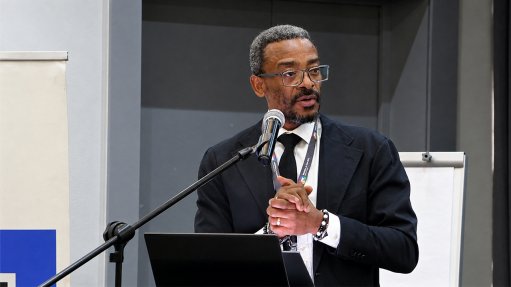
“Infrastructure investment in Sub-Saharan Africa is at a crucial juncture. While capital and demand are present, true success lies in aligning them across the entire value chain. It’s not just about building assets—it’s about creating systems that are interconnected, sustainable, and accessible to those who need it most. With the right policies and financing models, Africa can unlock its full potential for the future,” says Gadibolae Dihlabi, Managing Director, Liquefied Petroleum Gas Association of South Africa (LPGSA)
Article Enquiry
Email Article
Save Article
Feedback
To advertise email advertising@creamermedia.co.za or click here

Projects

Latest Multimedia

Latest News
Showroom

We supply customers with practical affordable solutions for their testing needs. Our products include benchtop, portable, in-line process control...
VISIT SHOWROOM
AxFlow AQS Liquid Transfer (Pty) Ltd is an Importer and Distributor of Pumps in Southern Africa
VISIT SHOWROOM


Press Office
Announcements
What's On
Subscribe to improve your user experience...
Option 1 (equivalent of R125 a month):
Receive a weekly copy of Creamer Media's Engineering News & Mining Weekly magazine
(print copy for those in South Africa and e-magazine for those outside of South Africa)
Receive daily email newsletters
Access to full search results
Access archive of magazine back copies
Access to Projects in Progress
Access to ONE Research Report of your choice in PDF format
Option 2 (equivalent of R375 a month):
All benefits from Option 1
PLUS
Access to Creamer Media's Research Channel Africa for ALL Research Reports, in PDF format, on various industrial and mining sectors
including Electricity; Water; Energy Transition; Hydrogen; Roads, Rail and Ports; Coal; Gold; Platinum; Battery Metals; etc.
Already a subscriber?
Forgotten your password?
Receive weekly copy of Creamer Media's Engineering News & Mining Weekly magazine (print copy for those in South Africa and e-magazine for those outside of South Africa)
➕
Recieve daily email newsletters
➕
Access to full search results
➕
Access archive of magazine back copies
➕
Access to Projects in Progress
➕
Access to ONE Research Report of your choice in PDF format
RESEARCH CHANNEL AFRICA
R4500 (equivalent of R375 a month)
SUBSCRIBEAll benefits from Option 1
➕
Access to Creamer Media's Research Channel Africa for ALL Research Reports on various industrial and mining sectors, in PDF format, including on:
Electricity
➕
Water
➕
Energy Transition
➕
Hydrogen
➕
Roads, Rail and Ports
➕
Coal
➕
Gold
➕
Platinum
➕
Battery Metals
➕
etc.
Receive all benefits from Option 1 or Option 2 delivered to numerous people at your company
➕
Multiple User names and Passwords for simultaneous log-ins
➕
Intranet integration access to all in your organisation