Africa’s energy utilities reach crossroads


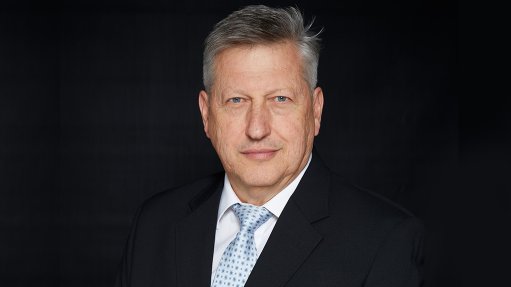
MARTIN KUHLMANN Once a critical mass of connected assets is achieved, utilities can implement reliability-centred capital planning at fleet scale



Surging electricity demand, ageing infrastructure, and tightening climate commitments are converging into a high-stakes test for utilities, particularly in Africa, and the only viable response is an urgent, end-to-end digital energy strategy, says Martin Kuhlmann, Energy Solutions Digital Head for Hitachi Energy in Africa, a global leader in electrification.
At the heart of this energy shift is an unprecedented change in how electricity is generated and consumed.
“There is an ever-growing demand for electricity, and that demand is balanced with efficiency in terms of delivery of the product, which is electricity, but also in terms of consumption of that energy,” Kuhlmann said.
He notes the rapid rise of renewables, electric vehicles, and energy-intensive data centres is reshaping load profiles and operational models, and that electricity is displacing oil and gas across transport and industry, while governments accelerate their decarbonisation commitments.
However, replacing coal-based rotating generation with variable renewables is not a simple swap, as it introduces deep technical complexity into grids designed around stable baseload power.
Highlighting the dynamic interplay between new energy sources and shifting demand patterns, Kuhlmann adds that it is a change not only in how power is generated and distributed, but also in how consumers use it.
For utilities, the strain is multidimensional, as assets across parts of Africa are 50 to 80 years old, and transformers and transmission lines are deteriorating.
“Further, skills shortages are limiting maintenance capacity, while capital constraints and long manufacturing lead times – often two to three years for critical equipment – are delaying upgrades. At the same time, independent power producers are connecting wind and solar plants into networks never designed for nonsynchronous generation,” he said.
Kuhlmann also notes that in South Africa, unconnected renewable-energy capacity in resource-rich regions underscores this bottleneck, as power generation is coming online faster than transmission infrastructure can be expanded. Meanwhile, greater demand from data centres, particularly as AI applications scale, is adding further pressure to already stressed systems.
He argues that manual asset management approaches are no longer fit for purpose and that utilities that once relied on field inspections and routine maintenance cycles must now integrate real-time data, predictive analytics, and fleet-wide asset visibility to prioritise capital deployment and prevent catastrophic failures.
Strategic Imperatives
Data-driven predictive maintenance is central to stabilising ageing infrastructure while planning long-term replacement, Kuhlmann says.
He also notes that through predictive analysis, utilities can align capital strategy with reliability targets, optimise maintenance intervals, and better manage operational risk, adding that enterprise asset management platforms increasingly act as the integration layer, linking technical asset health data with workforce scheduling and financial planning tools.
However, digital integration brings its own complexity, and historically siloed systems – such as asset databases, grid management platforms, workforce tools, and financial systems – are now being merged, thereby requiring IT and operational technology skills, as well as robust cybersecurity frameworks.
Therefore, Kuhlmann suggests that short-term gains can be achieved by changing procurement models, adding that instead of retrofitting sensors and connectivity after installation, utilities should specify digitally ready equipment from the outset to reduce lifecycle costs and accelerate data capture.
Moreover, he says medium-term programmes should focus more on retrofitting critical legacy infrastructure and embedding analytics into maintenance regimes.
“Over the long term, once a critical mass of connected assets is achieved, utilities can implement reliability-centred capital planning at fleet scale. However, the urgency cannot be overstated, and if you don’t have a clear and defined digital strategy, you are way behind, and if you don't organise that today, you're in trouble,” Kuhlmann warns.
The consequences of delayed digital transformation are already visible across many power systems, where unplanned outages, constrained grid capacity and unreliable supply are translating into direct economic costs.
Frequent blackouts disrupt industrial production, discourage investment in energy-intensive sectors such as manufacturing and mining, and undermine the reliability needed to support emerging digital industries, including large-scale data centres. In developing economies in particular, persistent grid instability can slow infrastructure expansion, weaken investor confidence and ultimately constrain economic growth, reinforcing the urgency for utilities to modernise operations and asset management through integrated digital systems.
Beyond technology, workforce capability is a key constraint, and utilities face shortages not only of field engineers but also of digital, analytics, and control room specialists capable of operating increasingly automated networks. Kuhlmann calls for coordinated investments in training across government, original-equipment manufacturers, and renewable-energy developers to close the gap.
He argues that digital transformation is the “glue” that binds financial discipline, operational efficiency, and technical resilience.
“Integrated digital platforms enable management teams to prioritise spending, reduce outages and balance affordability with sustainability.”
Kuhlmann believes that utilities no longer have the luxury of incrementalism, concluding that as Africa’s power grids confront climate-related stress, rising demand, and structural reform, digitalisation should be viewed not as a parallel initiative to the energy transition but as its key operating system.
Article Enquiry
Email Article
Save Article
Feedback
To advertise email advertising@creamermedia.co.za or click here
Research Reports

Projects

Latest Multimedia

Latest News
Showroom

For over 15 years, Lilak Aluminium, a trusted leader in architectural extrusion supply, has delivered excellence to businesses like yours.
VISIT SHOWROOM
ISO-certified Condra manufactures overhead cranes, portal cranes, cantilever cranes and crane components: hoists, drives, end-carriages, brakes and...
VISIT SHOWROOM
Press Office
Announcements
What's On
Subscribe to improve your user experience...
Option 1 (equivalent of R125 a month):
Receive a weekly copy of Creamer Media's Engineering News & Mining Weekly magazine
(print copy for those in South Africa and e-magazine for those outside of South Africa)
Receive daily email newsletters
Access to full search results
Access archive of magazine back copies
Access to Projects in Progress
Access to ONE Research Report of your choice in PDF format
Option 2 (equivalent of R375 a month):
All benefits from Option 1
PLUS
Access to Creamer Media's Research Channel Africa for ALL Research Reports, in PDF format, on various industrial and mining sectors
including Electricity; Water; Energy Transition; Hydrogen; Roads, Rail and Ports; Coal; Gold; Platinum; Battery Metals; etc.
Already a subscriber?
Forgotten your password?
Receive weekly copy of Creamer Media's Engineering News & Mining Weekly magazine (print copy for those in South Africa and e-magazine for those outside of South Africa)
➕
Recieve daily email newsletters
➕
Access to full search results
➕
Access archive of magazine back copies
➕
Access to Projects in Progress
➕
Access to ONE Research Report of your choice in PDF format
RESEARCH CHANNEL AFRICA
R4500 (equivalent of R375 a month)
SUBSCRIBEAll benefits from Option 1
➕
Access to Creamer Media's Research Channel Africa for ALL Research Reports on various industrial and mining sectors, in PDF format, including on:
Electricity
➕
Water
➕
Energy Transition
➕
Hydrogen
➕
Roads, Rail and Ports
➕
Coal
➕
Gold
➕
Platinum
➕
Battery Metals
➕
etc.
Receive all benefits from Option 1 or Option 2 delivered to numerous people at your company
➕
Multiple User names and Passwords for simultaneous log-ins
➕
Intranet integration access to all in your organisation