African mining well-positioned to grow but bankability risks require urgent action

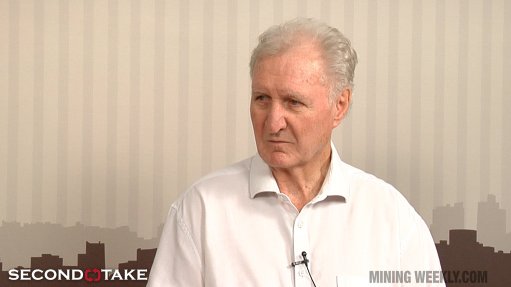
A video of Standard Bank Corporate and Investment Banking mining and metals executive VP Sean Evans discussing the bank's mining outlook ahead of the 2027 Investing in African Mining Indaba. Recording and Editing: Shadwyn Dickinson. Recorded 03-11-2026
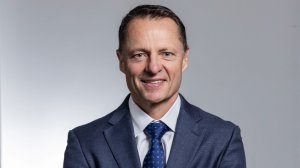


African mining is poised to attract increased investment over the next three to five years, driven by geopolitical developments and growing global demand for critical minerals; however, a shortage of new projects and persistent infrastructure constraints remain key challenges, financial services firm Standard Bank Corporate and Investment Banking mining and metals executive VP Sean Evans argues.
Speaking to Mining Weekly ahead of the 2027 Investing in African Mining Indaba, he says the bank is seeing considerable investment interest in gold opportunities across the continent, as well as copper and cobalt projects in the Democratic Republic of Congo (DRC) and Zambia.
He reports that gold has performed strongly, while the Central African Copperbelt spanning northern Zambia and the DRC remains an important investment destination as demand for copper and cobalt increases amid global efforts to secure critical mineral supplies.
“We need to find quite a few big copper deposits every year to keep up with the run rate required to supply the world's needs. So that's a big area for us,” Evans says.
Standard Bank is also seeing growing interest in other critical minerals, including lithium, graphite and rare earths, with opportunities emerging in Zimbabwe, Tanzania and Namibia.
However, Evans emphasises that the availability of quality mineral deposits remains fundamental to attracting financing, with the bank placing considerable importance on the technical characteristics of a project, including grade, metallurgy, deposit dimensions and mining methods.
Further, he notes that a high-quality orebody that can support a favourable position on the industry cost curve is particularly important, as it provides resilience during periods of weaker commodity prices.
“A high-quality orebody enables us to get out of trouble if we see a commodity price dip and we can ride it out,” Evans explains.
Other considerations include the stability of a mining jurisdiction, mining legislation, transparency, security of tenure and the ability to repatriate funds, as well as strong project sponsors, infrastructure availability, logistics and access to affordable power, which also influence Standard Bank’s financing decisions.
FINANCING OPPORTUNITIES
Evans says geopolitical developments are creating opportunities for more diversified funding arrangements, particularly for greenfield projects that have traditionally struggled to secure capital.
Standard Bank is increasingly engaging with development finance institutions (DFIs) and export credit agencies (ECAs) in the US, Europe and the Middle East to explore blended financing structures that combine different sources of capital and risk protection.
“We are starting to see a lot of interest from DFIs to invest or to start putting money behind these mining projects. They team up with the ECAs where we get a level of political risk insurance, as well as hopefully some commercial risk cover, which we can sort of ride on the back of and participate in some of these project finances,” Evans says.
Moreover, he says Standard Bank's international presence, together with its understanding of African markets, positions it to work alongside these institutions and help unlock projects that might otherwise struggle to attract funding.
However, he cautions that alternative financing arrangements do not remove the need for technically robust and economically viable projects.
REVIVING EXPLORATION
Beyond financing, Evans identifies the revival of exploration activity as one of the most important requirements for strengthening Africa's mining project pipeline.
A former exploration geologist, he says the continent needs to restore the active junior mining exploration culture that previously helped generate new discoveries, particularly in West Africa.
He says governments can encourage exploration by simplifying and accelerating licensing processes, improving transparency, making mineral and licence-holding information readily available and providing incentives for exploration companies to operate.
Evans also points to the importance of geological surveys, access to exploration equipment and services and more competitive operating conditions.
Infrastructure constraints remain another significant consideration, with inadequate rail and road networks, unreliable or expensive power and limited water availability weighing on project economics and, in some cases, rendering otherwise attractive projects unbankable, he notes.
Looking towards the 2027 Investing in African Mining Indaba, Evans says African governments and industry stakeholders will need to maintain progress on these fundamentals to convert growing international interest in the continent’s mineral resources into committed investment.
He adds that sound mining legislation, security of tenure and continued improvements in infrastructure will be essential to supporting the development of new projects.
“It's all about getting the basics right, keep working at all of these key factors that drive the mining industry and sector, and I think the African continent's got a very bright future in terms of servicing the world's critical mineral needs. We've got to take advantage of it,” Evans concludes.
Evans' insights form part of Mining Weekly's Investing in African Mining Indaba interview series, which examines investment prospects, industry developments, opportunities and challenges shaping African mining ahead of the 2027 event.
Article Enquiry
Email Article
Save Article
Feedback
To advertise email advertising@creamermedia.co.za or click here
Research Reports
Projects

Latest Multimedia
Latest News
Showroom
Design, Construction and Maintenance of Site Erected, Welded Bulk Storage Tanks for the Petrochemical, LNG, Ammonia and Sustainable fuel Sectors.
VISIT SHOWROOM
Rentech provides renewable energy products and services to the local and selected African markets. Supplying inverters, lithium and lead-acid...
VISIT SHOWROOM
Announcements
What's On
Subscribe to improve your user experience...
Option 1 (equivalent of R125 a month):
Receive a weekly copy of Creamer Media's Engineering News & Mining Weekly magazine
(print copy for those in South Africa and e-magazine for those outside of South Africa)
Receive daily email newsletters
Access to full search results
Access archive of magazine back copies
Access to Projects in Progress
Access to ONE Research Report of your choice in PDF format
Option 2 (equivalent of R375 a month):
All benefits from Option 1
PLUS
Access to Creamer Media's Research Channel Africa for ALL Research Reports, in PDF format, on various industrial and mining sectors
including Electricity; Water; Energy Transition; Hydrogen; Roads, Rail and Ports; Coal; Gold; Platinum; Battery Metals; etc.
Already a subscriber?
Forgotten your password?
Receive weekly copy of Creamer Media's Engineering News & Mining Weekly magazine (print copy for those in South Africa and e-magazine for those outside of South Africa)
➕
Recieve daily email newsletters
➕
Access to full search results
➕
Access archive of magazine back copies
➕
Access to Projects in Progress
➕
Access to ONE Research Report of your choice in PDF format
RESEARCH CHANNEL AFRICA
R4500 (equivalent of R375 a month)
SUBSCRIBEAll benefits from Option 1
➕
Access to Creamer Media's Research Channel Africa for ALL Research Reports on various industrial and mining sectors, in PDF format, including on:
Electricity
➕
Water
➕
Energy Transition
➕
Hydrogen
➕
Roads, Rail and Ports
➕
Coal
➕
Gold
➕
Platinum
➕
Battery Metals
➕
etc.
Receive all benefits from Option 1 or Option 2 delivered to numerous people at your company
➕
Multiple User names and Passwords for simultaneous log-ins
➕
Intranet integration access to all in your organisation